Low back pain while driving: causes, seat adjustments, and stretches for relief
Apr 22, 2026
Over 1 Million members trust Hinge Health, a digital clinic that provides access to virtual physical therapy, to address their joint and muscle pain.
Reduction in member pain
of licensed physical therapists and health coaches
Average star rating of the Hinge Health mobile app
Bailey JF, et al. Digital Care for Chronic Musculoskeletal Pain: 10,000 Participant Longitudinal Cohort Study. J Med Internet Res 2020;22(5):e18250.
Lower back pain while driving is common but manageable. Learn seat adjustments and gentle exercises to stay comfortable on the road.
Available at $0 cost to many members
For most of us, driving is a daily necessity. Even a 15-20 minute commute each way can add up over the course of a week or month. And if you’re dealing with lower back pain, that time spent behind the wheel can feel even longer.
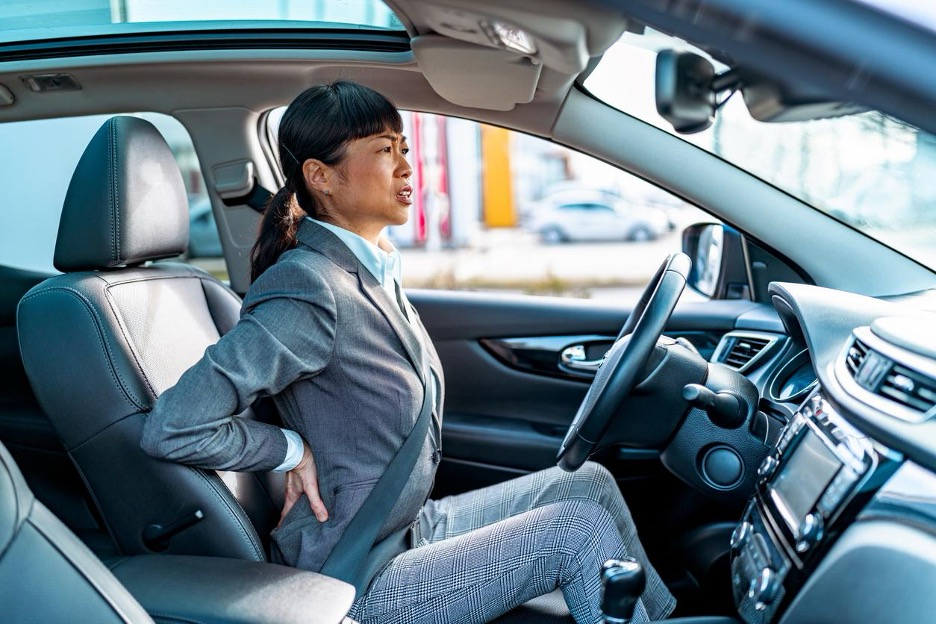
Many factors can contribute to back pain while driving, but the biggest one is often the prolonged, static sitting itself. “Your body is designed to move, so staying in any single position for too long places stress on the back, contributing to pain in this area,” says Britni Barber, PT, DPT, a physical therapist at Hinge Health.
On top of that, the driving position itself — with your hips flexed, arms stretched out forward, and limited ability to move around — can place added strain on your spine and surrounding muscles. Over time, even small amounts of muscle tension can turn into noticeable discomfort.
But that doesn’t mean you have to drive with this discomfort. Making small modifications to how you sit, move, and prepare your body before a car ride can make a meaningful difference. “Small changes in how you sit and move may seem minor, but together, they can make a big difference in how your back feels by the time you reach your destination,” says Dr. Barber.
Read on for tips to make driving more comfortable and get targeted exercises recommended by Hinge Health physical therapists to get relief.
Reviewed by our clinical and medical experts


Fully covered back pain relief
Find relief from lower back pain, a thrown out back, sciatica, & more.
Causes of lower back pain while driving
Driving itself isn’t likely to cause serious damage to your back, but it can contribute to lower back pain — especially when you’re sitting in one position for long periods. Those who drive for a living may experience more back discomfort than someone with a short commute to work, for example. Some reasons why your back may hurt include:
Prolonged static sitting. Sitting in one position for extended periods reduces blood flow and puts pressure on structures in your spine. Over time, this can contribute to stiffness and discomfort, Dr. Barber says.
Sitting in sub-optimal positions. Sitting with rounded shoulders, having the seat pushed too far from the pedals, or reclining your seat too much can all put extra strain on your lower back and make it harder for your spine to stay in a comfortable position.
Not enough lower back support. Many car seats don’t fully support the natural curve of your lower back. Without that support, it’s easier to slump or sink into the seat, which can increase strain on the structures in your back.
Vibrations and road impact. Even small, constant vibrations from the road can add up over time, causing your back muscles to tense up and potentially increasing discomfort. “For someone who’s already experiencing back pain, just going over a speed bump, pothole, or uneven road can feel especially uncomfortable,” says Dr. Barber.
Limited opportunities to move. Unlike walking or standing, driving keeps you in one position for longer periods. That lack of movement can lead to muscle fatigue, joint stiffness, and a buildup of tension in your back.
Doing more than your body is ready for. Long drives — especially if you’re not used to them or haven’t been very active — can exceed your body’s current capacity to tolerate sustained sitting. Without adequate strength and mobility, your muscles may fatigue more quickly, leading to achiness and pain.
Symptoms of lower back pain while driving
Symptoms of lower back pain while driving vary from person to person, depending on your medical history and any underlying spinal, muscle, or nerve-related issues. Common symptoms often include:
Aching or tightness in your lower back during or after driving
Difficulty finding a comfortable position in your seat
Pain that worsens the longer you drive
Stiffness when getting out of the car
Muscle tension in your lower back and hips
Pain that radiates into your butt or legs (this may indicate a nerve-related issue like sciatica)
How movement can help lower back pain while driving
When driving leads to lower back pain, you may feel reluctant to go work out (or even move around your house). But in most cases, consistent movement and changing your positions are essential for relief.
Movement helps improve blood flow to muscles and joints, reduce stiffness, and prevent muscle tension that comes from staying in one position too long. It also helps to strengthen your core muscles, some of which wrap around your lower back and support your spine, easing strain during bouts of prolonged sitting.
Even small forms of movement can help make a difference. This includes shifting your posture at stoplights or getting out of the car at pit stops to take a short walk or do a few quick stretches. “Taking a quick movement snack break seems small, but that habit really builds up over time, especially when you do it consistently,” says Dr. Barber.
Seat adjustments and ergonomic tips for drivers
Adjusting your seat positioning is a first-line strategy when driving with back pain. It can help support your back’s natural alignment, reduce pressure on spinal discs, and ease muscle strain. When in the driver’s seat, consider making these changes to improve your comfort:
Position your seat close enough to the pedals. Your knees should remain slightly bent (not locked) when pressing the pedals, and you shouldn’t have to reach or strain. Hips should be as far back in the seat as possible.
Adjust your seat angle. Aim for a 100-110° recline angle. Sitting too upright or too reclined can both strain your lower back.
Set your seat height so you can clearly see the road. “Be sure you’re in a well-supported position that still allows you to comfortably navigate the road safely without slouching or straining your neck,” says Dr. Barber.
Add lumbar support. Many car seats aren’t designed to support the natural inward curve of your lower back (that’s why there’s often a gap between your lower back and the seat). Using built-in lumbar support — or adding a rolled towel or cushion — helps maintain that curve, reducing strain on the structures in your spine and surrounding muscles.
Set your steering wheel correctly. Position the wheel so your elbows are slightly bent, and your shoulders stay relaxed — not reaching or rounded forward. For both comfort and safety, try placing your hands at 9:00 and 3:00 (or 8:00 and 4:00), which can reduce shoulder and upper back strain compared to the traditional 10:00 and 2:00 position.
Adjust your headrest. Adjust the head restraint so the center is against the center of your head, not your neck. Especially on long drives, the headrest should be positioned so you can comfortably rest your head against it. Avoid forcing your head forward, which can strain your neck and upper back.
Empty your pockets. Sitting on items like wallets or phones can shift your hips out of alignment and create uneven pressure on your lower back. Removing them before you drive can help you sit more evenly and comfortably.
Adjust mirrors properly. Set your mirrors so you can see clearly without needing to lean forward, twist, or slouch. This helps reduce repeated awkward movements that can add strain over time. “If you have to lean forward every time you check your mirrors — especially in stop-and-go traffic or when switching lanes often — it can irritate your upper back and lead to lower back pain,” says Dr. Barber.
Stretches and exercises for lower back pain while driving
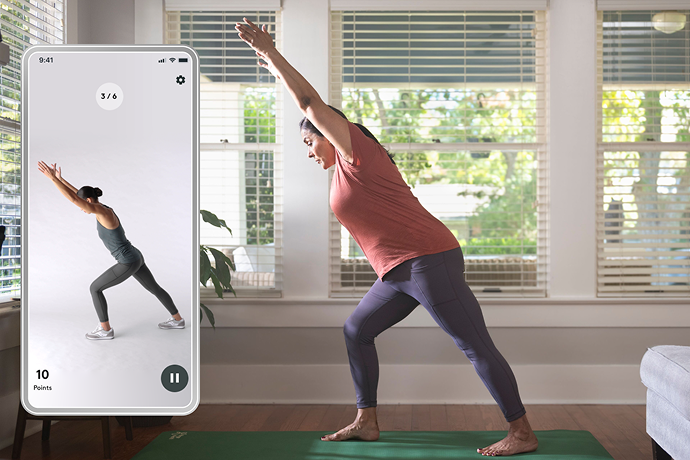
This move counteracts prolonged sitting by stretching tight muscles along your back, hips, and legs. It can also help relieve pressure in your spine after being in a compressed seated position. “I love this exercise because you can just hop out of your car and do it,” says Dr. Barber.
Want expert care?
Check if you're covered for our free programThese exercises help prepare your body to handle the demands of driving more comfortably. Stretches like forward bend, hamstring stretch, standing hip flexor stretch, standing trunk rotation, and figure four target areas that tend to tighten with prolonged sitting, which include your hips, glutes, and hamstrings. Strengthening exercises like seated pelvic tilts and Pallof presses support your core and posture, reducing strain on your lower back over time.
The information contained in these videos is intended to be used for educational purposes only and does not constitute medical advice or treatment for any specific condition. Hinge Health is not your healthcare provider and is not responsible for any injury sustained or exacerbated by your use of or participation in these exercises. Please consult with your healthcare provider with any questions you may have about your medical condition or treatment.
Did you know?
Physical therapy (PT) is for more than just recovering from surgery or injury. It’s one of the top treatments for joint and muscle pain. It helps build strength, improve mobility, and reduce pain. And it doesn't always need to be in person.
Hinge Health members can conveniently access customized plans or chat with their care team at home or on the go — and experience an average 68% reduction in pain* within the first 12 weeks of their program. Learn more*.
Treatments for lower back pain while driving
You may not be able to control how much time you spend driving, but you can take steps to reduce its effects on your body. Targeted exercises, regular movement, stretch breaks, and hot and cold therapy can all help manage symptoms and address underlying contributors to back pain.
Try physical therapy and targeted exercises. Targeted exercises can help alleviate tension from your lower back and improve your overall comfort. You can do exercise therapy at home or work with a physical therapist who can guide you through movements tailored to your needs. You can see a physical therapist in person or use a program like Hinge Health, where you may access a PT via telehealth/video visit.
Stay active. Regular movement outside of driving helps keep your muscles loose and your body more resilient to long periods of sitting. Exercise improves circulation, reduces stiffness, and strengthens your core so it can better support your spine. Dr. Barber recommends following the CDC guidelines: at least 150 minutes of moderate-intensity activity per week (like brisk walking for 30 minutes, five days a week), plus two days of strength training.
Take frequent breaks during long drives. Try to stop every hour or so to give your body a break from sitting. Even a short 10-15 minute movement snack break to walk around or stretch can help reduce stiffness and get blood flowing again. “It’s a simple habit, but it can make a big difference over time,” says Dr. Barber. Staying hydrated can also help — it naturally encourages you to take regular breaks.
Apply heat or ice. Heat can help relax tight muscles and improve blood flow — using options like seat warmers or heat wraps while driving can be especially helpful. If your pain is sharp, new, or related to a recent injury, ice may be a better choice to help reduce inflammation. You can also alternate between heat and ice or stick to the method that works best for you.
Take over-the-counter (OTC) medication as needed. Pain relievers such as ibuprofen (Advil, Motrin), naproxen (Aleve), and acetaminophen (Tylenol) can help ease pain so you can do your targeted exercises and stay active when you have back pain. Other options are topical NSAIDs or pain relief creams. If you have a medical condition or take other medications, check in with your provider to make sure these OTC options are safe to take.
Consider lifestyle modifications. Factors like sleep, stress, nutrition, and certain activities can all play a role in how you feel. In fact, many people are surprised to learn that pain isn’t just about what’s happening physically — your daily habits and overall well-being can have a real impact, too. Staying curious about how your routines affect your muscles and joints can help you identify where small changes might help reduce pain. For example, you might notice your pain is less noticeable on low-stress days.
Try complementary treatments. Talk to your provider if you’re interested in trying alternative treatments for back pain relief, such as massage, acupuncture, or chiropractic care.
Ask about TENS therapy. TENS, or transcutaneous electrical nerve stimulation, uses gentle pulses to quiet your pain response and help reduce back pain. One option is the wearable device Enso, available through Hinge Health. It’s small, wireless, and portable. “Enso shouldn’t be worn while driving or operating machinery, but you can place it on your back for relief after you arrive at your final destination,” says Dr. Barber.
How to prevent lower back pain while driving
You can reduce strain on your lower back by setting your body up for success before and during your drive. Small adjustments — both in and out of the car — can help prevent pain from developing or coming back.
Maintain regular core strength. A stronger core helps support your spine during long periods of sitting, so your back muscles don’t have to work as hard.
Focus on lower body flexibility. Tightness in the hips and hamstrings can contribute to low back pain and tightness. Regularly stretching these areas can help keep your back pain-free.
Check your seat setup before you drive. Even small changes in seat position can make a difference in how you feel. “If you’re the only driver, setting it once is fine, but you should consider readjusting it if someone else has used the vehicle or if your symptoms have changed,” says Dr. Barber. During a flare-up, a few tweaks can help you find a more comfortable position.
Use cruise control when safe. On longer drives, cruise control can give your legs a break and allow you to shift positions slightly, which helps reduce muscle tension.
Choose a supportive setup. If you drive often and have ongoing back pain, look for a vehicle (or add-ons like lumbar cushions) that provides good seat support and adjustability.
Build in movement breaks — even when you feel okay. Don’t wait for pain to start. Taking a few minutes to stretch at a pitstop or even when you arrive at your destination can help prevent muscle stiffness. “If driving exacerbates your back pain, leave five minutes earlier so you can stretch when you get there,” says Dr. Barber. “This is especially important if you’re heading into another long period of sitting.”
Keep moving your body throughout the day. Regular movement outside of driving helps your body stay adaptable and resilient. When your muscles and joints are used to moving, they’re better able to tolerate periods of sitting without becoming stiff or painful.
When to see a doctor
Lower back pain from driving often improves with simple adjustments to your seat position, regular movement breaks, and targeted exercises. But if your lower back pain is severe, worsening (for example, radiating pain down your leg), or interfering with your ability to drive safely or perform daily activities, see a healthcare provider.
It’s also a good idea to seek medical attention if you experience any of the following:
Weakness, numbness, or tingling in your feet or legs
Loss of bowel or bladder control
Pain accompanied by unexplained weight loss or fever
Pain following a significant injury or accident
PT tip: Reduce twisting when getting in and out of the car
“Twisting to get in and out of the car can be painful for a lot of people with lower back pain,” says Dr. Barber. To reduce that strain, stand with your back close to the seat, then lower yourself down. Pivot so you’re facing forward, then bring one leg into the car (using your hands if needed), followed by the other. To exit, reverse the process.
Keeping your torso facing forward as much as possible helps reduce twisting forces on your spine, which can aggravate pain.
How Hinge Health can help you
If you have joint or muscle pain that makes it hard to move, you can get the relief you’ve been looking for with Hinge Health’s online exercise therapy program.
The best part: You don’t have to leave your home because our program is digital. That means you can easily get the care you need through our app when and where it works for you.
Through our program, you’ll have access to therapeutic exercises and stretches for your condition. Additionally, you’ll have a personal care team to guide, support, and tailor our program to you.
See if you qualify for Hinge Health and confirm free coverage through your employer or benefit plan here.
This article and its contents are provided for educational and informational purposes only and do not constitute medical advice or professional services specific to you or your medical condition.
Looking for pain relief? Check if your employer or health plan covers our program.
Join more than 1.2 million members and over 2,800 companies that trust Hinge Health to get relief.

Related articles

Learn PT-backed tips, stretches, and simple adjustments to prevent and relieve neck pain when driving so you can stay comfortable on and off the road.
Read more
Learn what causes driver’s knee and how you can treat it, especially with exercises recommended by Hinge Health physical therapists.
Read more
Learn what causes pain while commuting, and how to prevent and treat it with exercises and tips from physical therapists.
Read more
Stay active and reduce travel-related pain with these essential exercises and tips.
Read more
If your back hurts while you ride a bike, try these tips and exercises from physical therapists to help reduce low back pain during or after cycling.
Read moreReferences
- 1Gross, A. (2016, September 6). Americans Spend an Average of 17,600 Minutes Driving Each Year | AAA NewsRoom. AAA NewsRoom. https://newsroom.aaa.com/2016/09/americans-spend-average-17600-minutes-driving-year/
- 2Centers for Disease Control and Prevention. (2024, April 19). What You Can Do to Meet Physical Activity Recommendations. Physical Activity Basics. https://www.cdc.gov/physical-activity-basics/guidelines/index.html
- 3Battié, M. C., Videman, T., Gibbons, L. E., Manninen, H., Gill, K., Pope, M., & Kaprio, J. (2002). Occupational driving and lumbar disc degeneration: a case-control study. The Lancet, 360(9343), 1369–1374. doi:10.1016/s0140-6736(02)11399-7
- 4Mauck, M. C., Aylward, A. F., Barton, C. E., Birckhead, B., Carey, T., Dalton, D. M., Fields, A. J., Fritz, J., Hassett, A. L., Hoffmeyer, A., Jones, S. B., McLean, S. A., Mehling, W. E., O’Neill, C. W., Schneider, M. J., Williams, D. A., Zheng, P., & Wasan, A. D. (2022). Evidence-based interventions to treat chronic low back pain: treatment selection for a personalized medicine approach. PAIN Reports, 7(5), e1019. doi:10.1097/pr9.0000000000001019
- 5Jia, J., Zhang, M., Cao, Z., Yang, Z., Hu, X., Lei, S., Zhang, Y., Leng, W., & Kang, X. (2024). Prevalence of and risk factors for low back pain among professional drivers: a systematic review and meta-analysis. Journal of Orthopaedic Surgery and Research, 19(1). doi:10.1186/s13018-024-04999-z