Over 1 Million members trust Hinge Health, a digital clinic that provides access to virtual physical therapy, to address their joint and muscle pain.
Reduction in member pain
of licensed physical therapists and health coaches
Average star rating of the Hinge Health mobile app
Bailey JF, et al. Digital Care for Chronic Musculoskeletal Pain: 10,000 Participant Longitudinal Cohort Study. J Med Internet Res 2020;22(5):e18250.
Struggling to sleep after a C-section? Learn the best sleep positions, how to get in and out of bed safely, and recovery tips from physical therapists.
Available at $0 cost to many members
If you recently had a C-section, you may feel desperately tired. While sleep is essential for healing after a C-section, getting the rest your body needs is often easier said than done.
Between incision discomfort, nighttime feedings, and the challenge of finding a comfortable, supportive position, quality sleep can be hard to come by during recovery. And poor sleep can increase pain sensitivity, and pain can make it harder to sleep — creating a frustrating cycle during recovery.
A few simple adjustments can help you get more comfortable and support your recovery. Finding comfortable sleep positions that don’t irritate tender areas is one important piece of the puzzle. Gentle movement is another important piece. "Gentle activity and targeted physical therapy exercises can improve recovery, making it easier to sleep and do other activities over time," says Alex Jones, PT, DPT, a physical therapist at Hinge Health.
Whether you're recovering now or preparing for an upcoming delivery, here's what to know about how to sleep after a C-section, including the best sleep positions, recovery tips, and how targeted exercises recommended by Hinge Health physical therapists can help you heal.
Reviewed by our clinical and medical experts


Fully Covered Pelvic Care
Find relief from pelvic pain, leakage, muscle weakness, & more.
Best sleeping positions after a C-section
When deciding how to sleep after a C-section, the goal is to minimize strain on your abdominal muscles and incision while keeping your body well supported. The best sleep position is ultimately the one that feels most comfortable and allows you to rest without increasing pain.
Here are a few different positions to consider trying:
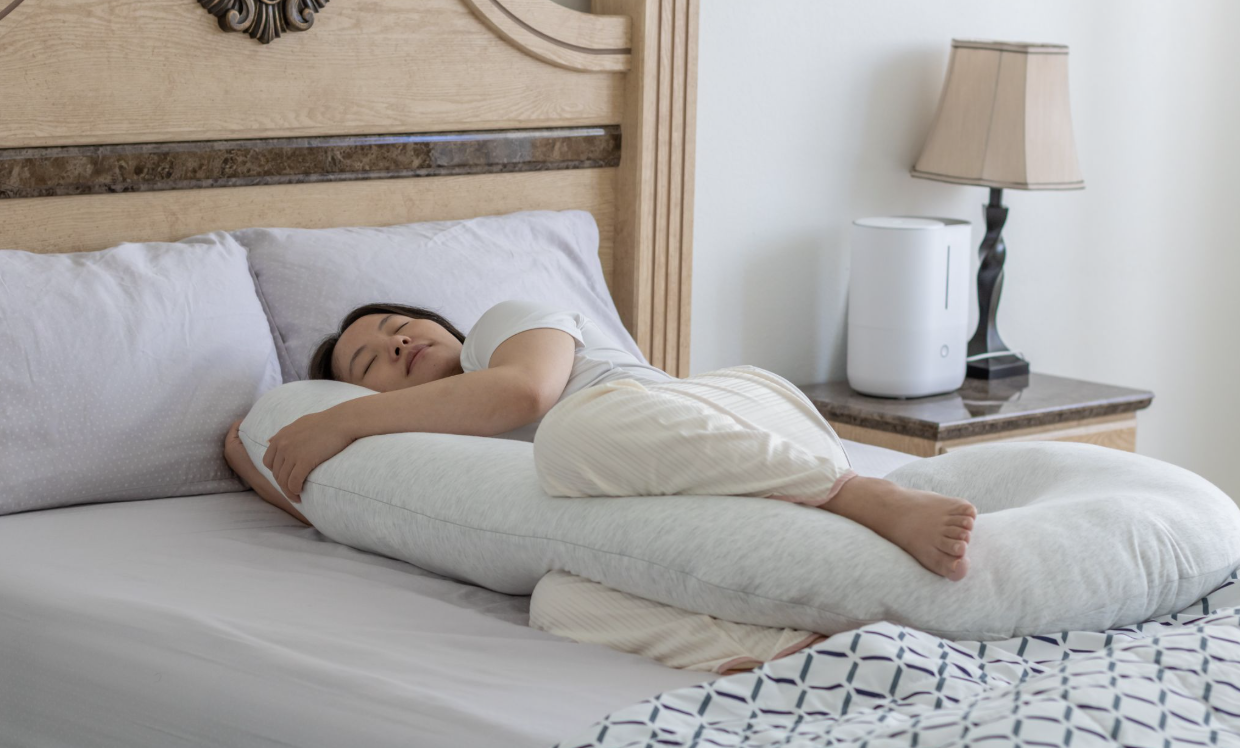
Back sleeping with knees elevated. This is one of the most commonly recommended positions during early recovery. "You can reduce abdominal strain that may contribute to pain by sleeping with a pillow under your knees," says Dr. Jones.
Semi-reclined (45-degree angle). Try propping up your upper body with pillows or a wedge pillow to reduce pulling on your incision. Many people find this position feels similar to sleeping in a recliner and is more comfortable during the first week or two after surgery.
Side sleeping. Many people wonder how soon they can sleep on their side after a C-section, Dr. Jones says. In general, side sleeping is usually okay once you can comfortably tolerate the position, often within the first several days after surgery. Dr. Jones suggests placing a pillow between your knees and ankles to keep your pelvis aligned and hugging a small pillow against your abdomen for additional incision support.
Recliner. During the first few days after surgery, some people find it easiest to sleep upright or slightly reclined in a chair. This position can make it easier to get up without heavily relying on your abdominal muscles.
Sleeping positions to avoid after a C-section
It can feel challenging to find a sleep position that feels comfortable and gives your abdominal muscles and incision the space they need to heal properly. While there aren’t many positions that could actually cause damage to this area, Dr. Jones advises the following: “As a general rule, try not to sleep in positions that don’t feel physically comfortable during your recovery. Some sleep positions you may be more likely to feel some discomfort in include:
Stomach sleeping, which puts direct pressure on the incision site
Lying flat on your back without support under your knees, especially if it increases abdominal tension
Any position that requires twisting, crunching, or significant core engagement to get into or out of bed
How to get in and out of bed after a C-section
Getting in and out of bed is especially important after a C-section, because rotating or twisting too much can interfere with your recovery and increase discomfort.
Dr. Jones recommends the log roll technique, which can help you avoid uncomfortable twisting. Here’s how to do it:
Roll onto your side with your shoulders, hips, and knees moving together as one unit.
Use your arms to push yourself upright while lowering your legs off the side of the bed at the same time.
PT tip: Holding a pillow gently against your abdomen during this transition can help support your incision and make movement feel more comfortable.
"To get back into bed, simply reverse the process," says Dr. Jones.
Tips for sleeping more comfortably after a C-section
Small adjustments to your sleep setup — from timing your pain medication to making adjustments to your sleep environment — can make a big difference in how well you rest during C-section recovery.
Time your pain medication. Take over-the-counter or prescription medications exactly as recommended by your healthcare provider. Taking them before bedtime can help prevent pain from waking you up during the night. "Waking up in pain mid-sleep can often be much harder to recover from," says Dr. Jones.
Know that sleep challenges are common. It’s normal to struggle to fall asleep after a C-section. Pain, hormonal shifts, anxiety, adrenaline, frequent newborn wake-ups, and the stress of recovering from surgery can all interfere with sleep. But as your body heals, you may notice that sleep quality will also begin to improve.
Prepare your sleep setup before you're tired. Keep water, your phone, feeding supplies, medications, and anything else you might need within easy reach. This can reduce unnecessary trips out of bed during the night.
Use pillows strategically. Place a pillow under your knees if you're sleeping on your back or between your knees and ankles if you're sleeping on your side. Body pillows, wedge pillows, or even rolled blankets can provide extra support. "The goal is full-body support," says Dr. Jones.
Ask for help with night feeds. If you have a partner, family member, or provider available, consider sharing nighttime responsibilities when possible. Protecting longer stretches of sleep can help support healing and recovery.
Prioritize gentle movement during the day. Short, slow walks as tolerated can help support circulation and healing after a C-section, which in turn supports better sleep and further recovery over time.
How movement supports C-section recovery and sleep
When you're exhausted and sore, exercise is probably the last thing on your mind. But gentle movement is one of the best things you can do for your recovery.
Short walks, diaphragmatic breathing, and other gentle movements help improve circulation, which supports healing and reduces the risk of complications such as blood clots. Movement can also help reduce stiffness, ease muscle tension, and prevent scar tissue from becoming overly restricted.
"If we don't keep moving, scar tissue may continue to build in one area and become less mobile over time," says Dr. Jones.
Movement can also support better sleep. Physical activity helps regulate your body's sleep-wake cycle, reduce stress, and relieve some of the discomfort that can make it difficult to get comfortable at night.
This isn't about jumping back into your pre-pregnancy workout routine. It's about giving your body what it needs to heal. If you’re unsure what’s safe, your OB-GYN, midwife, or a pelvic floor physical therapist can help you decide when to start exercises and gradually progress your movement from walking to more targeted postpartum exercises.
Gentle exercises to support recovery and help you sleep
This breathing technique helps activate the body’s "rest and digest" system, helping bring you into a state of relaxation before bed. It also reduces abdominal guarding and tension around the incision site, making it easier to find a comfortable sleeping position.
Want expert care?
Check if you're covered for our free programThese exercises are meant to be gentle options for the early weeks after a C-section. Make sure to check with your healthcare provider to get their clearance before you start any kind of exercise postpartum.
The information contained in these videos is intended to be used for educational purposes only and does not constitute medical advice or treatment for any specific condition. Hinge Health is not your healthcare provider and is not responsible for any injury sustained or exacerbated by your use of or participation in these exercises. Please consult with your healthcare provider with any questions you may have about your medical condition or treatment.
💡Did you know?
Pelvic floor physical therapy is more than just kegel exercises. Various exercises tailored to your symptoms and needs are key to getting relief. Pelvic floor PT can relieve many different pelvic issues, such as pelvic pain, painful sex, and urinary incontinence.
Members of the Hinge Health pelvic health program experience an average 67% reduction in pelvic pain and 54% reduction in urinary incontinence within the first 12 weeks. Learn more*.
When to see a doctor
Most people find that sleep becomes easier as incision pain improves over the first few weeks. But if you're experiencing symptoms that concern you, contact your healthcare provider. Red flags may include:
Signs of infection at the incision site, including redness, warmth, drainage, or swelling
Fever
Pain that is worsening instead of improving
Shortness of breath or leg swelling
Inability to sleep because of severe pain despite medication
PT tip: Hug a pillow when you move
Keep a small pillow within arm's reach during the first few weeks after surgery. Holding it gently against your abdomen when you cough, sneeze, laugh, roll over in bed, or get up from lying down can help reduce strain on your incision and make movement feel more comfortable. "That gentle compression can reduce irritation and provide support while your tissues heal," says Dr. Jones.
How Hinge Health can help you
If you have pelvic pain, bladder, bowel, or other pelvic symptoms that are affecting your quality of life, you can get the relief you've been looking for with Hinge Health’s online exercise therapy program.
The best part: You don’t have to leave your home because our program is digital. That means you can easily get the care you need through our app, when and where it works for you. Through our program, you’ll have access to therapeutic exercises and stretches for your condition. Additionally, you’ll have a personal care team to guide, support, and tailor our program to you.
See if you qualify for Hinge Health and confirm free coverage through your employer or benefit plan here.
This article and its contents are provided for educational and informational purposes only and do not constitute medical advice or professional services specific to you or your medical condition.
Looking for pain relief? Check if your employer or health plan covers our program.
Join more than 1.2 million members and over 2,800 companies that trust Hinge Health to get relief.
Related Articles
Not sure how to describe your back pain to a doctor or PT? Use these tips to communicate clearly and get the care that actually helps.
Read more
Hinge Health physical therapists share the top iliotibial band syndrome exercises and stretches to help you move more comfortably.
Read more
Learn what causes pickleball knee pain and discover expert tips for prevention, relief, and staying active.
Read more
In this guide to the mind-body connection, learn how the two are linked, plus simple ways to strengthen their bond and improve your quality of life.
Read more
Learn how to prevent knee pain when running. Explore the causes, tips, and exercises recommended by physical therapists.
Read more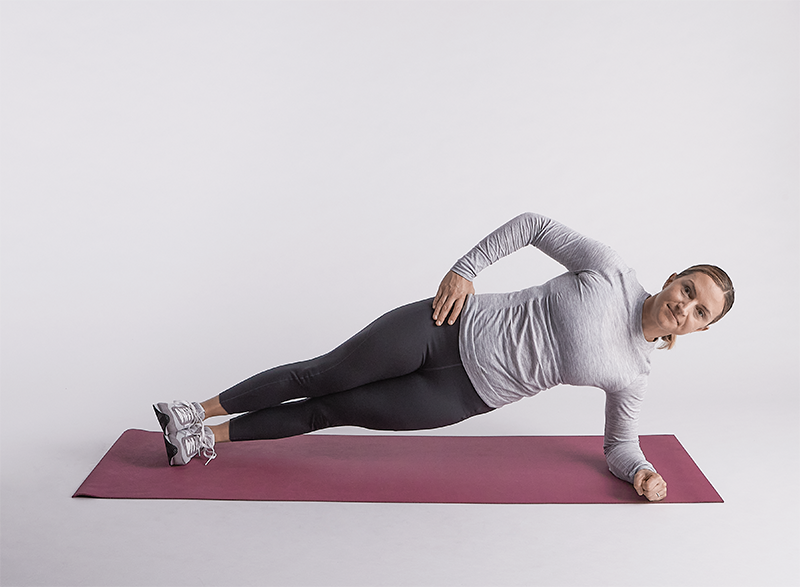
Learn how to do a side plank with expert tips. Strengthens the core, obliques, and hips, with modifications for beginners and video demos.
Read moreReferences
- 1Patient education: C-section (cesarean delivery) (Beyond the Basics). Berghella, MD, V. (2022, December 6). UpToDate. Www.uptodate.com. https://www.uptodate.com/contents/c-section-cesarean-delivery-beyond-the-basics
- 2Cesarean Section: What to Expect at Home | Kaiser Permanente. (2023, July 10). Healthy.kaiserpermanente.org. https://healthy.kaiserpermanente.org/health-wellness/health-encyclopedia/he.cesarean-section-what-to-expect-at-home.ud1242#:~:text=Your%20Recovery
- 3Cesarean Birth. (2022, May). Www.acog.org. https://www.acog.org/womens-health/faqs/cesarean-birth
- 4Stupak, A., Kondracka, A., Fronczek, A., & Kwaśniewska, A. (2021). Scar Tissue after a Cesarean Section-The Management of Different Complications in Pregnant Women. International Journal of Environmental Research and Public Health, 18(22), 11998. doi:10.3390/ijerph182211998
- 5Perman Pandal, Carvalho, B., Shu, C.-H., Ciechanowicz, S., O’Carroll, J., Nima Aghaeepour, Fowler, C., Simons, L. E., Druzin, M. L., Panelli, D. M., & Sultan, P. (2024). Postpartum sleep quality and physical activity profiles following elective cesarean delivery: a longitudinal prospective cohort pilot study utilizing a wearable actigraphy device. International Journal of Obstetric Anesthesia, 62, 104305–104305. doi:10.1016/j.ijoa.2024.104305