Self-soothing techniques to reduce stress, according to physical therapists
Jun 1, 2026
Over 1 Million members trust Hinge Health, a digital clinic that provides access to virtual physical therapy, to address their joint and muscle pain.
Reduction in member pain
of licensed physical therapists and health coaches
Average star rating of the Hinge Health mobile app
Bailey JF, et al. Digital Care for Chronic Musculoskeletal Pain: 10,000 Participant Longitudinal Cohort Study. J Med Internet Res 2020;22(5):e18250.
Feeling stressed or anxious? Explore simple self-soothing techniques to help you feel calm, build resilience, and support your overall well-being.
Available at $0 cost to many members
It's normal to occasionally feel upset or anxious. But while you can't control situations that make you feel this way, you can build a toolkit of ways to help cope with them.
One way to do this is through self-soothing. "Self-soothing refers to a set of practices you can use to put yourself in a place that's happier and calmer," says Aashini Govani, PT, DPT, a physical therapist with Hinge Health. Research backs this up, too. One study found that people who practice simple self-soothing measures — such as placing a hand on the heart or hugging themselves when they are anxious — experience a lower stress response in their body.
Self-soothing isn't just for emotional stress — it can also help with pain. Because stress and emotions can turn up the volume on how you experience pain, calming your nervous system with self-soothing techniques may help you feel more comfortable in your body.
Here's a closer look at self-soothing: what it is, its benefits, and how to self-soothe, including calming strategies from Hinge Health physical therapists.
Reviewed by our clinical and medical experts


Fully covered pain relief
Find relief from muscle and joint pain.
What is self-soothing?
Self-soothing is a way to calm down after an upsetting event. "It lets your brain and body reset if you experience stress, anxiety, or another difficult emotion that's hard to manage," says Dr. Govani. "It's a good way to regulate your emotions and even regulate pain."
Self-soothing can take many forms — gentle movement, diaphragmatic breathing, or even your favorite stretch, adds Dr. Govani. It can also look like engaging your senses (think: calming scents, soothing sounds, or the feel of a cozy blanket) or simply pausing to check in with yourself. "It looks different for every person — it's whatever helps you calm down and relax," she explains.
You can think of self-soothing as a skill. The more you practice, the easier it becomes to tap into these strategies when you need them most — whether you're dealing with a stressful day, a wave of anxiety, or a pain flare.
The goal is to find self-soothing behaviors that feel good for you and support your mental and physical health.
Benefits of practicing self-soothing
Self-soothing may sound simple, but research shows these practices can create real, measurable changes in how your body responds to stress — and even pain. Here are a few reasons why self-soothing behaviors are worth building into your routine:
They reduce feelings of anxiety. Self-soothing behaviors activate your parasympathetic nervous system — the part of your nervous system responsible for helping you feel calm. This can lower your heart rate and slow your breathing, leaving you feeling more at ease.
They promote relaxation and better sleep quality. Self-soothing activities that involve mindfulness, like deep breathing or a body scan, have been shown to improve sleep quality.
They help you become more resilient. Resilience is like a muscle — the more you use skills that build it, the better you get at it. "The more you practice self-soothing as part of your daily routine, the more you instinctively learn how to regulate your emotions," explains Dr. Govani. "It gets easier the more you practice."
They help you build a positive wellness toolkit. When you're stressed, it's natural to reach for whatever feels comforting in the moment. Having a go-to set of self-soothing techniques gives you more options to choose from. "Self-soothing techniques are more tools in your toolbox that you can rely on when you are stressed or anxious to help you calm down," says Dr. Govani.
They support your overall mental health and well-being. "Self-soothing is a great way to stay in touch with yourself, and to help to find a way to ground yourself so that you stay present in the moment versus falling into a spiral of anxiety," explains Dr. Govani.
How to self-soothe
Like most things in life, it takes some time and practice to learn how to self-soothe. Here are some steps you can take to get started:
Recognize early signs of distress. These can be physical signs, like feeling your heart beat more rapidly. But there are also more subtle signs, like feeling edgy or anxious, says Dr. Govani.
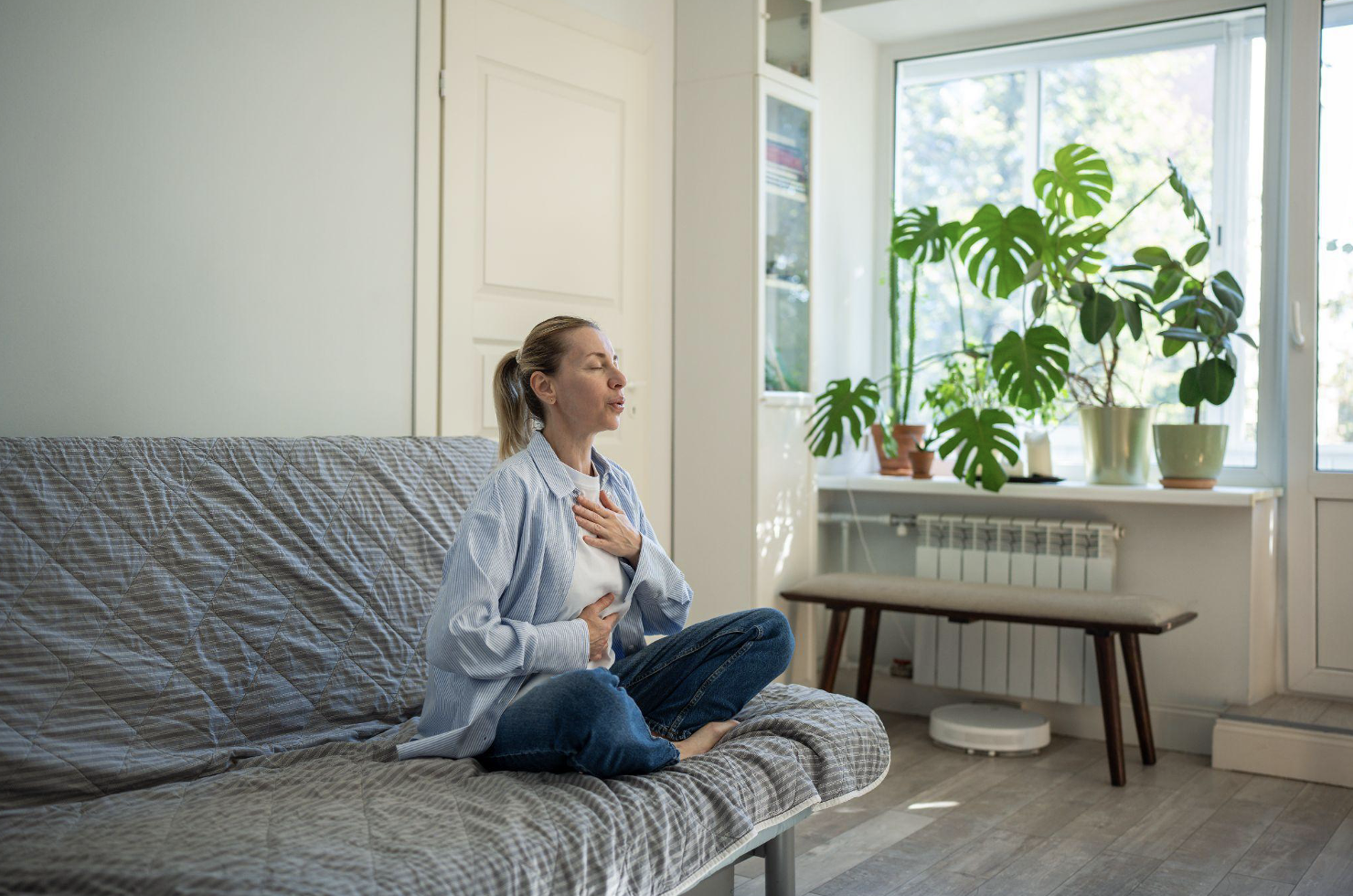
Take some deep breaths. Breathing exercises like belly breathing, or diaphragmatic breathing, can help you calm down. Studies show they can help regulate your body's stress response.
Engage in sensory-based activities. Listen to calming music, hold a comforting object, like a squeeze ball, or sit in a calming place outside and soak in the sights of nature. Soothing self-touch can also help.
Practice a self-soothing technique that works for you. Experiment with the techniques listed below to see what feels most supportive for you.
Self-soothing techniques
The following calming strategies are recommended by Hinge Health physical therapists to help you self-soothe:
Aromatherapy or essential oils. "These use your sense of smell, which is fantastic because they help to distract your brain from whatever is causing stress or anxiety," says Dr. Govani. Lavender in particular has been shown to help relieve stress.
Baths or showers. These can help relax the body and support stress relief. You can also try an Epsom salt bath, which may help support a sense of calm and well-being. Pour about a cup of Epsom salt into your bath as it fills with warm water. You can try cold water, too. "Some people find that running their hands under cold water, or taking a cold shower helps to reduce their anxiety," notes Dr. Govani.
Meditative walks. Gentle movement like walking can be soothing because it can ground you in the present, says Dr. Govani. When you walk, focus on the sensation of taking each step and the rhythm of your breathing. It will help you get into a more meditative, calming state.
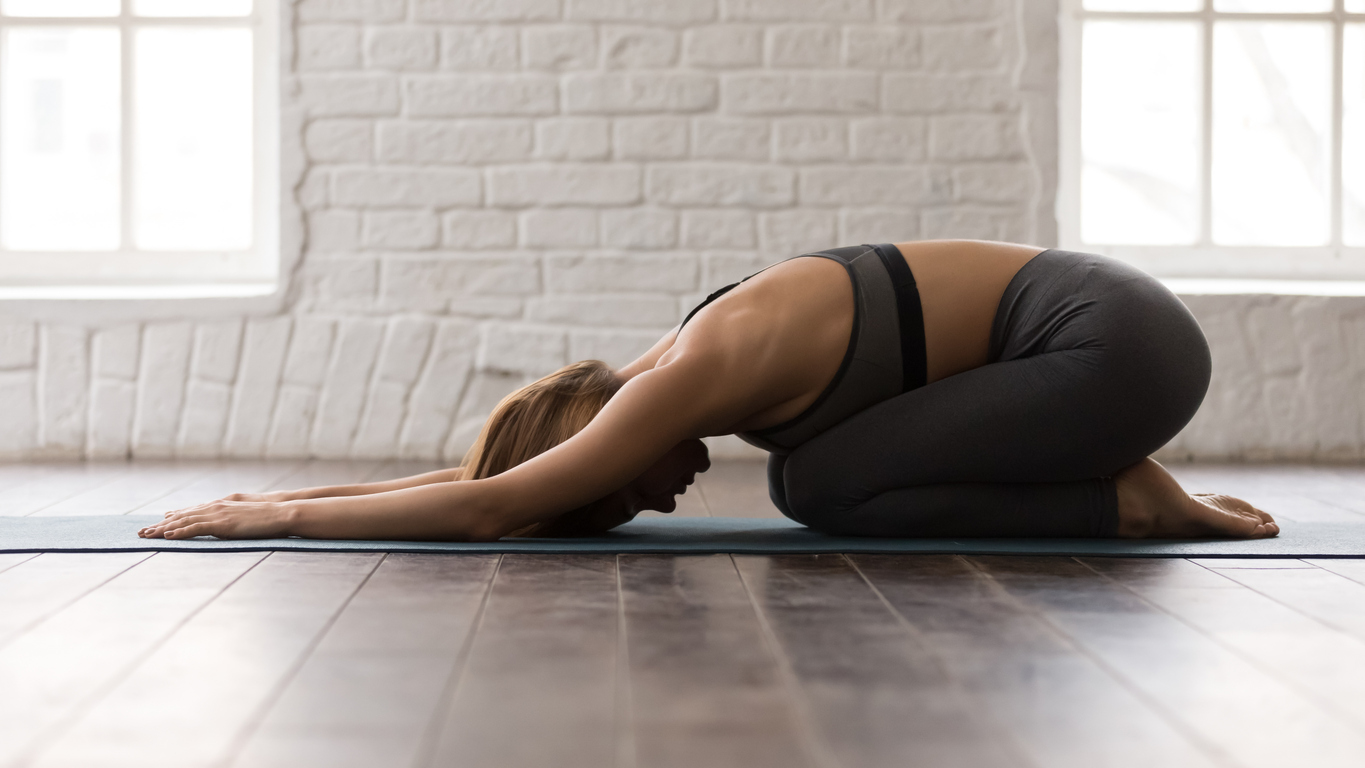
Yoga poses. "They are a great way to get your body to move, and they also help shift your focus and bring you back to the present moment," says Dr. Govani. "It will help you stay grounded, because it encourages you to stay in touch with your body." Research shows that yoga is particularly effective in times of significant stress.
Crafting. Whether it's coloring, making a bracelet, creating origami, or knitting, crafting can help boost mindfulness and be a powerful way to self-soothe. People who regularly craft report a greater sense of well-being.
Comfort objects. These can often help you self-soothe because they allow you to use your sense of touch, notes Dr. Govani. "It should be something that feels pleasing to you, like a plush stuffed animal, or a soft blanket," she says. Weighted blankets are often helpful, because they apply gentle, firm pressure across your entire body, which helps lower stress hormones and make you feel more relaxed.
Calming sounds. It can be soft music, or the sounds of nature like birds singing, or a waterfall. These have all been linked to a lower heart rate, increased relaxation, and lower stress levels.
Progressive muscle relaxation. Progressive muscle relaxation involves tensing a muscle group on purpose, then releasing it — so you learn the difference between tension and relaxation in your body.
Visualization exercises. Visualization exercises have you use your imagination to relax your body: for example, you may close your eyes and visualize a peaceful spot such as the beach.
Mindfulness or meditation practices. It can be as simple as setting an alarm on your phone to remind you to check in with yourself and do some breathing exercises.
Did you know?
Physical therapy (PT) is for more than just recovering from surgery or injury. It’s one of the top treatments for joint and muscle pain. It helps build strength, improve mobility, and reduce pain. And it doesn't always need to be in person.
Hinge Health members can conveniently access customized plans or chat with their care team at home or on the go — and experience an average 68% reduction in pain* within the first 12 weeks of their program. Learn more*.
PT tip: Try a variety of methods
"Self-soothing looks different for everyone — what works for someone else may not work for you," says Dr. Govani. It's a good idea to try a little bit of everything, whether it's aromatherapy, gentle movement, or an activity that uses your hands, like crafting, to find something that speaks to you.
How Hinge Health can help you
If you have joint or muscle pain that makes it hard to move, you can get the relief you’ve been looking for with Hinge Health’s online exercise therapy program.
The best part: You don’t have to leave your home because our program is digital. That means you can easily get the care you need through our app when and where it works for you.
Through our program, you’ll have access to therapeutic exercises and stretches for your condition. Additionally, you’ll have a personal care team to guide, support, and tailor our program to you.
See if you qualify for Hinge Health and confirm free coverage through your employer or benefit plan here.
This article and its contents are provided for educational and informational purposes only and do not constitute medical advice or professional services specific to you or your medical condition.
Looking for pain relief? Check if your employer or health plan covers our program.
Join more than 1.2 million members and over 2,800 companies that trust Hinge Health to get relief.
Related articles
Vaginismus makes penetration painful, but relief is possible. Try these gentle exercises to relax your pelvic floor and build comfort and confidence.
Read more
Discover how performing grounding techniques for anxiety, such as soothing movements and mental exercises, can help restore a sense of calm.
Read more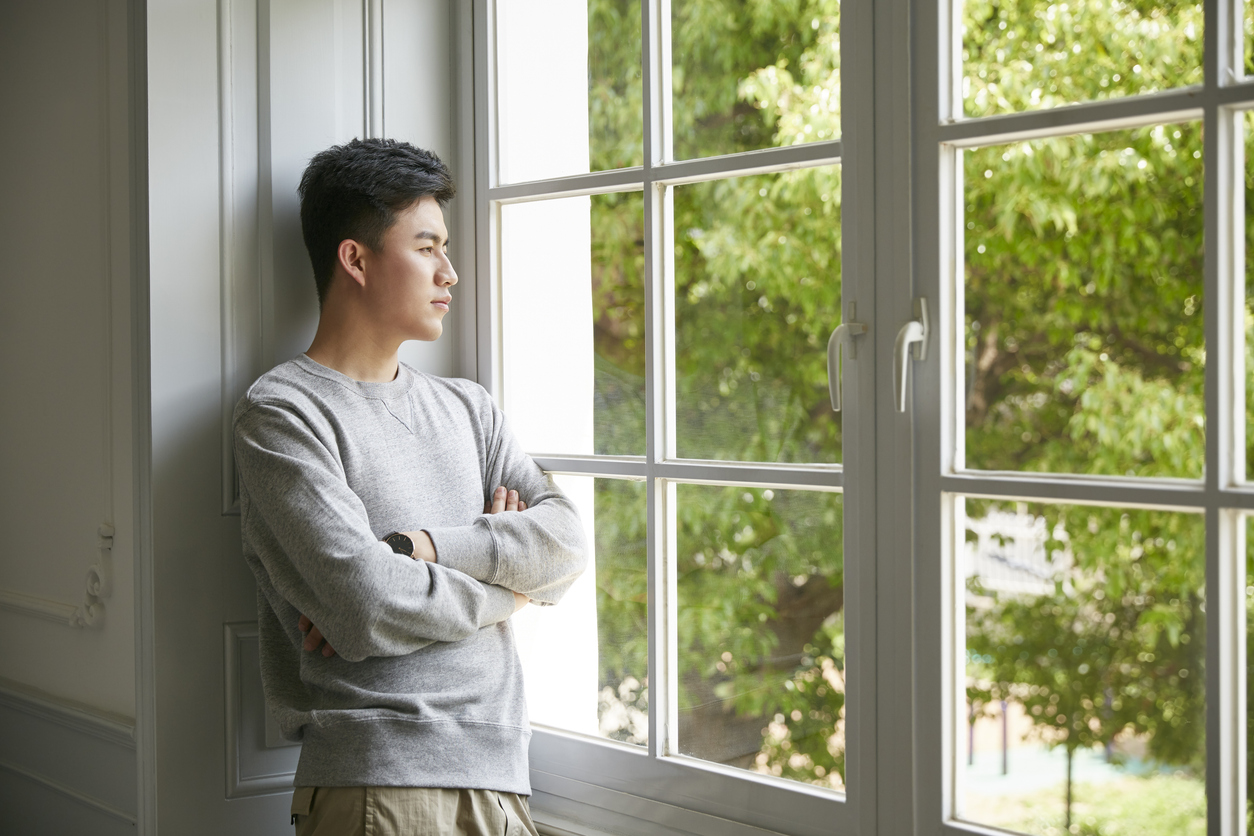
Learn how to regulate your nervous system with approachable strategies like mindful movement and reassuring mantras, so you feel calm and confident.
Read more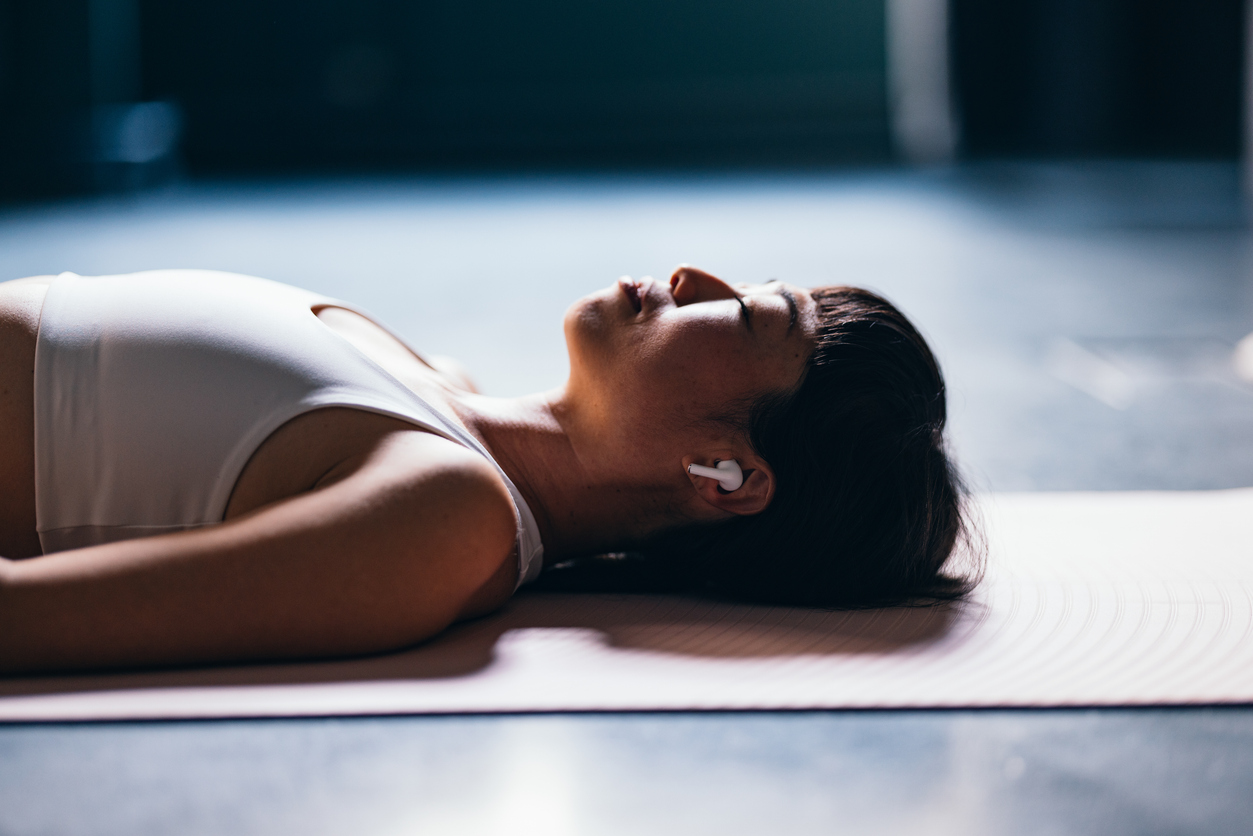
Discover effective relaxation techniques to ease stress, calm your mind, and reduce tension in your body anytime, anywhere.
Read more
Learn how to be more mindful and manage stress and pain effectively. Discover mindfulness techniques to improve your mental and physical well-being.
Read moreReferences
- 1Dreisoerner, A., Junker, N. M., Schlotz, W., Heimrich, J., Bloemeke, S., Ditzen, B., & van Dick, R. (2021). Self-soothing touch and being hugged reduce cortisol responses to stress: A randomized controlled trial on stress, physical touch, and social identity. Comprehensive Psychoneuroendocrinology, 8, 100091. doi:10.1016/j.cpnec.2021.100091
- 2Fincham, G. W., Strauss, C., Montero-Marin, J., & Cavanagh, K. (2023). Effect of breathwork on stress and mental health: A meta-analysis of randomised-controlled trials. Scientific Reports, 13, 432. doi:10.1038/s41598-022-27247-y
- 3Ghavami, T., Kazeminia, M., & Rajati, F. (2022). The effect of lavender on stress in individuals: A systematic review and meta-analysis. Complementary Therapies in Medicine, 68, 102832. doi:10.1016/j.ctim.2022.102832
- 4Sahni, P. S., Singh, K., Sharma, N., & Garg, R. (2021). Yoga an effective strategy for self-management of stress-related problems and wellbeing during COVID19 lockdown: A cross-sectional study. PLoS ONE, 16(2), e0245214. doi:10.1371/journal.pone.0245214
- 5Song, I., Baek, K., Kim, C., & Song, C. (2023). Effects of nature sounds on the attention and physiological and psychological relaxation. Urban Forestry & Urban Greening, 86, 127987. doi:10.1016/j.ufug.2023.127987
- 6Wong, S., Fabiano, N., Luu, B., Seo, C., Gupta, A., Kim, H. K., Shorr, R., Jones, B. D. M., Mak, M. S. B., & Husain, M. I. (2024). The effect of weighted blankets on sleep quality and mental health symptoms in people with psychiatric disorders in inpatient and outpatient settings: A systematic review and meta-analysis. Journal of Psychiatric Research, 179, 286–294. doi:10.1016/j.jpsychires.2024.09.027
- 7Hilton, L., Hempel, S., Ewing, B. A., Apaydin, E., Xenakis, L., Newberry, S., Colaiaco, B., Maher, A. R., Shanman, R. M., Sorbero, M. E., & Maglione, M. A. (2017). Mindfulness meditation for chronic pain: Systematic review and meta-analysis. Annals of Behavioral Medicine, 51(2), 199–213. doi:10.1007/s12160-016-9844-2