Reviewed by our clinical and medical experts

Over 1 Million members trust Hinge Health, a digital clinic that provides access to virtual physical therapy, to address their joint and muscle pain.
Reduction in member pain
of licensed physical therapists and health coaches
Average star rating of the Hinge Health mobile app
Bailey JF, et al. Digital Care for Chronic Musculoskeletal Pain: 10,000 Participant Longitudinal Cohort Study. J Med Internet Res 2020;22(5):e18250.
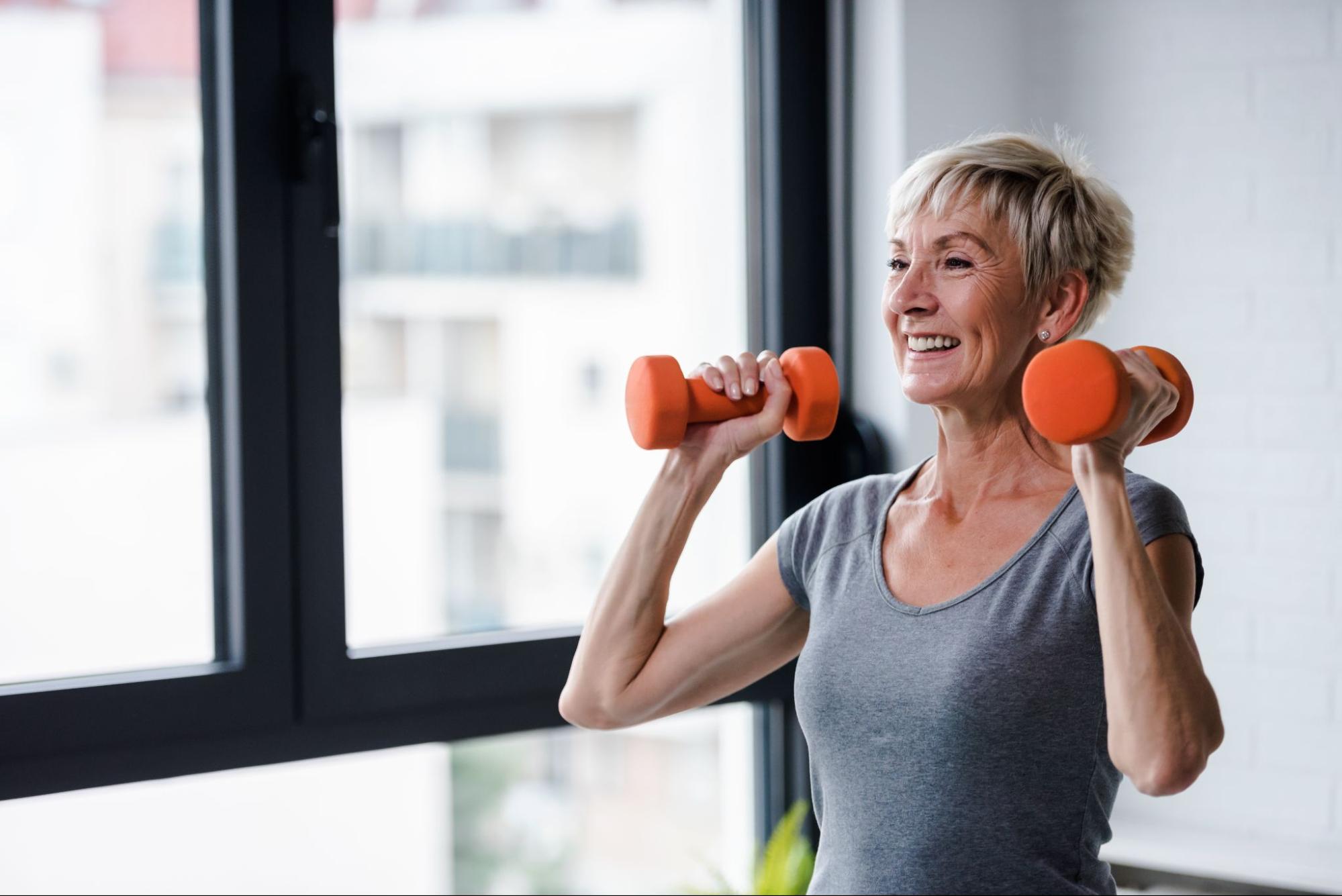
Muscle mass is one of the strongest predictors of longevity. Learn why it matters as you age — and how to build and maintain it with targeted exercises.
Available at $0 cost to many members
Do you want to increase your chances of living a longer, healthier life? Make building and maintaining muscle strength a priority.
“Studies show there’s a connection between muscle mass and longevity,” says Andrea Bettini, PT, DPT, a physical therapist at Hinge Health. Research has linked muscle mass and strength with longevity and healthspan, or the years you spend in good health.
Your muscles do more than power your workouts. They help you climb stairs, carry groceries, pick up children, get out of a chair with ease, and enjoy activities like hiking, dancing, or playing pickleball.
“Increasing your muscle mass increases your strength and ability to do daily activities, which can lead to a healthier and more independent life,” says Dr. Bettini.
While muscle mass and strength tend to decline with age, you can take steps to slow that process. Regular movement, strength training, and balanced nutrition can help you maintain muscle and build strength at any age.
Here, learn how muscle mass relates to longevity, how your muscles change over time, and what you can do to stay strong, including targeted exercises recommended by Hinge Health physical therapists.
Fully covered pain relief
Find relief from muscle and joint pain.
Why muscle mass matters for longevity
Muscles also play an important role in your overall health. Skeletal muscle helps your body use and store glucose (blood sugar) for energy, supports metabolic health, and works with your bones to keep you moving comfortably.
Maintaining muscle strength as you age may also help:
Support mobility and independence. Strong muscles make everyday activities easier and can help you maintain your ability to move confidently.
Improve balance and reduce fall risk. Strengthening your legs and core can help you stay steady and respond to changes in your balance.
Support bone health. Strength training places healthy stress on your bones, helping maintain bone strength as you age.
Support metabolic health. Muscle plays an important role in blood sugar regulation, which can help support long-term health.
Promote overall well-being. Staying strong can make it easier to remain physically active and participate in activities that benefit your physical and mental health.
Muscle strength can also offer clues about your overall health as you age. For example, research suggests that grip strength, or how firmly you can squeeze something with your hand, may help predict how long you live, sometimes offering more insight than body mass index (BMI) alone.
That doesn’t mean grip strength determines how long you’ll live—it’s one of several indicators that can offer insight into overall health and physical function.
How muscle changes as you age
Muscle mass and strength generally increase through early adulthood before gradually declining later in life. Some research suggests that muscle mass may decrease by approximately three to eight percent per decade beginning around age 30, with losses often accelerating after age 60.
But everyone’s experience is different. How much muscle you maintain depends on several factors, including your activity level, nutrition, health conditions, and genetics.
More significant losses of muscle strength and function can contribute to sarcopenia, a muscle condition that becomes more common with age. Sarcopenia isn’t simply another name for normal aging, and it isn’t inevitable.
“Strength training can counteract some of this loss,” says Dr. Bettini.
How movement can help you maintain muscle mass
“Movement activates and engages many muscles, which slows the loss of muscle mass,” says Dr. Bettini. “Any movement is better than no movement. Walking is better than inactivity. Going up and down stairs is better than not doing anything.”
Everyday activities like walking, gardening, and climbing stairs help keep you moving and support your overall health. But when it comes to building and maintaining muscle, resistance training is especially important.
Also called strength training, resistance training involves challenging your muscles against a force. That might mean lifting dumbbells, pulling on resistance bands, using exercise machines, or performing bodyweight exercises like squats and push-ups.
As your muscles adapt to these challenges, they become stronger. Over time, resistance training can also help increase your muscle mass.
You don’t need to lift heavy weights or spend hours at the gym to benefit, either. Bodyweight exercises, using resistance bands, and even workouts with lighter weights can all be effective, especially when you’re just starting. The key is to challenge your muscles at a level that’s appropriate for you and gradually increase the difficulty as you get stronger.
Exercises to build muscle mass for seniors
This modified push-up strengthens your chest, shoulders, triceps (the muscles along the backs of your upper arms), and core muscles. Building strength in these areas can help with everyday pushing and lifting activities. As you get stronger, you can gradually work toward more challenging push-up variations.
Want expert care?
Check if you're covered for our free programTogether, these exercises provide a total-body workout that will help you maintain—or even regain—muscle mass at any age. “Most of the exercises are whole-body movements, so they include a lot of muscle groups,” says Dr. Bettini. Push-ups on knees, shoulder rows, and standing banded bilateral overhead presses target the upper body. Squats, mini side lunges, and banded bridges work the lower body. Side plank on knees, along with push-ups and bridges, trains your core muscles.
Start with variations that feel manageable and gradually increase the challenge as you get stronger. A physical therapist can help you modify exercises based on your fitness level, health conditions, and goals.
The information contained in these videos is intended to be used for educational purposes only and does not constitute medical advice or treatment for any specific condition. Hinge Health is not your healthcare provider and is not responsible for any injury sustained or exacerbated by your use of or participation in these exercises. Please consult with your healthcare provider with any questions you may have about your medical condition or treatment.
Did you know?
Physical therapy (PT) is for more than just recovering from surgery or injury. It’s one of the top treatments for joint and muscle pain. It helps build strength, improve mobility, and reduce pain. And it doesn't always need to be in person.
Hinge Health members can conveniently access customized plans or chat with their care team at home or on the go — and experience an average 68% reduction in pain* within the first 12 weeks of their program. Learn more*.
Tips to build and maintain muscle mass as you age
Building muscle after age 50 requires a multi-pronged approach. “Strength training is the foundation,” says Dr. Bettini. “But if you’re not eating enough and getting enough sleep, you can do all the strength training you want, but your body won’t be in a position to build strength.” Consider these tips to build muscle and strength.
Strength train at least twice a week. The Physical Activity Guidelines for Americans recommend muscle-strengthening activities on at least two days per week. Aim to work your major muscle groups, including your legs, hips, back, chest, shoulders, arms, and core.
Use whatever resistance works for you. You don’t need heavy weights or a gym membership to get stronger. Bodyweight movements, resistance bands, dumbbells, and exercise machines can all help you build strength. Choose a level of resistance that feels challenging but manageable.
Start gradually. If you’re new to strength training, try one set of eight to 10 repetitions of each exercise, then gradually work toward additional sets as you feel ready. Starting with a manageable routine can help you build confidence and consistency.
Keep challenging your muscles. As exercises become easier, gradually increase the resistance, repetitions, or sets. This is called progressive overload, and it helps your muscles continue adapting. “If you give your body the same stimulus over time—the same exercise, weight, or number of repetitions—it becomes efficient at doing it,” says Dr. Bettini. “Instead, you want progressive overload, so your body continues adapting to new stimuli by becoming stronger and building more muscle mass.”
Eat enough to support your activity. Your body needs adequate energy and nutrients to maintain muscle and recover from exercise. “Make sure you’re drinking enough water and eating enough food, including protein, fruits, and vegetables with every meal,” says Dr. Bettini. Rather than focusing on a universal calorie target, aim for a balanced eating pattern that supports your individual needs and activity level. But as a reference, the U.S. Dietary Guidelines recommend 1,600 to 2,200 calories daily for women and 2,000 to 3,000 for men.
Prioritize protein. Protein provides the building blocks your body needs to repair and maintain muscle. The National Resource Center on Nutrition & Aging suggests that generally healthy older adults should aim for approximately 1.0 to 1.2 grams of protein per kilogram of body weight per day, although individual needs vary. For someone who weighs 150 pounds, that’s roughly 68 to 82 grams daily. Include protein-rich foods such as fish, poultry, eggs, dairy, beans, lentils, or tofu throughout the day. Note: If you have kidney disease or another condition that affects your dietary needs, ask your healthcare provider about an appropriate target.
Make sleep a priority. Sleep supports recovery and overall health. Not getting enough quality sleep each night can interfere with muscle recovery and accelerate muscle loss, according to a study in BMC Public Health. Most adults should aim for seven to nine hours per night, though everyone is different. Maintaining a consistent sleep schedule and following good sleep hygiene habits can help you feel more rested and ready for activity.
Stay active between workouts. Strength training is important, but so is everyday movement. Walking, gardening, taking the stairs, dancing, and doing household chores all help you stay active and support your overall health.
Find ways to manage stress. Chronic stress can affect sleep, energy, and your ability to maintain healthy routines. Relaxation techniques like deep breathing, stretching, meditation, and regular movement can help you manage stress and support your well-being.
Is it too late to build muscle after 60?
“No, you can build muscle at any age,” says Dr. Bettini.
Research has shown that older adults, including people in their 80s and 90s, can make meaningful strength gains with resistance training. In a landmark studypublishedin JAMA, adults in their late 80s and 90s significantly improved their strength after eight weeks of high-intensity resistance training. The researchers reported an average strength increase of 174%, along with improvements in walking speed.
These results don’t mean everyone should expect the same gains. This older study was small and used a supervised training program, but it demonstrates that muscles can respond to strength training even at very advanced ages.
And you don’t have to make dramatic gains to notice a difference. Getting stronger may make it easier to climb stairs, carry groceries, get up from a chair, and continue doing activities you enjoy.
PT tip: Ask for guidance when you need it
If you have arthritis, are going through menopause, or have another health condition that makes exercise feel challenging, a physical therapist can help you find a routine that works for you.
“We can help you find effective exercises, modify movements, and adjust the dosage so you feel more comfortable while still building strength,” says Dr. Bettini.
You don’t have to wait until you’re pain-free or already fit to start strength training. A physical therapist can help you begin at a comfortable level and gradually build your strength and confidence.
You can work with a physical therapist in person or use a program like Hinge Health, where you may access a PT via telehealth/video visit.
How Hinge Health can help you
If you have joint or muscle pain that makes it hard to move, you can get the relief you’ve been looking for with Hinge Health’s online exercise therapy program.
The best part: You don’t have to leave your home because our program is digital. That means you can easily get the care you need through our app when and where it works for you.
Through our program, you’ll have access to therapeutic exercises and stretches for your condition. Additionally, you’ll have a personal care team to guide, support, and tailor our program to you.
See if you qualify for Hinge Health and confirm free coverage through your employer or benefit plan here.
This article and its contents are provided for educational and informational purposes only and do not constitute medical advice or professional services specific to you or your medical condition.
Looking for pain relief? Check if your employer or health plan covers our program.
Join more than 1.2 million members and over 2,800 companies that trust Hinge Health to get relief.
Related articles

Cold weather can worsen knee pain. Learn why it happens and get science-backed strategies to keep moving all winter.
Read more
Learn what piriformis syndrome is, how it differs from sciatica, and how targeted exercises and simple strategies can ease discomfort and improve mobility.
Read more
Try these physical therapist-backed rectus femoris exercises to rebuild leg strength after injury and support daily activities like climbing stairs.
Read more
Wondering if you have a rotator cuff strain or tear? Learn the key differences, symptoms, and how physical therapy exercises can help you recover.
Read more
Discover how you can alleviate discomfort in your elbow joint from weightlifting with arm-strengthening exercises.
Read more
Learn about postpartum pooping and discover expert tips from physical therapists to navigate this common issue after giving birth.
Read moreReferences
- 1Bohannon, R. W. (2019). Grip strength: An indispensable biomarker for older adults. Clinical Interventions in Aging, 14(1), 1681–1691. doi:10.2147/CIA.S194543
- 2LaMonte, M. J., Hyde, E. T., Nguyen, S., Castro, E., Seguin-Fowler, R. A., Eaton, C. B., Miller, C. R., Di, C., Stefanick, M. L., & LaCroix, A. Z. (2026). Muscular strength and mortality in women aged 63 to 99 years. JAMA Netw Open, 9(2), e2559367. doi:10.1001/jamanetworkopen.2025.59367
- 3D’Onofrio, G., Kirschner, J., Prather, H., Goldman, D., & Rozanski, A. (2023). Musculoskeletal exercise: Its role in promoting health and longevity. Progress in Cardiovascular Diseases, 77, 25–36. doi:10.1016/j.pcad.2023.02.006
- 4Fiatarone, M. A., Marks, E. C., Ryan, N. D., Meredith, C. N., Lipsitz, L. A., & Evans, W. J. (1990). High-intensity strength training in nonagenarians: Effects on skeletal muscle. JAMA, 263(22), 3029–3034. doi:10.1001/jama.1990.03440220053029
- 5Masfiah, S., Kurnialandi, A., Johannes Jacobus, M., & Maier, A. B. (2025). Definitions of healthspan: A systematic review. Ageing Research Reviews, 111, 102806. doi:10.1016/j.arr.2025.102806
- 6U.S. Department of Health and Human Services. (2018). Physical activity guidelines for americans 2nd edition. https://odphp.health.gov/sites/default/files/2019-09/Physical_Activity_Guidelines_2nd_edition.pdf
- 7USDA. (2020b). Dietary guidelines for americans 2020-2025. In Dietary Guidelines for Americans. USDA. https://www.dietaryguidelines.gov/sites/default/files/2021-03/Dietary_Guidelines_for_Americans-2020-2025.pdf