
Reviewed by our clinical and medical experts


Over 1 Million members trust Hinge Health, a digital clinic that provides access to virtual physical therapy, to address their joint and muscle pain.
Reduction in member pain
of licensed physical therapists and health coaches
Average star rating of the Hinge Health mobile app
Bailey JF, et al. Digital Care for Chronic Musculoskeletal Pain: 10,000 Participant Longitudinal Cohort Study. J Med Internet Res 2020;22(5):e18250.
Learn which core exercises are safe during pregnancy and which to avoid. PT-approved moves to build strength, support your baby, and prepare for birth.
Available at $0 cost to many members
If you’re pregnant or planning to be, you may be wondering how exercise fits into your routine. Every pregnancy is different, but staying active — including strengthening your core muscles — can help support your changing body during pregnancy and as you prepare for postpartum recovery.
Pregnancy brings plenty of physical changes, and exercises that once felt comfortable may start to feel different as your belly grows. You don’t necessarily have to stop doing core exercises during pregnancy, but you may need to adjust certain movements to make them more comfortable.
Here, learn why core strength matters during pregnancy, which exercises may be safe and comfortable, when to make modifications, and how exercises recommended by Hinge Health physical therapists can help you keep moving.
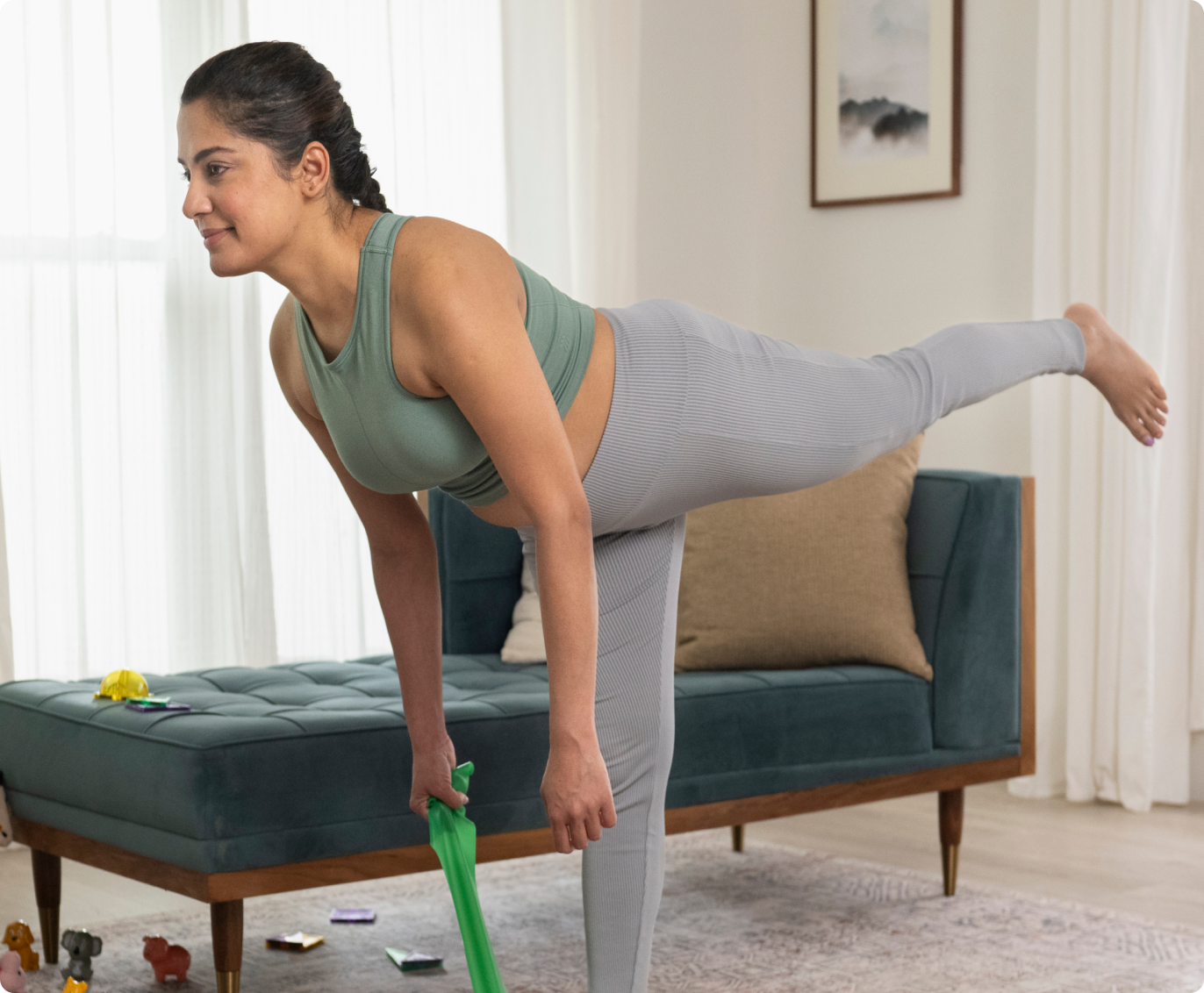
Fully Covered Pelvic Care
Find relief from pelvic pain, leakage, muscle weakness, & more.
Why core strength matters during pregnancy
Your core includes more than your abdominal muscles. It also involves muscles in your back, hips, diaphragm, and pelvic floor. Together, these muscles provide stability and support as your body adapts to the physical demands of pregnancy, childbirth, and postpartum recovery.
As your belly grows, changes in your posture, balance, and movement patterns are completely normal. Maintaining your core strength can help you adjust to these changes, manage everyday activities like walking and lifting more comfortably, and stay active throughout pregnancy. Some separation of your abdominal muscles, known as diastasis recti, is also a normal part of pregnancy and doesn’t mean your core is weak.
“Core strength is always important, but it’s especially important during this time to put less strain on your supporting muscles and reduce common pain symptoms,” says Morgan Dunn, PT, DPT, a Hinge Health physical therapist.
Your core also plays a role during labor and delivery, when your abdominal muscles, diaphragm, and pelvic floor work together to help you manage pressure and coordinate pushing. Building strength and learning to relax these muscles can support your body’s ability to meet these demands.
Your pelvic floor muscles are another important part of your core. Pelvic floor training during pregnancy may also help prepare these muscles for childbirth by improving strength, coordination, and the ability to relax.
Research suggests it may reduce the risk of severe perineal tearing during delivery and urinary leakage during pregnancy and after childbirth. Once you’ve given birth, gradually rebuilding core strength can help you regain comfort and confidence with everyday movements as your body recovers.
A pelvic health physical therapist can help you find exercises that support your needs at every stage.
Pregnancy safe core exercises
This deep belly breathing exercise helps coordinate your core and pelvic floor muscles while promoting relaxation and easing tension during pregnancy. It can also be a helpful tool during labor, helping you manage contractions and coordinate breathing and pelvic floor relaxation during pushing. “This breathing technique can also help reduce pain and stress symptoms,” says Dr. Dunn.
Want expert care?
Check if you're covered for our free programTogether, these exercises offer different ways to strengthen and move your core during pregnancy. You don’t need to do all of them in one session or perform them at a particular intensity to benefit. Improving your core stability and coordination with your pelvic floor muscles can help support your growing belly, protect your spine, improve your balance as your center of gravity changes, and prepare your body for labor, delivery, and postpartum recovery. Remember, you can always adjust movements as your body changes.
The information contained in these videos is intended to be used for educational purposes only and does not constitute medical advice or treatment for any specific condition. Hinge Health is not your healthcare provider and is not responsible for any injury sustained or exacerbated by your use of or participation in these exercises. Please consult with your healthcare provider with any questions you may have about your medical condition or treatment.
Did you know?
Pelvic floor physical therapy is more than just kegel exercises. Various exercises tailored to your symptoms and needs are key to getting relief. Pelvic floor PT can relieve many different pelvic issues, such as pelvic pain, painful sex, and urinary incontinence.
Members of the Hinge Health pelvic health program experience an average 67% reduction in pelvic pain and 54% reduction in urinary incontinence within the first 12 weeks. Learn more*.
Core exercises to modify or avoid during pregnancy
Many familiar abdominal exercises can still be part of a pregnancy exercise routine. But as your body changes, you may find that some movements need adjusting, especially those that increase intra-abdominal pressure or require positions that aren’t comfortable or safe during pregnancy. Here are a few exercises that may benefit from modifications:
Traditional crunches and sit-ups. These exercises aren’t automatically harmful or proven to cause diastasis recti, however, lying on your back and lifting your upper body can increase downward pressure, which can be especially problematic after the first trimester. “The pressure is trying to escape somewhere, so if it escapes through the abdomen, it can exacerbate a separation,” says Dr. Dunn.
Full planks. As your belly grows, it may be difficult to do a full plank. Listen to your body about when to modify this core-strengthening move to your hands and knees or even leaning up against a wall or table.
Exercises lying flat on your back. After the first trimester, flat-lying exercises can compress the vena cava, two major blood vessels, making you feel dizzy, nauseated, or lightheaded. “Instead of lying on your back flat, use incline or side-lying positions,” says Dr. Dunn.
Deep twisting movements. Gentle rotations are a normal part of everyday movements, like getting in and out of a car, and aren’t inherently dangerous during pregnancy. However, forceful or uncomfortable twisting may become harder as your belly grows. Adjust your range of motion or choose another exercise if needed.
High-impact jumping or bouncing. Some people can continue higher-impact activities during uncomplicated pregnancies, particularly if they were active before becoming pregnant. Others may experience pelvic discomfort, urinary leakage, or difficulty with balance. Lower-impact options may feel better as pregnancy progresses.
How to know if a core exercise is safe for you
Not sure whether a particular exercise belongs in your pregnancy routine? These tips from Hinge Health physical therapists can help you decide when to continue, adjust, or ask for guidance.
Pay attention to abdominal doming or coning. You may notice a ridge or bulge along the middle of your belly during certain movements. This can happen as your abdominal wall stretches during pregnancy. It doesn’t necessarily mean you’re causing damage or worsening diastasis recti. If the bulging is pronounced, uncomfortable, or difficult to manage, try reducing the intensity or changing positions. A pelvic health physical therapist can help you assess it.
Keep breathing. Try to breathe naturally during exercise rather than holding your breath through strenuous efforts. If you find yourself straining or struggling to breathe, reduce the intensity or take a break.
Notice pelvic floor symptoms. Urinary leakage, pelvic heaviness, or pressure may be signs that an exercise needs adjusting. These symptoms are common, but you don’t have to simply accept them as part of pregnancy. A pelvic health physical therapist can help you address these issues through movement modifications, breathing techniques, and targeted exercises. “Exhaling on exertion helps you engage your core from the bottom up, which helps decrease pressure on your pelvic floor,” says Dr. Dunn.
Choose movements that feel comfortable and controlled. If you’re feeling unsteady, try a supported variation or reduce the intensity. Pregnancy-related changes in balance may make some exercises more challenging.
Pay attention to how you feel. You know when something feels different. If a movement causes pain, dizziness, or other concerning symptoms, stop and contact a member of your care team.
These principles apply throughout pregnancy, but your exercise needs may change from one trimester to the next. Remember, your physical therapist (PT) is a great resource for what’s right for you at any given time during pregnancy.
Tips to maintain core strength throughout pregnancy
You don’t need an intense abdominal workout to maintain core strength during pregnancy. Small, consistent efforts can help you stay active and feel more confident as your body changes. Here are some simple-but-effective ways to keep your core strong through pregnancy.
Exercise regularly, at a comfortable intensity. Consistent strengthening can help you maintain muscle strength and function. You can gradually adjust the challenge based on how you’re feeling, rather than pushing through pain or exhaustion.
Include pelvic floor training. Your pelvic floor is part of your core, and pelvic floor muscle exercises can help reduce urinary leakage during pregnancy and after childbirth. Just as importantly, these muscles need to relax as well as contract. A pelvic health physical therapist can help you find an approach that works for you.
Focus on everyday movements. Exercises that involve standing, reaching, lifting, and carrying can help you maintain core strength for daily activities, such as carrying groceries, doing laundry, or picking up a child.
Connect with your breath. Try to exhale during the exertion part of a core exercise. This, Dr. Dunn says, helps manage pressure in your abdomen to reduce the risk of diastasis recti.
Breathe comfortably during exercise. Exhaling during the more challenging part of a movement may help you avoid unnecessary breath-holding and straining. But there’s no single breathing pattern you have to follow to protect your abdominal muscles.
Adjust as pregnancy progresses. An exercise that felt easy in your first trimester may become uncomfortable later on. Try changing your position, reducing the range of motion, or choosing a different variation.
Remember that your core is still working even when you’re not doing a dedicated core workout. Walking, getting out of a chair, and other everyday movements all involve these muscles.
When to seek physical therapy support
It’s never too soon or too late to connect with a physical therapist during pregnancy. Not sure if PT is for you? It may be helpful to work with a physical therapist if you:
Experience persistent back, hip, or pelvic pain
Notice urinary leakage, pelvic heaviness, or pressure
Have concerns about abdominal doming or diastasis recti
Have a history of pelvic floor symptoms
Feel unsure how to modify exercises as your pregnancy progresses
Want personalized guidance for staying active during pregnancy or returning to exercise postpartum
Physical therapy can help you find exercises that feel comfortable and support your goals, whether that’s continuing your usual workouts or making everyday activities easier.
PT tip: Your core works all day, not just during exercise
Your core muscles support you throughout the day, whether you're getting out of bed, lifting a child, or carrying groceries. As your body changes during pregnancy, practicing coordinated breathing and gentle core engagement during these movements can help you feel more stable and comfortable. You don’t need to keep your abs tightened all day. Instead, focus on breathing naturally and engaging your core as needed. “These daily moments are opportunities to practice good core engagement and protect your ab muscles,” says Dr. Dunn.
How Hinge Health can help you
If you have pelvic pain, bladder, bowel, or other pelvic symptoms that are affecting your quality of life, you can get the relief you've been looking for with Hinge Health’s online exercise therapy program.
The best part: You don’t have to leave your home because our program is digital. That means you can easily get the care you need through our app, when and where it works for you. Through our program, you’ll have access to therapeutic exercises and stretches for your condition. Additionally, you’ll have a personal care team to guide, support, and tailor our program to you.
See if you qualify for Hinge Health and confirm free coverage through your employer or benefit plan here.
This article and its contents are provided for educational and informational purposes only and do not constitute medical advice or professional services specific to you or your medical condition.
Looking for pain relief? Check if your employer or health plan covers our program.
Join more than 1.2 million members and over 2,800 companies that trust Hinge Health to get relief.
Related articles

Joint pain before your period? Learn how hormones play a role and get relief tips, including exercises from Hinge Health physical therapists.
Read more
Discover how hip flexor exercises can relieve hip pain. Improve your hip strength with tips from Hinge Health physical therapists.
Read more
Discover the benefits of static stretching for flexibility and pain relief. Learn effective techniques and get physical therapist-recommended stretches.
Read more
Learn how physical therapy helps treat MCL tears and get recommended knee exercises from physical therapists.
Read more
Learn how to build therapeutic alliance and why it’s key to delivering personalized physical therapy in a digital musculoskeletal (MSK) clinic.
Read moreReferences
- 1ACOG. (2020). Physical Activity and Exercise During Pregnancy and the Postpartum Period. Acog.org. https://www.acog.org/clinical/clinical-guidance/committee-opinion/articles/2020/04/physical-activity-and-exercise-during-pregnancy-and-the-postpartum-period
- 2Cooper, D. B., & Yang, L. (2023, April 17). Pregnancy and exercise. In StatPearls. StatPearls Publishing. https://www.ncbi.nlm.nih.gov/books/NBK430821/
- 3Çiçek, S., Çeliker Tosun, Ö., Parlas, M., Bilgiç, D., Yavuz, O., Kurt, S., Başer Seçer, M., & Tosun, G. (2023). Is the function of the core muscles affected during pregnancy?. International urogynecology journal, 34(11), 2725–2736. doi:10.1007/s00192-023-05597-z
- 4Du, Y., Huang, M., Wang, S., Yang, L., Lin, Y., Yu, W., Pan, Z., & Ye, Z. (2025). Diastasis recti abdominis: A comprehensive review. Hernia: the journal of hernias and abdominal wall surgery, 29(1), 222. doi:10.1007/s10029-025-03417-5
- 5Zhang, D., Bo, K., Montejo, R., Sánchez‐Polán, M., Silva‐José, C., Palacio, M., & Barakat, R. (2023). Influence of pelvic floor muscle training alone or as part of a general physical activity program during pregnancy on urinary incontinence, episiotomy and third‐ or fourth‐degree perineal tear: Systematic review and meta‐analysis of randomized clinical trials. Acta Obstetricia et Gynecologica Scandinavica, 103(6). doi:10.1111/aogs.14744
- 6Woodley, S. J., Lawrenson, P., Boyle, R., Cody, J. D, Mørkved, S., Kernohan, A., & Hay-Smith, E. J. C. (2020). Pelvic floor muscle training for preventing and treating urinary and faecal incontinence in antenatal and postnatal women. Cochrane Database of Systematic Reviews, 5(5). doi:10.1002/14651858.cd007471.pub4