
Over 1 Million members trust Hinge Health, a digital clinic that provides access to virtual physical therapy, to address their joint and muscle pain.
Reduction in member pain
of licensed physical therapists and health coaches
Average star rating of the Hinge Health mobile app
Bailey JF, et al. Digital Care for Chronic Musculoskeletal Pain: 10,000 Participant Longitudinal Cohort Study. J Med Internet Res 2020;22(5):e18250.
Facet joint syndrome causes chronic back or neck pain. Learn about symptoms, causes, and effective treatments, including exercise therapy and PT.
Available at $0 cost to many members
Got a dull ache in your lower back? Facet joint syndrome could be one possible cause. While it’s not considered a serious condition, it can lead to persistent back or neck pain that may interfere with daily activities.
“If you have facet joint syndrome, you may feel quite stiff and experience deep, achy pain that makes it hard to get through the day,” says Whitney Rogers, PT, DPT, a physical therapist with Hinge Health.
Movement and targeted exercises are key tools for managing symptoms. “You may have pain, but remember, your back is designed to move,” explains Dr. Rogers. “There’s no reason why you can’t move forward and live life.” Your body is resilient and adaptable. Building strength in the muscles around your spine can help reduce strain and improve how you feel over time.
Here’s a closer look at facet joint syndrome and how to manage it, with tips from Hinge Health physical therapists.
Reviewed by our clinical and medical experts


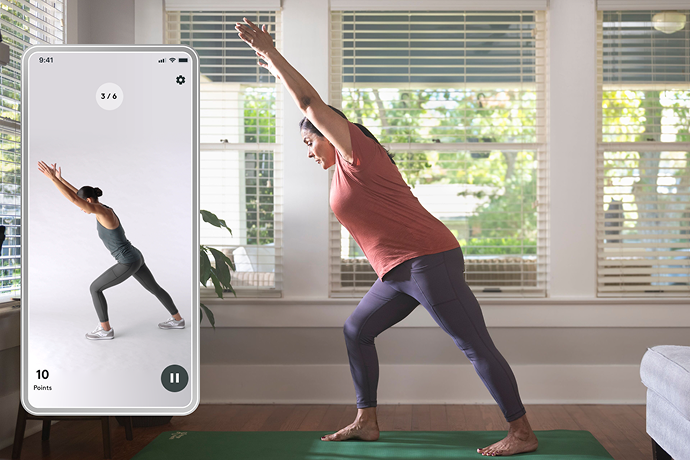
Fully covered back pain relief
Find relief from lower back pain, a thrown out back, sciatica, & more.
What is facet joint syndrome?
Facet joint syndrome — also called facet joint arthritis, facet arthropathy, or facet osteoarthritis — is a common contributor to back pain. It’s estimated to play a role in up to 41% of chronic lower back pain cases.
Your facet joints are small joints located at the back of your spine, with one on each side of every vertebra. “They help guide movement, especially when you lean backward or rotate side to side,” says Dr. Rogers.
Over time, these joints can become irritated or more sensitive, which may lead to stiffness and discomfort. “These joints and the surrounding tissues can become more sensitive, so your nervous system begins to send stronger pain signals,” explains Dr. Rogers. This doesn’t necessarily mean there’s ongoing damage — it reflects how your body is responding to changes in the joint.
Facet joint pain can occur anywhere along the spine, from your neck to your lower back, but it’s most common in the lumbar (lower back) region.
Causes of facet joint syndrome
Facet joint pain often develops over time as part of normal changes in your spine. It’s usually not caused by just one thing, but rather a combination of factors related to movement, load, and how your body adapts. The encouraging part: many of these contributors respond well to strengthening and movement-based approaches.
Age-related changes in the spine. As you get older, the cartilage in your facet joints naturally changes, and your joints may become more sensitive. “It’s a normal age-related change, just like skin wrinkles,” says Dr. Rogers.
Osteoarthritis. Like other joints in your body, facet joints can show signs of osteoarthritis, which is a natural part of aging. “Anyone over the age of 21 can start to develop facet joint arthritis,” says Dr. Rogers. “Many people don’t even know they have it because often, it doesn’t lead to any symptoms”.
Injury or trauma. Events like a fall or whiplash injury can irritate the facet joints. Sometimes these changes show up on imaging, even if they were present before symptoms began, explains Dr. Rogers.
Repetitive stress or strain. Activities that involve frequent bending backward or twisting — whether at work or during sports — can place repeated stress on facet joints. “Your facet joints help control extension and rotation, so these movements can overload them over time,” says Dr. Rogers.
Disc changes. As spinal discs change with age, they may shift how forces move through your spine, which can increase pressure on the facet joints.
Spinal alignment variations. Natural differences in spinal shape or posture can affect how much load your facet joints take on during movement.
Doing more than your body is ready for. Sudden increases in activity — especially without gradually strengthening or conditioning your body beforehand — can overload the muscles that support your spine. “This area can become irritated when it’s asked to handle more than it’s prepared for,” says Dr. Rogers.
Symptoms of facet joint syndrome
Facet joint pain often feels like a deep, achy discomfort in your neck or lower back. Symptoms can vary depending on where the affected joints are located.
Lumbar (lower back) facet joint syndrome:
Localized lower back pain and tenderness
Pain that worsens with backward bending or twisting
Stiffness, especially after sitting or first thing in the morning
Pain that may radiate into the buttocks or hips (but usually not below the knee)
Difficulty standing up straight after sitting
Relief when bending forward or sitting
Cervical (neck) facet joint syndrome:
Neck pain and stiffness
Headaches, often at the base of the skull
Difficulty turning your head or looking up
Pain that may radiate into the shoulders or upper back
Tenderness when pressure is applied to the joints
“A lot of patients notice it’s uncomfortable to turn their head, like when checking their blind spot while driving,” says Dr. Rogers.
Note: While facet joint pain is very real, remember that intensity doesn’t always indicate severity, says Dr. Rogers.
How movement can help facet joint syndrome
Movement is a key part of managing facet joint syndrome. While it may seem counterintuitive to move when your back or neck hurts, the right kind of movement is one of the most effective ways to reduce symptoms.
“It strengthens the foundational muscles that support your spine, helping reduce stress on your facet joints,” explains Dr. Rogers. Movement also improves spinal stability and helps your body distribute forces more evenly, so no one area is overloaded.
In addition, staying active increases blood flow to tight or sensitive muscles, which can ease stiffness and improve how your body feels during daily activities. “You may notice that you feel less stiff and more comfortable moving throughout your day,” says Dr. Rogers.
The key is finding your movement sweet spot — the right type and amount of activity that supports your spine without significantly increasing symptoms.
Exercises for facet joint syndrome
“It’s a foundational core exercise that activates your transverse abdominis — a deep muscle that wraps around your trunk and helps support your spine,” says Dr. Rogers.
Want expert care?
Check if you're covered for our free programDid you know?
Physical therapy (PT) is for more than just recovering from surgery or injury. It’s one of the top treatments for joint and muscle pain. It helps build strength, improve mobility, and reduce pain. And it doesn't always need to be in person.
Hinge Health members can conveniently access customized plans or chat with their care team at home or on the go — and experience an average 68% reduction in pain* within the first 12 weeks of their program. Learn more*.
Together, these exercises build strength and coordination in the muscles that support your spine. Over time, this can improve how your body handles daily movements, reduce strain on your facet joints, and help you move more comfortably.
The information contained in these videos is intended to be used for educational purposes only and does not constitute medical advice or treatment for any specific condition. Hinge Health is not your healthcare provider and is not responsible for any injury sustained or exacerbated by your use of or participation in these exercises. Please consult your healthcare provider with any questions you may have about your medical condition or treatment.
Treatments for facet joint syndrome
The best treatment for facet joint syndrome begins with simple, movement-based approaches. Physical therapy, targeted exercises, and options like TENS therapy can help reduce pain, improve mobility, and support your spine. If your symptoms don’t improve with these strategies, your healthcare provider may recommend additional treatments, such as facet joint injections or radiofrequency ablation. These approaches are usually considered when severe pain persists despite consistent, noninvasive care.
Try physical therapy and targeted exercises. Targeted exercises do help strengthen your core, improve spinal stability, and maintain healthy mobility. You can do exercise therapy at home or work with a physical therapist who can guide you through movements tailored to your needs. You can see a physical therapist in person or use a program like Hinge Health, where you may access a PT via telehealth/video visit.
Stay active with movements you enjoy. Movement is medicine—it can help with facet joint pain, says Dr. Rogers. Low impact activities like walking are a great place to start. They get your back muscles working and increase blood flow to the area. Swimming and gentle yoga are also good options to maintain mobility and build overall resilience.
Apply heat or ice. Heat therapy can help ease muscle tension and stiffness around affected joints, while ice may ease inflammation and numb pain. Alternate between the two or stick to the method that works best for you.
Take over-the-counter (OTC) medication as needed. Pain relievers such as ibuprofen (Advil, Motrin), naproxen (Aleve), and acetaminophen (Tylenol) can help ease pain so you can do your targeted exercises and stay active when you have facet joint-related pain. Other options are topical NSAIDs or pain relief creams. If you have a medical condition or take other medications, check in with your provider to make sure these OTC options are safe to take.
Experiment with posture modifications. “Your best posture is your next posture,” says Dr. Rogers. Instead of staying in one position too long, try to switch things up regularly — if you’ve been sitting, stand up, and vice versa. “Changing positions helps shift load and reduce pressure on your facet joints,” Dr. Rogers explains.
Ask about TENS therapy. TENS, or transcutaneous electrical nerve stimulation, uses gentle pulses to quiet your pain response and help reduce pain associated with facet joint syndrome. One option is the wearable device Enso, available through Hinge Health. It’s small, wireless and portable.
Facet joint injections. These injections typically contain a numbing medication to relieve pain and a steroid to calm inflammation. “We sometimes recommend them for patients who have tried physical therapy and targeted exercise for about a month but aren’t improving,” says Dr. Rogers. In some cases, reducing pain can make it easier to return to movement and build strength.
Radiofrequency ablation (rhizotomy). If other treatments haven’t helped, your provider may suggest this procedure, which uses heat to temporarily interrupt pain signals from the facet joints. It can be effective for persistent symptoms, but it’s not a permanent fix. “Ablation works by temporarily disrupting the nerves that carry pain signals. Over time, those nerves can regain function, which means pain relief may not be permanent. That's why continuing with movement and physical therapy is important for long-term improvement.,” says Dr. Rogers.
How to prevent facet joint symptoms from worsening
If you’re dealing with facet joint pain, small, consistent habits can help you manage symptoms and support your spine over time. Here’s what Hinge Health physical therapists recommend:
Build and maintain core strength. Exercises like the ones above help strengthen your deep core muscles, including the transverse abdominis — a corset-like muscle that supports your spine. “This muscle helps keep your spine strong and supported,” says Dr. Rogers.
Practice good body mechanics. How you move during daily tasks matters. When lifting, stay close to the object and bend at your hips and knees rather than your back. This helps distribute load more evenly and reduces strain on your spine.
Stay generally active. Regular activity helps increase blood flow, reduce stiffness, and keep your back feeling more adaptable.
Change positions frequently. Avoid staying in one position for too long. “I often suggest setting a timer to get up every 15 to 30 minutes,” says Dr. Rogers. Changing positions helps prevent stiffness and keeps your joints moving comfortably.
When to see a doctor
Facet joint syndrome often improves with targeted exercises, physical therapy, and activity modifications. But if your facet joint pain is severe, getting worse, or significantly limiting your daily activities or ability to sleep, see a healthcare provider. It's also important to seek care if you have:
New or worsening weakness in your arms or legs
Numbness or tingling that's progressive or affecting large areas
Difficulty with balance or coordination
Loss of bowel or bladder control
Pain accompanied by unexplained weight loss or fever
PT tip: Tweak Your Position
“Pay attention to which positions lead to facet joint pain flares — and which ones help you feel better,” says Dr. Rogers. Movements like repeated leaning backward or excessive extension may feel more uncomfortable for some people, so it can help to adjust or limit those temporarily while your symptoms settle. Over time, you can gradually reintroduce these movements as your strength and tolerance improve.
How Hinge Health can help you
If you have joint or muscle pain that makes it hard to move, you can get the relief you’ve been looking for with Hinge Health’s online exercise therapy program.
The best part: You don’t have to leave your home because our program is digital. That means you can easily get the care you need through our app when and where it works for you.
Through our program, you’ll have access to therapeutic exercises and stretches for your condition. Additionally, you’ll have a personal care team to guide, support, and tailor our program to you.
See if you qualify for Hinge Health and confirm free coverage through your employer or benefit plan here.
This article and its contents are provided for educational and informational purposes only and do not constitute medical advice or professional services specific to you or your medical condition.
Looking for pain relief? Check if your employer or health plan covers our program.
Join more than 1.2 million members and over 2,800 companies that trust Hinge Health to get relief.

Related articles

Learn how menopause affects sleep and explore tips for better rest, including exercise and lifestyle tips from physical therapists.
Read more
Discover what causes shoulder popping when you move it, plus exercises you can do to alleviate any pain and potentially make the popping stop.
Read more
Discover the bodyweight exercises physical therapists swear by that you can do anytime, any place — no equipment necessary.
Read more
Learn how to do scapular squeezes to help with upper back and shoulder strength, plus modifications to make this exercise easier or harder.
Read more
Learn how to do side lunges to help with lower body strength and balance, plus modifications to make it easier or harder.
Read moreReferences
- 1Curtis, L., Shah, N., & Padalia, D. (2023, January 9). Facet Joint Disease. PubMed; StatPearls Publishing. https://www.ncbi.nlm.nih.gov/books/NBK541049/
- 2Du, R., Xu, G., Bai, X., & Li, Z. (2022). Facet Joint Syndrome: Pathophysiology, Diagnosis, and Treatment. Journal of Pain Research, 15, 3689–3710. doi:10.2147/JPR.S389602
- 3Le, D. T., & Alem, N. (2022). Facet Joint Injection. PubMed; StatPearls Publishing. https://www.ncbi.nlm.nih.gov/books/NBK572125/
- 4Yoo, Y.-M., & Kim, K.-H. (2024). Facet joint disorders: from diagnosis to treatment. The Korean Journal of Pain, 37(1), 3–12. doi:10.3344/kjp.23228
- 5Chang, C.-J., Liu, Y.-F., Hsiao, Y.-M., Chang, W.-L., Huang, Y.-H., Liu, K.-C., Hsu, C.-C., Yeh, M.-L., & Lin, C.-L. (2025). Full-Endoscopic Lumbar Rhizotomy for the Treatment of Facetogenic Low Back Pain: A Systematic Review of the Current Literature. Journal of Minimally Invasive Spine Surgery and Technique, 10(Suppl 1), S42–S51. doi:10.21182/jmisst.2024.01844