Tennis knee pain: causes, movement strategies, and how to protect your knees on court
Oct 22, 2026
Over 1 Million members trust Hinge Health, a digital clinic that provides access to virtual physical therapy, to address their joint and muscle pain.
Reduction in member pain
of licensed physical therapists and health coaches
Average star rating of the Hinge Health mobile app
Bailey JF, et al. Digital Care for Chronic Musculoskeletal Pain: 10,000 Participant Longitudinal Cohort Study. J Med Internet Res 2020;22(5):e18250.
Tennis knee pain is common but manageable. Learn what causes it, how to keep playing, and exercises to build knee strength on and off the court.
Available at $0 cost to many members
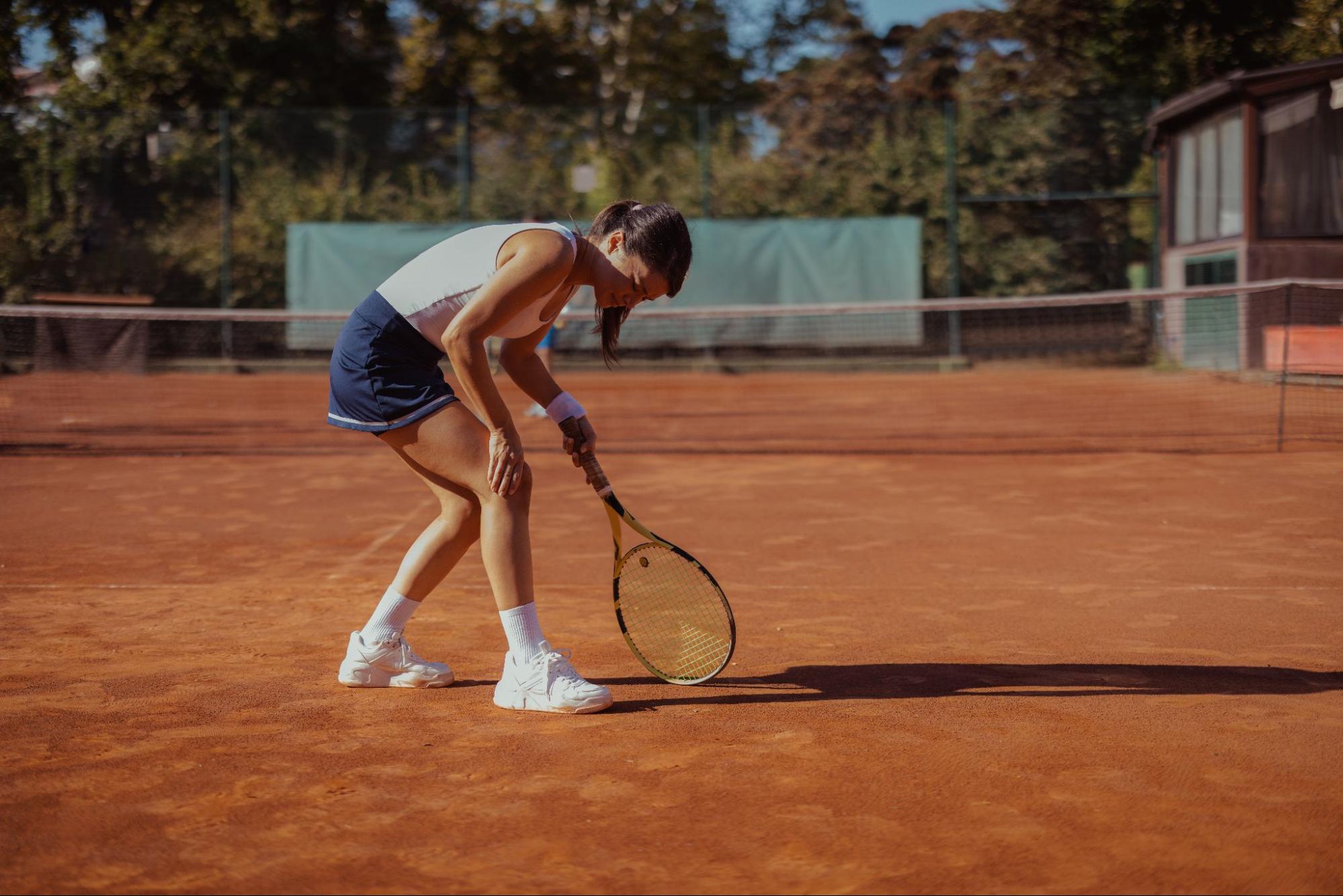
Picture this: You make a quick pivot during your tennis match, but as your foot lands on the court, you feel an aching sensation in your knee. Whether the discomfort starts during a rally or creeps up after a long match, knee pain can make it harder to enjoy your time on the court.
Tennis involves plenty of quick starts, stops, lunges, and changes in direction, all of which challenge your knees. “Tennis places a lot of demands on your knees, with its combination of explosive movement, quick lateral cuts, and hard court surfaces,” says Andrea Bettini, PT, DPT, a physical therapist with Hinge Health.
But your knees are resilient and designed to move with you, and having some knee pain doesn't always mean you need to stop playing the sport. Doing targeted strengthening exercises and making adjustments to your game can help ease symptoms and condition your knee.
Ahead, learn what causes tennis knee pain, how to manage it, especially with exercises recommended by Hinge Health physical therapists to help you stay active.
Reviewed by our clinical and medical experts


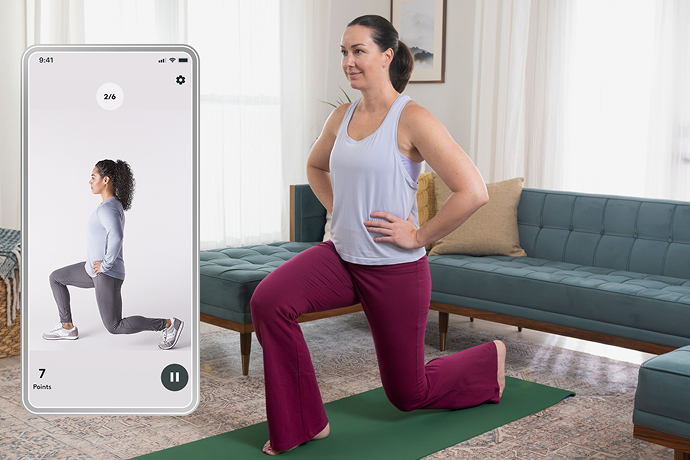
Fully covered knee pain relief
Find relief from knee pain, knee locking, stiff knees, & more.
Causes of tennis knee pain
Tennis challenges your knees in several ways, from repeated lunges and split-step landings to quick pivots and side-to-side movement. Knee pain can develop when the demands of these activities exceed what your knee is currently able to comfortably handle. Several conditions also may contribute to knee pain during or after tennis, including:
Patellofemoral pain syndrome (runner's knee). Refers to pain related to how the kneecap moves along the groove at the end of the thigh bone as you bend and straighten your knee. It can cause discomfort around or behind the kneecap, especially during squats, lunges, stairs, or other activities that involve bending the knee.
IT band irritation. Your iliotibial (IT) band is a thick band of connective tissue that runs along the outside of your thigh to just below your knee. Irritation in this area can lead to pain along the outside of your knee, especially during repetitive movements.
Patellar tendinopathy (jumper's knee). Your patellar tendon connects your kneecap to your shinbone and helps your knee perform dynamic activities like jumping, landing, and changing direction. Pain can develop when the tendon isn’t conditioned to handle the amount or intensity of loading it’s experiencing. “It’s jumping combined with quick stops,” says Dr. Bettini.
Meniscus irritation. Your menisci are two pieces of cartilage that help distribute forces through your knee. Tennis involves plenty of twisting and pivoting, which can sometimes aggravate a sensitive meniscus. Meniscus-related symptoms may include pain, swelling, or catching sensations.
Arthritis. Changes in the knee joint associated with osteoarthritis can contribute to pain or stiffness during activity. But having osteoarthritis doesn't mean tennis is off-limits. Movement and strengthening can help you continue doing activities you enjoy.
Symptoms of tennis knee pain
Tennis knee pain can feel different depending on what’s contributing to it. Common symptoms can include:
Pain during or after play, especially when jumping, lunging, or changing direction
Aching or stiffness around the front, sides, or back of the knee
Discomfort when climbing stairs, squatting, or getting up after a match
Where you feel pain can offer clues about what’s causing it, but location alone isn’t enough to make a diagnosis. A physical therapist or healthcare provider can help you understand your symptoms and determine what may help.
How movement can help tennis knee pain
You don't necessarily have to stop playing tennis when your knee hurts. In many cases, adjusting how often or how intensely you play while building strength can help you stay active.
“You might need to back off of tennis for a little bit, but you don’t have to stop entirely,” says Dr. Bettini. “It may just mean that you play one match instead of three as you work to build strength around your knee.”
Targeted exercises can help strengthen the muscles around your knees and hips, improve knee mobility, and gradually build your ability to tolerate the demands of tennis. Lower-impact activities like walking, swimming, and cycling can also help you stay active as symptoms settle.
“Tennis is a great way to stay active. Because it’s a weight-bearing sport, it can help support bone strength, balance, and coordination. It’s also a fun, social activity — so the goal should be to help you get back to the full-court activity you enjoy,” says Dr. Bettini.
Exercises for tennis knee pain
This stretch targets your hamstring muscles along the back of your thighs. Improving flexibility here can help you move comfortably through the bending, lunging, and reaching motions involved in tennis.
Want expert care?
Check if you're covered for our free programTogether, these exercises address both mobility and strength. Hamstring, quad, and calf stretches help you move comfortably through a range of motion, while glute bridges, clamshells, and banded squats build the lower-body strength needed for tennis. “If you do them all together, they provide a great strengthening and stretching program for all the muscles that support your knee, including your quads, calves, hamstrings, glutes, and hip muscles,” says Dr. Bettini.
The information contained in these videos is intended to be used for educational purposes only and does not constitute medical advice or treatment for any specific condition. Hinge Health is not your healthcare provider and is not responsible for any injury sustained or exacerbated by your use of or participation in these exercises. Please consult with your healthcare provider with any questions you may have about your medical condition or treatment.
Did you know?
Physical therapy (PT) is for more than just recovering from surgery or injury. It’s one of the top treatments for joint and muscle pain. It helps build strength, improve mobility, and reduce pain. And it doesn't always need to be in person.
Hinge Health members can conveniently access customized plans or chat with their care team at home or on the go — and experience an average 68% reduction in pain* within the first 12 weeks of their program. Learn more*.
Treatments for tennis knee pain
Most cases of tennis-related knee pain improve with at-home treatments, especially targeted exercise and adjustments to physical activity. Consider these approaches from Hinge Health physical therapists:
Try physical therapy and targeted exercises. Targeted exercises can help strengthen the muscles around your knee, reduce pain, and improve their function. You can do exercise therapy at home or work with a physical therapist who can guide you through movements tailored to your needs. You can see a physical therapist in person or use a program like Hinge Health, where you may access a PT via telehealth/video visit.
Stay active but adjust your tennis routine. You may be able to keep playing the sport by reducing the number of matches, shortening sessions, or temporarily dialing back the intensity. For example, if you usually play three times a week, you might try one or two shorter sessions while weaving in resistance training sessions, Dr. Bettini says. Walking, cycling, and swimming are other ways to keep up your aerobic base as your knee heals.
Apply heat or ice. Ice reduces swelling and inflammation, so you may find it most helpful with an acute flare-up and right after a vigorous tennis match, says Dr. Bettini. Heat increases blood flow and reduces stiffness. It’s okay to try both and stick to the one that works best for you.
Take over-the-counter (OTC) medication as needed. Pain relievers such as ibuprofen (Advil, Motrin), naproxen (Aleve), and acetaminophen (Tylenol) can help ease pain so you can do your targeted exercises and stay active when you have knee pain. Other options are topical NSAIDs or pain relief creams. If you have a medical condition or take other medications, check in with your provider to make sure these OTC options are safe to take.
Consider complementary treatments. Talk to your provider if you’re interested in trying alternative treatments for knee pain relief, such as massage, acupuncture, or chiropractic care.
Ask about TENS therapy. TENS, or transcutaneous electrical nerve stimulation, uses gentle pulses to quiet your pain response and help ease knee pain after playing tennis. One option is the wearable device Enso, available through Hinge Health. It’s small, wireless, and portable.
Does playing tennis hurt the knees?
Not necessarily. Tennis places demands on your knees, but that doesn't mean it's damaging them. In fact, research involving people with or at risk for knee osteoarthritis found that those with a history of playing tennis weren’t more likely to have symptomatic knee osteoarthritis than those non-tennis players.
Again, strengthening the muscles that support your knee is key to preventing pain. Improving lower-body mobility and flexibility can also support your overall knee health.
How long does tennis knee pain take to heal?
Some people notice improvements within a few weeks of starting at-home treatments, while others need more time, especially those who’ve been managing symptoms for a while. Pay attention to how your knee is functioning. Are you able to walk, squat, climb stairs, and play tennis with less discomfort? Can you gradually increase your activity without a significant or lasting flare-up? These improvements can help you gauge your progress and determine when you’re ready to do more.
Tips to manage tennis knee pain
Small adjustments to your routine can help you manage symptoms and improve your knee's capacity for tennis.
Wear comfortable, supportive tennis shoes. Choose shoes that feel comfortable and provide the traction and stability you prefer on your usual playing surface. Replace them when they’re noticeably worn or no longer feel supportive rather than following a strict replacement schedule.
Warm up before playing. Start with a few minutes of walking, easy jogging, or gentle movements, then gradually add tennis-specific activities like side steps, lunges, and light hitting. This helps prepare your muscles and joints for the movements ahead.
Manage your weekly match load. If your knee has been bothering you, consider temporarily shortening sessions, reducing match frequency, or mixing in lower-intensity practice. Gradually increase your playing time as your symptoms improve.
Consider a knee sleeve or brace. Some people find that a knee sleeve provides comfort or a sense of support while playing. It won't replace strengthening, but it may be a helpful option for managing symptoms. “An over-the-counter knee sleeve or brace provides additional support when you are on the court that allows you to play longer while you work on strengthening your knee muscles,” explains Dr. Bettini.
When to see a doctor
Tennis knee pain often improves with activity adjustments, strengthening, and time. But it’s a good idea to see a healthcare provider if you experience:
Significant swelling or warmth in your knee
A feeling that your knee repeatedly gives way
Locking or an inability to fully straighten your knee
Pain that regularly disrupts sleep or everyday activities
Pain that makes it difficult to walk normally
Symptoms that persist or worsen despite modifying activity and trying targeted exercises
Seek prompt medical care if you experience a sudden injury with severe pain, rapid swelling, or an inability to bear weight.
PT tip: Consider your court surface
Different tennis court surfaces can feel different underfoot, and you may find that one is more comfortable for your knees than another. For example, if hard courts seem to aggravate your symptoms, consider trying a clay court when one is available. But remember that clay can change how you move, too. “Since it’s softer, it can be easier to slip and slide,” explains Dr. Bettini. “Make sure you’re wearing shoes with good traction and consider incorporating balance exercises into your workout routine to help you stay steady on the court.”
How Hinge Health can help you
If you have joint or muscle pain that makes it hard to move, you can get the relief you’ve been looking for with Hinge Health’s online exercise therapy program.
The best part: You don’t have to leave your home because our program is digital. That means you can easily get the care you need through our app when and where it works for you.
Through our program, you’ll have access to therapeutic exercises and stretches for your condition. Additionally, you’ll have a personal care team to guide, support, and tailor our program to you.
See if you qualify for Hinge Health and confirm free coverage through your employer or benefit plan here.
This article and its contents are provided for educational and informational purposes only and do not constitute medical advice or professional services specific to you or your medical condition.
Looking for pain relief? Check if your employer or health plan covers our program.
Join more than 1.2 million members and over 2,800 companies that trust Hinge Health to get relief.
Related articles
Discover symptoms, causes, and treatments for interstitial cystitis/bladder pain in women, plus how exercise and lifestyle changes can offer relief.
Read more
Discover effective relaxation techniques to ease stress, calm your mind, and reduce tension in your body anytime, anywhere.
Read more
Learn how to sleep with shoulder pain with expert tips on sleeping positions, stretches, and adjustments to ease discomfort and improve rest.
Read more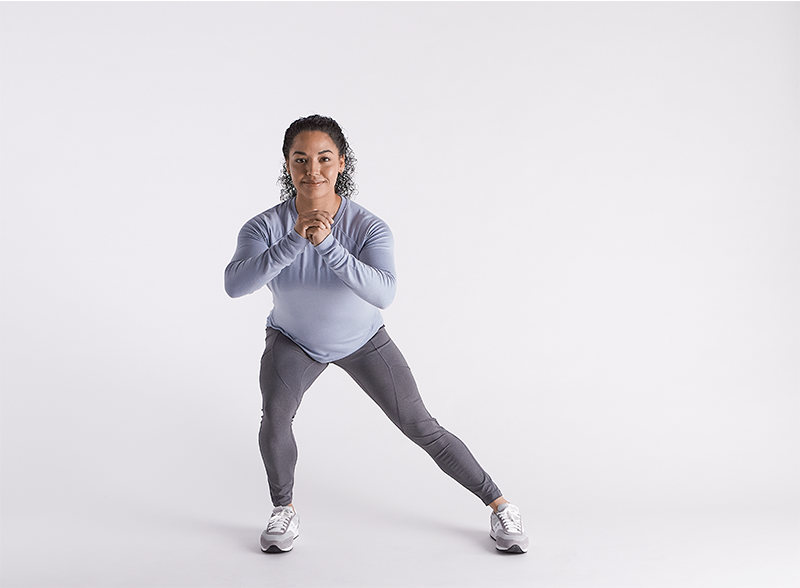
Learn how to do side lunges to help with lower body strength and balance, plus modifications to make it easier or harder.
Read moreReferences
- 1Theodorou, A., Komnos, G., & Hantes, M. (2023). Patellar tendinopathy: An overview of prevalence, risk factors, screening, diagnosis, treatment and prevention. Archives of Orthopaedic and Trauma Surgery, 143(11). doi:10.1007/s00402-023-04998-5
- 2Neal, B. S., Bartholomew, C., Barton, C. J., Morrissey, D., & Lack, S. D. (2022). Six treatments have positive effects at 3 months for people with patellofemoral pain: A systematic review with meta-analysis. Journal of Orthopaedic & Sports Physical Therapy, 52(11), 750–768. doi:10.2519/jospt.2022.11359
- 3Madan, R., Driban, J. B., McAlindon, T. E., Kriska, A. M., Rockette-Wagner, B. J., Eaton, C. B., Hochberg, M. C., Jackson, R. D., Kwoh, C. K., Nevitt, M. C., & Lo, G. H. (2023). Tennis is not associated with symptomatic radiographic knee osteoarthritis: Data from the osteoarthritis initiative. Osteoarthritis and Cartilage, 31, S149. doi:10.1016/j.joca.2023.01.111
- 4Iliotibial band (IT band) syndrome - OrthoInfo - AAOS. (2024). Aaos.Org. https://orthoinfo.aaos.org/en/diseases--conditions/iliotibial-band-it-band-syndrome/
- 5Willy, R. W., Hoglund, L. T., Barton, C. J., Bolgla, L. A., Scalzitti, D. A., Logerstedt, D. S., Lynch, A. D., Snyder-Mackler, L., & McDonough, C. M. (2019). Patellofemoral pain. Journal of Orthopaedic & Sports Physical Therapy, 49(9), CPG1–CPG95. doi:10.2519/jospt.2019.0302