
Over 1 Million members trust Hinge Health, a digital clinic that provides access to virtual physical therapy, to address their joint and muscle pain.
Reduction in member pain
of licensed physical therapists and health coaches
Average star rating of the Hinge Health mobile app
Bailey JF, et al. Digital Care for Chronic Musculoskeletal Pain: 10,000 Participant Longitudinal Cohort Study. J Med Internet Res 2020;22(5):e18250.
Experiencing knee pain after an injury? Learn how to recognize PCL tear symptoms, how they differ from an ACL tear, and possible recovery options for you.
Available at $0 cost to many members
It can happen in a split second. You land awkwardly after a jump, twist your knee while changing direction, or take a hard fall. Knee ligament injuries can be painful and unsettling, especially when you’re not sure what exactly happened.
The ACL and PCL are two major ligaments inside the knee, and both can be injured during sports, falls, or other sudden movements. While the symptoms can overlap, some differences can offer clues about which ligament may be involved.
“Knowing whether an injury is more consistent with the ACL or PCL can help guide evaluation and treatment,” says Krista Asprec, PT, DPT, a physical therapist at Hinge Health.
Many knee ligament injuries can be managed successfully with physical therapy and targeted exercise. Treatment depends on the severity of the tear, how stable your knee feels, what activities you want to return to, and whether other structures were injured.
“Regardless of which knee ligament is injured, keeping the muscles around your knee strong — including your quads, hamstrings, and glutes — can help support recovery and keep you moving,” says Dr. Asprec.
Ahead, learn the differences between PCL and ACL injuries, including common causes, symptoms, treatments, and exercises recommended by Hinge Health physical therapists that can help you heal.
Reviewed by our clinical and medical experts


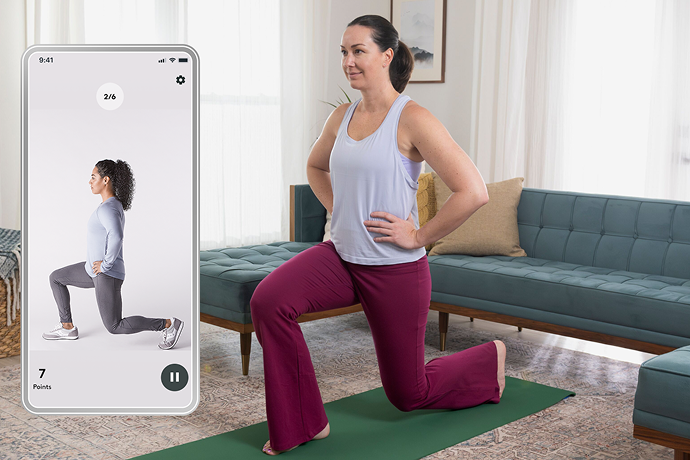
Fully covered knee pain relief
Find relief from knee pain, knee locking, stiff knees, & more.
What are the PCL and ACL?
The PCL, or posterior cruciate ligament, and ACL, or anterior cruciate ligament, are strong bands of connective tissue located deep within your knee joint. Both connect the femur, or thigh bone, to the tibia, or shinbone, and help control movement at the knee.
The PCL sits toward the back of the knee and helps limit excessive backward movement of the tibia. The ACL sits more toward the front and helps control forward movement and rotation.
The PCL is nearly twice as strong as the ACL, which may help explain why PCL injuries are less common and more likely to be partial tears. Either ligament can be injured to varying degrees, often by a significant force during a specific movement or activity.
PCL tear symptoms vs. ACL tear symptoms: key differences
PCL and ACL injuries can both cause pain, swelling, stiffness, and a feeling that the knee isn’t moving normally. But the mechanism of injury and how symptoms show up can be different.
“You may be able to walk after some PCL injuries, while ACL injuries can make weight-bearing or pivoting feel much more difficult,” says Dr. Asprec.
How PCL tears occur
A direct blow to the front of the knee
A car accident where the bent knee hits the dashboard
Falling hard onto a bent knee
How ACL tears occur
Twisting while the foot is planted
A sudden pivot or change of direction
An awkward landing
A direct hit to the knee during sports or other activity
Symptoms of a PCL tear
Pain, often toward the back of the knee
Swelling that may develop more gradually
Stiffness or reduced range of motion
A feeling that the knee is less secure, especially when walking downhill or downstairs
Symptoms of an ACL tear
Sudden, sharp pain
Hearing or feeling a “pop” at the time of injury
Rapid swelling
Difficulty bearing weight
A sense that the knee is giving way, especially with pivoting or direction changes
Stiffness or reduced range of motion
Symptoms alone can’t always tell you which ligament is injured. Your healthcare provider may use a physical exam and imaging, such as an MRI, to evaluate for an ACL or PCL tear and other injuries.
How movement can help PCL and ACL recovery
After a ligament injury, it’s understandable to want to protect your knee by avoiding movement. But once it’s safe for you to resume exercise, it can be an invaluable part of your recovery.
“Gentle movement can help maintain range of motion and keep the muscles around the knee working,” says Dr. Asprec. Over time, strengthening the quads, hamstrings, glutes, and hips can help you regain confidence with walking, stairs, exercise, and other activities.
PCL injuries often respond well to conservative treatment, including physical therapy and progressive strengthening. Depending on the severity of the injury, people may gradually return to higher-level activities such as running or sports.
ACL recovery can take longer, and some people may need surgery depending on the tear, instability, activity goals, and other injuries. But physical therapy is still central to recovery whether or not surgery is part of your treatment plan.
“If surgery is needed, building strength and improving your range of motion beforehand can make the rehabilitation process smoother,” says Dr. Asprec.
Exercises for knee ligament recovery
This exercise gently activates your quads, which can help prevent muscle weakness that often follows injury or surgery. It’s often a useful exercise to use in the beginning of your recovery because it requires very little knee movement.
Want expert care?
Check if you're covered for our free programTogether, these exercises progress from gentle muscle activation and mobility toward more functional strengthening and balance. Quad sets, straight leg raises, and side-lying leg raises build strength with relatively little knee movement, while heel slides support range of motion. Mini squats and single-leg balance gradually prepare your knee for everyday movements such as walking, stairs, and even resuming exercise.
The information contained in these videos is intended to be used for educational purposes only and does not constitute medical advice or treatment for any specific condition. Hinge Health is not your healthcare provider and is not responsible for any injury sustained or exacerbated by your use of or participation in these exercises. Please consult with your healthcare provider with any questions you may have about your medical condition or treatment.
Did you know?
Physical therapy (PT) is for more than just recovering from surgery or injury. It’s one of the top treatments for joint and muscle pain. It helps build strength, improve mobility, and reduce pain. And it doesn't always need to be in person.
Hinge Health members can conveniently access customized plans or chat with their care team at home or on the go — and experience an average 68% reduction in pain* within the first 12 weeks of their program. Learn more*.
Treatments for PCL and ACL injuries
Your specific treatment depends on the ligament involved, the severity of the tear, how your knee functions, and what activities you want to return to. For many people, treatment begins with simple strategies such as physical therapy, gradual activity, and pain-relief measures. These treatments include:
Try physical therapy and targeted exercises. Targeted exercises, such as the ones above, can help you strengthen the muscles and structures around your knee, which can remove pressure from the healing ligament. You can do exercise therapy at home or work with a physical therapist who can guide you through movements tailored to your needs. You can see a physical therapist in person or use a program like Hinge Health, where you may access a PT via telehealth/video visit.
Stay active while listening to your body. “You don’t need vigorous movement right away,” says Dr. Asprec. “Start with what you can tolerate and build from there.” If an activity significantly increases symptoms, try modifying the range, load, or duration rather than avoiding movement. Hinge Health physical therapists refer to this as finding your movement sweet spot, or the level of activity that feels just right.
Apply ice or heat. Ice may feel soothing if the knee is swollen or sore, especially early on or after activity. Heat may help with stiffness before movement. Consider alternating between the two or sticking to the method that feels best for you.
Elevate your leg. If your knee is swollen and uncomfortable, propping your leg up on pillows may help ease pressure from the area, Dr. Asprec says.
Consider over-the-counter (OTC) medication: Pain relievers such as ibuprofen (Advil, Motrin), naproxen (Aleve), and acetaminophen (Tylenol) can help ease pain and inflammation so you can do your targeted exercises and stay active as you recover. Other options include topical NSAIDs or pain-relief creams. If you have a medical condition or take other medications, check with your provider to make sure these OTC options are safe for you.
Try wearing a knee brace. A brace may improve comfort or confidence during movement for some injuries. Your healthcare provider or PT can help determine whether one is appropriate for you.
Ask about TENS therapy. TENS, or transcutaneous electrical nerve stimulation, uses gentle pulses to quiet your pain response and help reduce pain associated with ligament tears. One option is the wearable device Enso, available through Hinge Health. It’s small, wireless, and portable.
When to see a doctor
Knee ligament injuries can vary widely, so it’s always a good idea to get evaluated if your symptoms are severe or your knee isn’t functioning normally.
Severe pain or swelling after an injury
Difficulty bearing weight
A knee that repeatedly gives way or feels unstable
Difficulty fully straightening or bending the knee
Pain or swelling that isn’t improving
Numbness, tingling, or color changes in the lower leg or foot
How do ACL and PCL injuries compare?
ACL injuries are often associated with greater difficulty during pivoting, cutting, or quick direction changes, and some tears may require surgery depending on the person’s symptoms and goals.
PCL tears are often partial and frequently respond well to simple treatments, such as exercise therapy. Surgery may be considered if your injury is severe or if other ligaments are injured at the same time.
Neither injury is inherently “worse” than the other. What matters most is how severe the injury is, how your knee functions, and what you want to get back to doing.
Can you tear your PCL without knowing?
Yes. Some PCL tears, especially partial tears, can have less noticeable symptoms than ACL injuries and may not be obvious right away.
ACL tears are more commonly associated with a noticeable pop at the time of injury. “People sometimes describe it as a snapping sensation,” says Dr. Asprec.
With a PCL injury, you may be able to keep walking or initially assume you simply bruised or strained your knee. If soreness, swelling, or instability persists after a fall, impact, or other knee injury, get it evaluated by a healthcare provider.
PT tip: Recovery takes time — be patient
Ligament injuries take time to recover from, and returning to high-level activity too quickly can make symptoms flare. “People understandably want to get back to sports or vigorous activity as soon as possible,” says Dr. Asprec. “But recovery is usually measured in months, not weeks.”
Rather than rushing to a particular timeline, focus on gradually rebuilding your strength, mobility, and confidence. Trust your body as it heals.
How Hinge Health can help you
If you have joint or muscle pain that makes it hard to move, you can get the relief you’ve been looking for with Hinge Health’s online exercise therapy program.
The best part: You don’t have to leave your home because our program is digital. That means you can easily get the care you need through our app when and where it works for you.
Through our program, you’ll have access to therapeutic exercises and stretches for your condition. Additionally, you’ll have a personal care team to guide, support, and tailor our program to you.
See if you qualify for Hinge Health and confirm free coverage through your employer or benefit plan here.
This article and its contents are provided for educational and informational purposes only and do not constitute medical advice or professional services specific to you or your medical condition.
Looking for pain relief? Check if your employer or health plan covers our program.
Join more than 1.2 million members and over 2,800 companies that trust Hinge Health to get relief.

Related articles

Discover the benefits of working out at night and get expert-recommended exercises for your evening routine.
Read more
If you’re dealing with back pain, targeted back strengthening exercises can help you feel better so you can do all the activities you enjoy.
Read more
Learn how to do wall angels to improve neck, shoulder, and upper back strength, plus modifications to make this exercise easier or harder.
Read more
If you find yourself sitting for long periods of time, try these stretches recommended by physical therapists to keep muscles loose and reduce pain.
Read more
Learn about some of the most common knee injuries and what you can do to prevent and manage pain, especially with exercises from physical therapists.
Read more
Learn what ‘movement snacks’ are and how you can incorporate them into your day to reduce pain and boost energy.
Read moreReferences
- 1Raj, M. A., & Varacallo, M. (2020). Posterior cruciate ligament (PCL) knee injuries. StatPearls Publishing. PubMed. https://www.ncbi.nlm.nih.gov/books/NBK430726/
- 2Vaishya, R., Kambhampati, S. B. S., & Vaish, A. (2020). Comparing ACL and PCL publication trends on PubMed in the last four decades. Indian Journal of Orthopaedics, 54(5), 738–739. doi:10.1007/s43465-020-00062-1
- 3Yasen, S. K., & Mabrouk, A. (2026). Common knee injuries, diagnosis and management. Surgery (Oxford). doi:10.1016/j.mpsur.2025.12.009
- 4L.Belozo, F., S.M.N.Belozo, R., Charles Ricardo Lopes, Yamada, A. K., & Vagner R.R. Silva. (2024). Anterior cruciate ligament: A brief narrative review of main risk factors for injury and re-injury. Journal of Bodywork and Movement Therapies, 38. doi:10.1016/j.jbmt.2024.01.022
- 5Anmol Suneja, Deshpande, S. V., Hitendra Wamborikar, Date, S. V., Goel, S., & Sekhon, G. (2023). Outcome analysis of posterior cruciate ligament injuries: A narrative review. Cureus. doi:10.7759/cureus.47410