Over 1 Million members trust Hinge Health, a digital clinic that provides access to virtual physical therapy, to address their joint and muscle pain.
Reduction in member pain
of licensed physical therapists and health coaches
Average star rating of the Hinge Health mobile app
Bailey JF, et al. Digital Care for Chronic Musculoskeletal Pain: 10,000 Participant Longitudinal Cohort Study. J Med Internet Res 2020;22(5):e18250.
A ganglion cyst on the wrist is a harmless fluid-filled lump. Learn what causes it, when it needs treatment, and how movement helps your wrist feel better.
Available at $0 cost to many members
Maybe you noticed a new small, rounded bump on your wrist while rolling up your sleeve, typing at your desk, or pushing up from a chair. Finding a new lump can be unsettling, especially if it comes with wrist pain or muscle weakness. One possible explanation? A ganglion cyst.
“A ganglion cyst is a small, fluid-filled sac that can develop near a joint or tendon, often in the wrist or hand,” says Alec Martinez, PT, DPT, a physical therapist at Hinge Health.
Ganglion cysts are usually noncancerous, and many don’t require treatment. Some go away on their own, while others may need medical attention if they become painful or interfere with your daily activities.
Having a ganglion cyst doesn’t necessarily mean you need to stop using your wrist. Gentle movement, targeted exercises, and small adjustments to your routine can help you stay comfortable and active.
Read on to learn what causes ganglion cysts, which treatments can ease discomfort, and how to maintain your wrist mobility and strength as you heal, especially with exercises recommended by Hinge Health physical therapists.
Reviewed by our clinical and medical experts


Fully covered hand or wrist pain relief
Find relief from hand pain, wrist pain, finger joint pain, & more.
What is a ganglion cyst on the wrist?
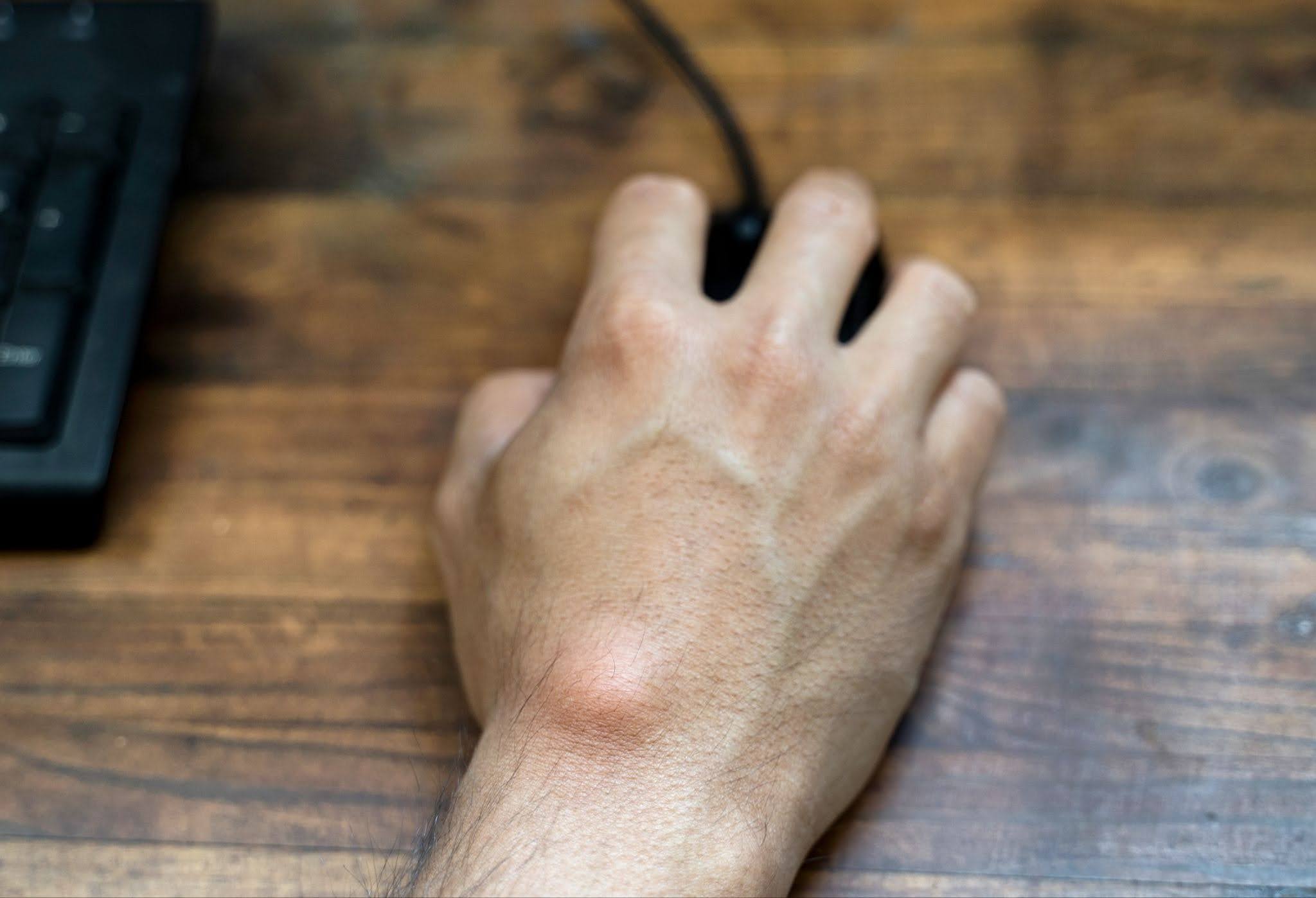
A ganglion cyst is a lump that contains a thick, jelly-like substance similar to the fluid that lubricates your joints and helps them move smoothly. Some are small enough that you barely notice them, while others form a visible bump beneath your skin.
One study suggests they most commonly develop on the back of your wrist or the palm side, although they can appear elsewhere in your hand.
A ganglion cyst may feel firm or slightly rubbery, and its size can change over time. Some cysts grow, shrink, or disappear without treatment.
While most ganglion cysts aren’t inherently dangerous, it’s important to have a healthcare provider evaluate a new or unexplained lump to confirm what's causing it. “If your lump grows or starts to bother you, that’s a good time to have a provider take a look,” says Dr. Martinez.
Ganglion cyst symptoms
The most noticeable sign of a ganglion cyst is a lump on your wrist or hand. But not everyone experiences pain or other symptoms. Here’s what you might notice:
A visible bump. A ganglion cyst often looks like a smooth, rounded lump beneath your skin.
Tenderness or aching. Some cysts are painless, while others cause discomfort, especially when you move or put pressure on your wrist.
Pain during certain activities. Movements like gripping, typing, or pushing up from a chair may feel uncomfortable, depending on the cyst’s location.
A feeling of weakness. Pain or discomfort may make it harder to grip objects or use your wrist as confidently as usual.
Changes in sensation. Occasionally, a cyst may press on a nearby nerve, causing tingling or numbness.
Keep in mind that symptoms can vary depending on your cyst’s size and location. If you notice new weakness, numbness, or a lump that’s changing, a healthcare provider can help determine what’s going on.
What causes a ganglion cyst on the wrist?
Experts don’t fully understand why ganglion cysts form, and many develop without an obvious cause. Importantly, having one doesn’t mean you’ve damaged your wrist or done something wrong. These cysts can develop even in otherwise healthy joints.
Some potential contributing factors include:
Repetitive wrist movements. Activities that involve frequent gripping or wrist movements may be associated with ganglion cysts, although it's unclear whether they directly cause them.
A previous injury. Sometimes, a ganglion cyst develops after an injury to the wrist or surrounding tissues.
Underlying joint conditions. Certain conditions, such as osteoarthritis or joint hypermobility, may be associated with an increased likelihood of developing ganglion cysts.
Do ganglion cysts go away on their own?
Some ganglion cysts get smaller or go away on their own. A 2023 review found that many hand and wrist ganglion cysts may resolve without surgery. Non-surgical options range from simply monitoring the cyst to having a provider drain it with a needle. Cysts can also come and go, and some can return even after being drained or surgically removed.
How movement and physical therapy can help
If you discover a lump on your wrist, you might feel hesitant to use your hand. But unless your clinician advises otherwise, it's generally important to keep your wrist and hand moving. While exercise won’t shrink or remove a ganglion cyst, gentle movements can help maintain flexibility and make everyday activities feel more comfortable.
Gentle, regular movement can help maintain wrist mobility over time. “I think of wrist motion as something you keep by using it, a bit like a path that stays clear when you walk it often,” says Dr. Martinez.
If your cyst is causing discomfort, a physical therapist can help you move more comfortably, modify activities that aggravate your symptoms, and gradually rebuild your wrist and grip strength.
Physical therapy may also be recommended after cyst treatment, depending on the procedure and your recovery needs.
“After a cyst is drained or removed, recovery often starts with easy wrist motion and builds toward grip and forearm strength,” says Dr. Martinez.
Exercises for wrist mobility and strength
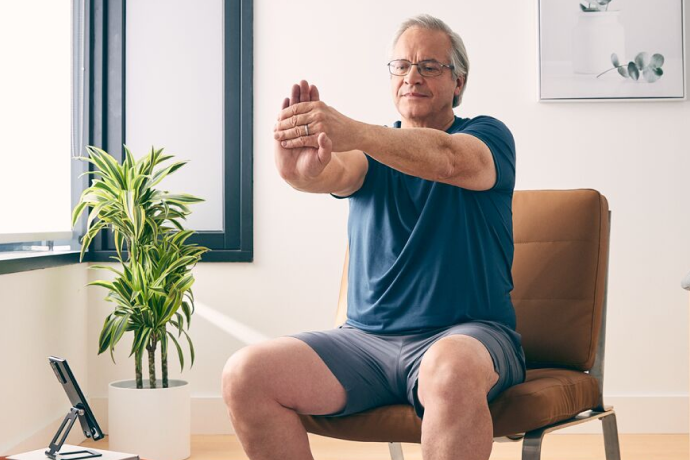
This exercise gently moves your wrist up and down, helping you maintain flexibility for everyday activities like typing, cooking, and reaching for objects.
Want expert care?
Check if you're covered for our free programDid you know?
Physical therapy (PT) is for more than just recovering from surgery or injury. It’s one of the top treatments for joint and muscle pain. It helps build strength, improve mobility, and reduce pain. And it doesn't always need to be in person.
Hinge Health members can conveniently access customized plans or chat with their care team at home or on the go — and experience an average 68% reduction in pain* within the first 12 weeks of their program. Learn more*.
Together, these exercises focus on wrist mobility, grip strength, and forearm strength, all of which you use for everyday tasks like typing and lifting. Find your movement sweet spot, or the level at which you feel like you’re exerting some effort while doing these exercises without straining yourself. As your wrist feels stronger, a physical therapist can add more challenging moves. You can also try wrist stretches.
The information contained in these videos is intended to be used for educational purposes only and does not constitute medical advice or treatment for any specific condition. Hinge Health is not your healthcare provider and is not responsible for any injury sustained or exacerbated by your use of or participation in these exercises. Please consult with your healthcare provider with any questions you may have about your medical condition or treatment.
Treatments for a ganglion cyst on the wrist
The right approach depends on how much your cyst hurts or gets in the way of using your hand. Options range from simple self-care to procedures your provider can do. Consider the following:
Try physical therapy and targeted exercises. Targeted exercises, such as the ones above, can help maintain your wrist mobility and strength while you decide on next steps. You can do exercise therapy at home or work with a physical therapist who can guide you through movements tailored to your needs. You can see a physical therapist in person or use a program like Hinge Health, where you may access a PT via telehealth/video visit.
Stay active. Targeted wrist mobility and grip exercises like the ones above are designed to help with recovery, but any type of movement — including household chores — can improve your wrist mobility, grip strength, and comfort during everyday tasks.
Try watchful waiting. As noted above, a cyst that doesn’t hurt may not need treatment, so your provider may suggest simply keeping an eye on it. Let them know if it grows or starts to bother you.
Pace your activities. If certain movements aggravate your wrist, try changing how you perform them. For example, you might take shorter breaks between repetitive tasks, use a different grip, or temporarily reduce pressure on your wrist.
Apply heat or ice. If your wrist aches, try a warm compress or a cold pack wrapped in a thin towel. Consider alternating between the two or stick to the method that works best for you.
Take over-the-counter (OTC) medication as needed. Pain relievers such as ibuprofen (Advil, Motrin), naproxen (Aleve), and acetaminophen (Tylenol) can help ease pain so you can do your targeted exercises and stay active when you have ganglion cyst pain. If you have a medical condition or take other medications, check in with your provider to make sure these OTC options are safe to take.
Consider a wrist splint. Your provider may suggest a wrist splint (a brace that holds your wrist steady) for a short time while your wrist is sore. It’s an extra tool you can add alongside the other steps, not something you need to wear all the time.
Ask your provider about aspiration. If your cyst is painful or gets in your way, a healthcare provider may be able to drain its fluid using a needle. This can reduce the lump’s size, but research suggests cysts frequently return after aspiration, so this may not be a long-term solution. The procedure isn't appropriate for every cyst, particularly those near important blood vessels or nerves.
Talk to your doctor about surgery for persistent symptoms. If your cyst continues to cause symptoms, returns after treatment, or affects nearby structures, your provider may discuss surgical removal. Surgery may be the most effective option for you.
What not to do with a ganglion cyst
It’s understandable to want to get rid of a noticeable lump, but some home remedies can cause more harm than good. Here’s what to avoid:
Don’t try to pop or drain it yourself. Puncturing a cyst at home can cause infection or damage nearby tissues. If drainage is appropriate, it should be performed by a healthcare professional.
Don’t hit it with a heavy object. You may have heard of using a book to flatten a ganglion cyst. This outdated approach can injure your wrist and isn't recommended.
Avoid aggressively massaging the lump. There’s no good evidence that rubbing or pressing on a ganglion cyst will make it disappear, and doing so may increase discomfort.
When to see a doctor
Most ganglion cysts are harmless, but a new lump should be evaluated by a healthcare provider to confirm what it is. It’s especially important to seek care if you notice:
A lump that’s growing quickly or changing in appearance.
Pain that’s worsening or interfering with everyday activities.
Numbness, tingling, or weakness in your hand or wrist.
Redness, warmth, or significant tenderness around the lump.
Seek prompt medical attention if you develop sudden or significant weakness, or if the area becomes very painful, red, or swollen, particularly if you also have a fever.
Even if your cyst isn’t painful, you can talk with your provider about whether monitoring or treatment makes the most sense for you.
PT tip: Adjust how you do your chores
Dr. Martinez often sees patients stop using their affected hand for everyday activities, like household chores, after discovering they have a ganglion cyst. But that’s not necessary.
“With small changes, like lighter grocery bags or typing in shorter stretches, you can often get back to your routine with less worry,” Dr. Martinez says. “Paying attention to how your wrist feels and adjusting from there tends to work better than avoiding your hand altogether.”
You don’t need to change everything about your routine. Start by identifying one activity that bothers your wrist and experiment with a small adjustment, like carrying a lighter bag or changing your hand position.
How Hinge Health can help you
If you have joint or muscle pain that makes it hard to move, you can get the relief you’ve been looking for with Hinge Health’s online exercise therapy program.
The best part: You don’t have to leave your home because our program is digital. That means you can easily get the care you need through our app when and where it works for you.
Through our program, you’ll have access to therapeutic exercises and stretches for your condition. Additionally, you’ll have a personal care team to guide, support, and tailor our program to you.
See if you qualify for Hinge Health and confirm free coverage through your employer or benefit plan here.
This article and its contents are provided for educational and informational purposes only and do not constitute medical advice or professional services specific to you or your medical condition.
Looking for pain relief? Check if your employer or health plan covers our program.
Join more than 1.2 million members and over 2,800 companies that trust Hinge Health to get relief.

References
- 1Clark, D. M., Nelson, S. Y., O’Hara, M., Putko, R. M., Bedrin, M. D., & Daniels, C. M. (2023). Surgical and patient-centered outcomes of open versus arthroscopic ganglion cyst excision: A systematic review. Journal of Wrist Surgery, 12(1), 32–39. doi:10.1055/s-0042-1749678
- 2Fernandes, C. H., Meirelles, L. M., Raduan Neto, J., Fernandes, M., Dos Santos, J. B. G., & Faloppa, F. (2019). Arthroscopic resection of dorsal wrist ganglion: Results and rate of recurrence over a minimum follow-up of 4 years. Hand (New York, N.Y.), 14(2), 236–241. doi:10.1177/1558944717743601
- 3Gregush, R. E., & Habusta, S. F. (2023). Ganglion cyst. In StatPearls. StatPearls Publishing. https://pubmed.ncbi.nlm.nih.gov/29262133/
- 4Hatchell, A., Meathrel, K., Farrokhyar, F., & Hynes, N. (2019). A prospective randomized controlled trial of aspiration and fibrin sealant use versus aspiration alone in the treatment of dorsal wrist ganglia. Plastic Surgery (Oakville, Ont.), 27(1), 22–28. doi:10.1177/2292550318800325
- 5Konigsberg, M. W., Tedesco, L. J., Mueller, J. D., Ball, J. R., Wu, C. H., Kadiyala, R. K., Strauch, R. J., & Rosenwasser, M. P. (2023). Recurrence rates of dorsal wrist ganglion cysts after arthroscopic versus open surgical excision: A retrospective comparison. Hand (New York, N.Y.), 18(1), 133–138. doi:10.1177/15589447211003184
- 6Lu, S., Kerluku, J., Nwawka, O. K., Miller, T. T., & Fufa, D. T. (2023). No difference in reintervention at 1-year between ultrasound-guided versus blind dorsal carpal ganglion aspiration. Journal of Hand Surgery Global Online, 5(6), 728–732. doi:10.1016/j.jhsg.2023.06.007
- 7Zhang, A., Falkowski, A. L., Jacobson, J. A., Kim, S. M., Koh, S. H., & Gaetke-Udager, K. (2019). Sonography of wrist ganglion cysts: Which location is most common? Journal of Ultrasound in Medicine, 38(8), 2155–2160. doi:10.1002/jum.14912
- 8Zoller, S. D., Benner, N. R., & Iannuzzi, N. P. (2023). Ganglions in the hand and wrist: Advances in 2 decades. The Journal of the American Academy of Orthopaedic Surgeons, 31(2), e58–e67. doi:10.5435/JAAOS-D-22-00105