
Over 1 Million members trust Hinge Health, a digital clinic that provides access to virtual physical therapy, to address their joint and muscle pain.
Reduction in member pain
of licensed physical therapists and health coaches
Average star rating of the Hinge Health mobile app
Bailey JF, et al. Digital Care for Chronic Musculoskeletal Pain: 10,000 Participant Longitudinal Cohort Study. J Med Internet Res 2020;22(5):e18250.
Radial tunnel syndrome causes forearm and elbow pain from nerve compression. Learn symptoms, causes, and how physical therapy can help you heal.
Available at $0 cost to many members
An ache along the outside of your elbow or upper forearm can make everyday activities, like typing, carrying groceries, or gripping objects, uncomfortable. You might even think you have tennis elbow, especially since the two conditions can cause pain in similar areas.
But sometimes, that discomfort may be related to radial tunnel syndrome, a condition involving irritation or compression of a nerve near your elbow.
“Tennis elbow and radial tunnel syndrome can feel similar because they sit so close together, but one involves a tendon, and the other involves a nerve. That’s why advice aimed at helping soothe a tendon may not ease pain coming from a nerve,” says Jennifer Parker, PT, DPT, a physical therapist at Hinge Health. “Telling your provider exactly where the ache sits, and what makes it better or worse, can help them sort out which one you’re dealing with.”
Radial tunnel syndrome can make you want to use your arm less, but targeted exercises and adjustments to your routine can help you manage symptoms and get back to doing daily activities with ease.
Read on to learn what causes radial tunnel syndrome, how it differs from tennis elbow, and which treatments and targeted exercises recommended by Hinge Health physical therapists may help.
Reviewed by our clinical and medical experts

Dr. Parker is a Hinge Health physical therapist who specializes in pelvic health throughout life transitions including pregnancy/postpartum, menopause, and beyond.
Jennifer Parker, PT, DPT
Physical Therapist

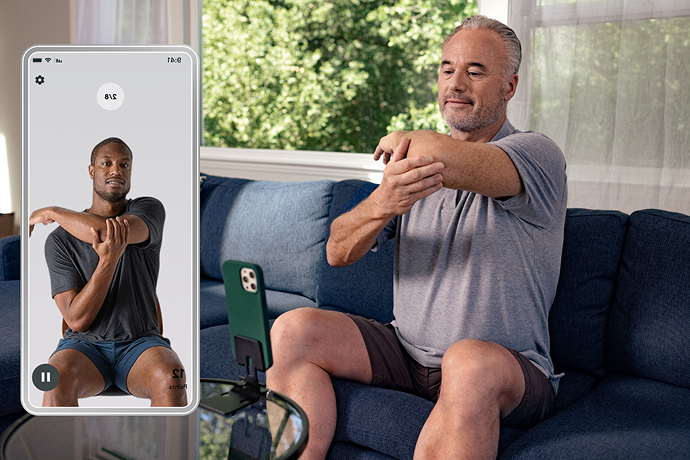
Fully covered arm or shoulder pain relief
Find relief from arm pain, shoulder pain, pinched nerves, & more.
What is radial tunnel syndrome?
Radial tunnel syndrome is a condition associated with irritation or compression of the radial nerve as it passes through a narrow space near the outside of your elbow, called the radial tunnel.
The radial nerve helps control movement in your arm, wrist, and fingers. One of its branches passes through the radial tunnel, surrounded by muscles and connective tissue. Sometimes this area can become irritated, which can result in an aching pain in your upper forearm, especially during activities that involve gripping, lifting, or rotating your arm.
But radial tunnel syndrome isn’t like some other nerve conditions. It can cause discomfort without significant numbness or muscle weakness.
Radial tunnel syndrome vs. tennis elbow
Radial tunnel syndrome and tennis elbow can feel similar, but they affect different structures in your arm and at your elbow.
Tennis elbow, also called lateral epicondylitis or lateral elbow tendinopathy, involves the tendons that attach your forearm muscles to the outside of your elbow. Radial tunnel syndrome, on the other hand, describes irritation of the nerve that passes nearby.
One difference is the pattern and location of the pain. Tennis elbow often causes more focal tenderness at the tendon attachment on the bony bump on the outside of your elbow. Radial tunnel syndrome more often causes a diffuse ache farther down your upper forearm. Both can make gripping, lifting, or twisting movements uncomfortable, though, so your symptoms alone aren’t often enough to tell them apart.
Your healthcare provider may examine where your arm is tender and assess how different movements affect your symptoms. There's no single definitive test for radial tunnel syndrome, and nerve conduction tests are often normal.
It’s also possible to have both conditions at once. If you’ve been treating what seems like tennis elbow without much improvement, consider asking your provider whether another source of pain could be contributing.
Symptoms of radial tunnel syndrome
The main symptom of radial tunnel syndrome is an aching pain along the outside of your upper forearm, just below your elbow. But symptoms can vary from person to person. You may also notice:
Pain during certain movements. Activities like gripping, lifting, turning a doorknob, or rotating your forearm may make symptoms more noticeable.
Pain that travels down your forearm. Discomfort may spread from the outside of your elbow toward your wrist.
Tenderness in your upper forearm. The muscles just below your outer elbow may feel sore when pressed.
Little or no numbness or tingling. Unlike some other nerve conditions, radial tunnel syndrome typically doesn’t lead to any skin sensations.
No significant muscle weakness. You may find certain movements uncomfortable, but true weakness or difficulty extending your fingers or wrist isn’t normally a symptom.
Causes of radial tunnel syndrome
Radial tunnel syndrome can develop if your radial nerve becomes irritated or compressed by doing repetitive daily activities when the soft tissues and structures in your arm aren’t prepared to do so. Sometimes, the irritation may be related to your anatomy. Other times, certain movements or activities may contribute to symptoms. The most common contributing factors often include:
Anatomical differences. The radial nerve travels through a relatively narrow space in your upper forearm. But everyone’s anatomy is a little different. The way muscles and connective tissues are arranged around the radial nerve may make it more prone to pressure or irritation in some people.
Repetitive arm movements. Activities that involve frequent gripping, twisting your forearm, or extending your wrist may contribute to nerve irritation, especially if you suddenly increase how often or intensely you do them before your muscles and surrounding tissues have had time to adapt to those added demands.
An injury. A fall onto your arm, a direct blow to your elbow, or another injury to your forearm may irritate tissues around the radial nerve and contribute to pain.
Muscle tension. If the muscles that surround your radial nerve become tight, they may put additional pressure on your nerve and contribute to discomfort.
How movement can help radial tunnel syndrome
When your forearm hurts, it's natural to want to rest it. And temporarily easing up on activities that aggravate symptoms can be helpful. But that doesn’t mean you need to avoid using your arm altogether.
Gentle, comfortable movement can help you maintain mobility and range of motion, build strength, and gradually improve your tolerance for everyday activities.
“It makes sense to want to protect a sore arm, but your nerves are designed to slide a little every time you bend, straighten, and turn it,” says Dr. Parker. “Gentle, regular motion helps that sliding feel smoother, and it can help a sensitive nerve settle down.”
Your physical therapist (PT) may recommend nerve glides, forearm stretches, and strengthening exercises based on your symptoms and goals. Nerve glides (also known as nerve flossing) involve gently moving your arm through specific positions to encourage normal nerve movement.
“Start with movements that feel easy, then build a little at a time as your forearm feels better,” Dr. Parker says.
Exercises for radial tunnel syndrome relief
This gentle exercise encourages the radial nerve to glide back and forth through the tissues around your elbow as you move your arm and wrist. The goal is to promote comfortable movement without overstretching or aggravating your nerve.
Want expert care?
Check if you're covered for our free programTogether, these exercises focus on nerve mobility, forearm flexibility, and gradually building strength from your shoulders to your hands. You don’t necessarily need to do every exercise, either. Your PT can help you find a combination that works for you and adjust the difficulty as your symptoms change.
The information contained in these videos is intended to be used for educational purposes only and does not constitute medical advice or treatment for any specific condition. Hinge Health is not your healthcare provider and is not responsible for any injury sustained or exacerbated by your use of or participation in these exercises. Please consult with your healthcare provider with any questions you may have about your medical condition or treatment.
Did you know?
Physical therapy (PT) is for more than just recovering from surgery or injury. It’s one of the top treatments for joint and muscle pain. It helps build strength, improve mobility, and reduce pain. And it doesn't always need to be in person.
Hinge Health members can conveniently access customized plans or chat with their care team at home or on the go — and experience an average 68% reduction in pain* within the first 12 weeks of their program. Learn more*.
Treatments for radial tunnel syndrome
Radial tunnel syndrome is usually managed with simple at-home, nonsurgical treatments first. Your care team may recommend these treatment options:
Try physical therapy and targeted exercises. Targeted exercises, such as the ones above, can help ease muscle tension around your sensitive nerve and improve your range of motion. You can do exercise therapy at home or work with a physical therapist who can guide you through movements tailored to your needs. You can see a physical therapist in person or use a program like Hinge Health, where you may access a PT via telehealth/video visit.
Stay active. Targeted nerve glides and gentle forearm stretches are designed to help with recovery, but any type of movement — like walking, stretching, or even household chores — can improve blood flow, mobility, and how your forearm feels day to day. Check with your provider before starting any new exercise program.
Modify activities temporarily. Adjusting how often or how intensely you perform certain movements may help ease discomfort. For example, try shorter sessions of repetitive work or lighter resistance during exercise, then gradually build back up as symptoms improve.
Consider lifestyle modifications. Factors like sleep, stress, nutrition, and certain activities can all play a role in how you feel. In fact, many people are surprised to learn that pain isn't just about what's happening physically — your daily habits and overall well-being can have a real impact, too. Staying curious about how your routines affect your muscles and joints can help you identify where small changes might help reduce pain. For example, you might notice your pain is less noticeable on low-stress days.
Apply heat or ice. Heat may help soothe tight muscles, while ice can temporarily relieve pain by numbing nerve endings. Choose whichever feels better, and protect your skin from extreme temperatures.
Take over-the-counter (OTC) medication as needed. Pain relievers such as ibuprofen (Advil, Motrin), naproxen (Aleve), and acetaminophen (Tylenol) can help ease pain so you can do your targeted exercises and stay active when you have radial tunnel syndrome pain. Other options are topical NSAIDs or pain relief creams. If you have a medical condition or take other medications, check in with your provider to make sure these OTC options are safe to take.
Consider complementary treatments. Talk to your provider if you’re interested in trying alternative treatments for nerve pain relief, such as massage, acupuncture, or chiropractic care.
Ask about a wrist splint. In some cases, your provider may recommend temporarily using a splint to limit certain movements that aggravate your symptoms, though it’s not necessary.
Consider TENS therapy. TENS, or transcutaneous electrical nerve stimulation, uses gentle pulses to quiet your pain response and help reduce pain associated with conditions like radial tunnel syndrome. One option is the wearable device Enso, available through Hinge Health. It’s small, wireless, and portable.
Tips to manage radial tunnel syndrome
Small adjustments to your daily routine, like taking movement breaks or using tools that make gripping easier, can help ease discomfort as you gradually build strength and tolerance. Try these strategies:
Build strength gradually. Start with manageable resistance and increase it as your arm adapts. “A good starting level should feel like it requires some effort without stirring up more pain afterward, and if your forearm is back to its usual self by the next day, you can add a little more,” says Dr. Parker.
Take movement snacks. If you spend long periods typing, using a mouse, or performing repetitive tasks, change positions and move your arms periodically. Even a brief moment of gentle movement can help invite healthy blood flow to tender areas.
Experiment with your grip. Thicker or padded handles may make certain tools more comfortable to hold. Try different grips and notice what works best for you.
Change positions regularly. There’s no single perfect wrist or arm position. Instead of trying to maintain one posture all day, give yourself opportunities to move and adjust.
Strengthen muscles in your whole arm. Your shoulders, upper back, and forearm work together during everyday activities. A PT may include exercises for these areas to help you build overall strength and function.
When to see a doctor
It’s a good idea to seek care if you experience any of the following:
New numbness or tingling in your arm or hand
Weakness that makes it difficult to grip, lift, or perform everyday tasks
Symptoms that aren't improving after several weeks of appropriate care.
Seek prompt medical evaluation if you develop significant or worsening weakness, especially if you suddenly have difficulty lifting your wrist or straightening your fingers. This can be a sign of a different nerve problem, such as posterior interosseous nerve syndrome, that requires further assessment.
How long does radial tunnel syndrome take to heal?
Recovery from radial tunnel syndrome varies depending on your symptoms, how long you’ve had them, and the treatments you’ve tried. Some people gradually improve with activity adjustments and physical therapy, while others experience symptoms that take longer to resolve.
A strengthening and mobility program may last several weeks, and progress can involve some occasional flare-ups, especially as you return to activities that challenge your forearm.
If your symptoms aren’t improving or you feel like you can’t use your arm that much due to discomfort, let your care team know so you can explore other treatments or get another evaluation.
PT tip: Build movement into your workday
"Every hour or so, let your arm relax at your side and gently move your wrist and forearm through a few easy motions. It takes less than a minute, and it gives your forearm a break from holding the same position,” Dr. Parker says. “If you tie it to something you already do, like sending an email or refilling your water, it becomes a habit rather than one more thing to remember.”
How Hinge Health can help you
If you have joint or muscle pain that makes it hard to move, you can get the relief you’ve been looking for with Hinge Health’s online exercise therapy program.
The best part: You don’t have to leave your home because our program is digital. That means you can easily get the care you need through our app when and where it works for you.
Through our program, you’ll have access to therapeutic exercises and stretches for your condition. Additionally, you’ll have a personal care team to guide, support, and tailor our program to you.
See if you qualify for Hinge Health and confirm free coverage through your employer or benefit plan here.
This article and its contents are provided for educational and informational purposes only and do not constitute medical advice or professional services specific to you or your medical condition.
Looking for pain relief? Check if your employer or health plan covers our program.
Join more than 1.2 million members and over 2,800 companies that trust Hinge Health to get relief.

Related articles

Learn how to exercise safely with POTS, including the best recumbent exercises, how to build tolerance gradually, and tips for managing symptom flares.
Read more
Cold weather can worsen knee pain. Learn why it happens and get science-backed strategies to keep moving all winter.
Read more
Learn what causes menopause brain fog, how long it lasts, and expert tips to improve memory, focus, and mood.
Read more
Learn what helps with inflammation and how to reduce inflammation with healthy lifestyle tips and pain management approaches.
Read more
Rounded shoulders can change your appearance and contribute to pain, but there’s a lot you can do to make things better, including targeted exercises.
Read more
Arthritis in your ankle can cause pain, stiffness, and swelling. Here’s how to keep it from affecting your daily movement.
Read moreReferences
- 1American Academy of Orthopaedic Surgeons. (2018). Therapeutic exercise program for radial tunnel syndrome. OrthoInfo. https://www.orthoinfo.org/globalassets/pdfs/a00791_therapeutic-exercise-program-for-radial-tunnel-syndrome_final.pdf
- 2Ang, G. G., Bolzonello, D. G., & Johnstone, B. R. (2023). Radial tunnel syndrome: Case report and comprehensive critical review of a compression neuropathy surrounded by controversy. Hand (New York, N.Y.), 18(1 Suppl), 146S–153S. doi:10.1177/15589447211029045
- 3Cornely, R. M., Henry, A., Johnson, J., Torres-Guzman, R., Savitz, B. L., Lineaweaver, W., Bhandari, P. L., & Hill, J. B. (2025). Compressive neuropathy in the upper extremity: Pathophysiology, diagnosis, and treatment. Annals of Plastic Surgery, 95(3S Suppl 1), S60–S67. doi:10.1097/SAP.0000000000004415
- 4Hones, K. M., Cueto, R. J., Ndjonko, L. C., Raymond, B. T., Buchanan, T. R., Aibinder, W. R., Srinivasan, R. C., Wright, T. W., King, J. J., & Hao, K. A. (2024). Establishing the diagnosis of radial tunnel syndrome: A systematic review of published clinical series. European Journal of Orthopaedic Surgery & Traumatology: Orthopedie Traumatologie, 34(6), 2813–2821. doi:10.1007/s00590-024-04003-8
- 5Keles, A., Palamar, D., Gunduz, A., & Akarirmak, U. (2026). Ultrasonographic and electrophysiologic assessment of radial tunnel syndrome in patients with treatment-resistant lateral epicondylitis: Insights into diagnostic utility and clinical implications. American Journal of Physical Medicine & Rehabilitation, 105(4), 330–337. doi:10.1097/PHM.0000000000002877
- 6Khoury, A., Gannot, G., & Oron, A. (2023). [Radial tunnel syndrome]. Harefuah, 162(3), 152–156. https://pubmed.ncbi.nlm.nih.gov/36966371/
- 7Lowe, B. D., Nigam, J. A. S., Caruso, C., Wong, I., & Tisdale-Pardi, J. (2020, November 20). Working from home: How to optimize your work environment and stay healthy. NIOSH Science Blog. https://www.cdc.gov/niosh/bulletin/2020/working-from-home.html
- 8Mayo Clinic Staff. (2025, April 29). Tennis elbow - Symptoms and causes. Mayo Clinic. https://www.mayoclinic.org/diseases-conditions/tennis-elbow/symptoms-causes/syc-20351987
- 9Ouyang, C., You, Q., Yang, C., & Yu, D. (2026). Time-dependent comparative efficacy of non-surgical treatments for pain relief in lateral epicondylitis: A systematic review and network meta-analysis. Frontiers in Physiology, 17, 1782562. doi:10.3389/fphys.2026.1782562
- 10Raveendranath, V., Sivadasan, N., Majumder, R., Srinivasan, J., & Narayan, R. B. U. (2026). Surgical anatomy of deep branch of the radial nerve at the arcade of Frohse: Geometric relationships relevant to posterior interosseous nerve entrapment. Surgical and Radiologic Anatomy: SRA, 48(1), 236. doi:10.1007/s00276-026-04003-9
- 11Tiryaki, P., & Çelik, D. (2026). Strengthening of rotator cuff and scapular muscles in patients with lateral elbow tendinopathy: A randomized controlled study. Archives of Physical Medicine and Rehabilitation, 107(10), 2755–2765. doi:10.1016/j.apmr.2026.05.006
- 12Węgiel, A., Karauda, P., Zielinska, N., Tubbs, R. S., & Olewnik, Ł. (2023). Radial nerve compression: Anatomical perspective and clinical consequences. Neurosurgical Review, 46(1), 53. doi:10.1007/s10143-023-01944-2
- 13Zhang, J. Y., Manirajan, A., & Wolf, J. M. (2023). The epidemiology of radial tunnel syndrome and its overlap with lateral epicondylitis. The Journal of Hand Surgery, 48(11), 1172.e1–1172.e7. doi:10.1016/j.jhsa.2023.03.007