Mallet finger: how the injury heals and the exercises that restore movement
Nov 19, 2026
Over 1 Million members trust Hinge Health, a digital clinic that provides access to virtual physical therapy, to address their joint and muscle pain.
Reduction in member pain
of licensed physical therapists and health coaches
Average star rating of the Hinge Health mobile app
Bailey JF, et al. Digital Care for Chronic Musculoskeletal Pain: 10,000 Participant Longitudinal Cohort Study. J Med Internet Res 2020;22(5):e18250.
Mallet finger happens when the tendon at your fingertip tears and the tip droops. Learn the symptoms, how splinting works, and what recovery looks like.
Available at $0 cost to many members
Maybe a basketball caught the tip of your finger, or your fingertip snagged while you were tucking in a bed sheet. Afterward, you notice the tip droops and won’t lift on its own. If this sounds familiar, you may be dealing with mallet finger.
Mallet finger is a tendon injury that keeps your fingertip from straightening on its own. Even if your finger doesn’t hurt much, it’s still worth getting it checked out by a healthcare professional.
“With mallet finger, how much it hurts isn’t a reliable guide to how much care it needs,” says Alec Martinez, PT, DPT, a physical therapist at Hinge Health. “A fingertip that won’t lift on its own is the sign to pay attention to, even if it only feels a little sore.”
Treatment typically involves wearing a splint for about 8 to 12 weeks. The splint keeps your fingertip straight while the tendon heals. During this time, you can still move the rest of your hand, and once your provider clears you, targeted exercises can help restore movement and strength. Ahead, learn what causes mallet finger, how a splint helps it heal, and how to get your finger moving again, especially with targeted exercises recommended by Hinge Health physical therapists.
Reviewed by our clinical and medical experts



Fully covered hand or wrist pain relief
Find relief from hand pain, wrist pain, finger joint pain, & more.
What is mallet finger?
Mallet finger occurs when the tendon that straightens the tip of your finger (called the extensor tendon) becomes injured. The tendon may tear or pull a small piece of bone away from where it attaches. When this happens, the joint closest to your fingertip can’t straighten on its own, causing the tip to droop.
Mallet finger is sometimes called “baseball finger” because it commonly happens when a ball strikes an outstretched finger. But it can also occur during everyday activities, like making a bed or getting dressed.
Mallet finger symptoms
Symptoms can appear right after a direct blow or snag to your fingertip. You may notice the following:
A drooping fingertip. The tip of your finger stays bent, even when you try to straighten it. You may still be able to gently straighten it with your other hand.
Pain and tenderness. You may have finger joint pain or soreness around the joint closest to your fingertip.
Swelling and bruising. The area around your fingertip joint may look swollen or discolored.
Bleeding under your nail. Sometimes blood collects under your fingernail, especially if it was affected by the snag or hit.
What causes mallet finger?
Mallet finger usually happens when a sudden force bends your fingertip while it's straight, injuring the tendon that helps extend it. Common causes include:
A direct hit to the fingertip. A ball striking an outstretched finger, as you might see in certain sports such as baseball, basketball, or volleyball, is a classic example.
An everyday snag. Catching your fingertip on a bed sheet, clothing, or another object can sometimes cause the same injury.
A cut or crush injury. A cut across the back of your fingertip or getting your finger caught in a door can also damage the tendon.
The two types of mallet finger
There are two main types of mallet finger, depending on which structures are injured.
Soft tissue mallet finger. The tendon that straightens your fingertip tears or pulls away from its attachment.
Bony mallet finger. The tendon pulls a small piece of bone away with it, creating a type of fracture.
A healthcare provider will usually recommend an X-ray to look for a fracture and check whether the joint is properly aligned. Both types can often be treated with a splint, although some injuries require additional treatment.
Why mallet finger needs prompt treatment
Mallet finger usually doesn’t heal on its own. It often requires a splint to help keep the injured tendon in a supported position. “A splint holds your fingertip straight so the tendon can heal, and treating it well can help you avoid lasting stiffness,” says Dr. Martinez.
Without treatment, your droop may stay, and an injury that isn’t treated well can leave lasting stiffness. Some untreated injuries can also affect the alignment of other finger joints over time.
For these reasons, it’s important to seek care promptly after an injury that leads to mallet finger. But even if some time has passed since your injury, treatment can still help. Research suggests that splinting can be effective even when treatment starts several weeks after an injury.
Treatments for mallet finger
Most mallet finger injuries are treated without surgery. Your provider may recommend one or more of the following at-home treatments:
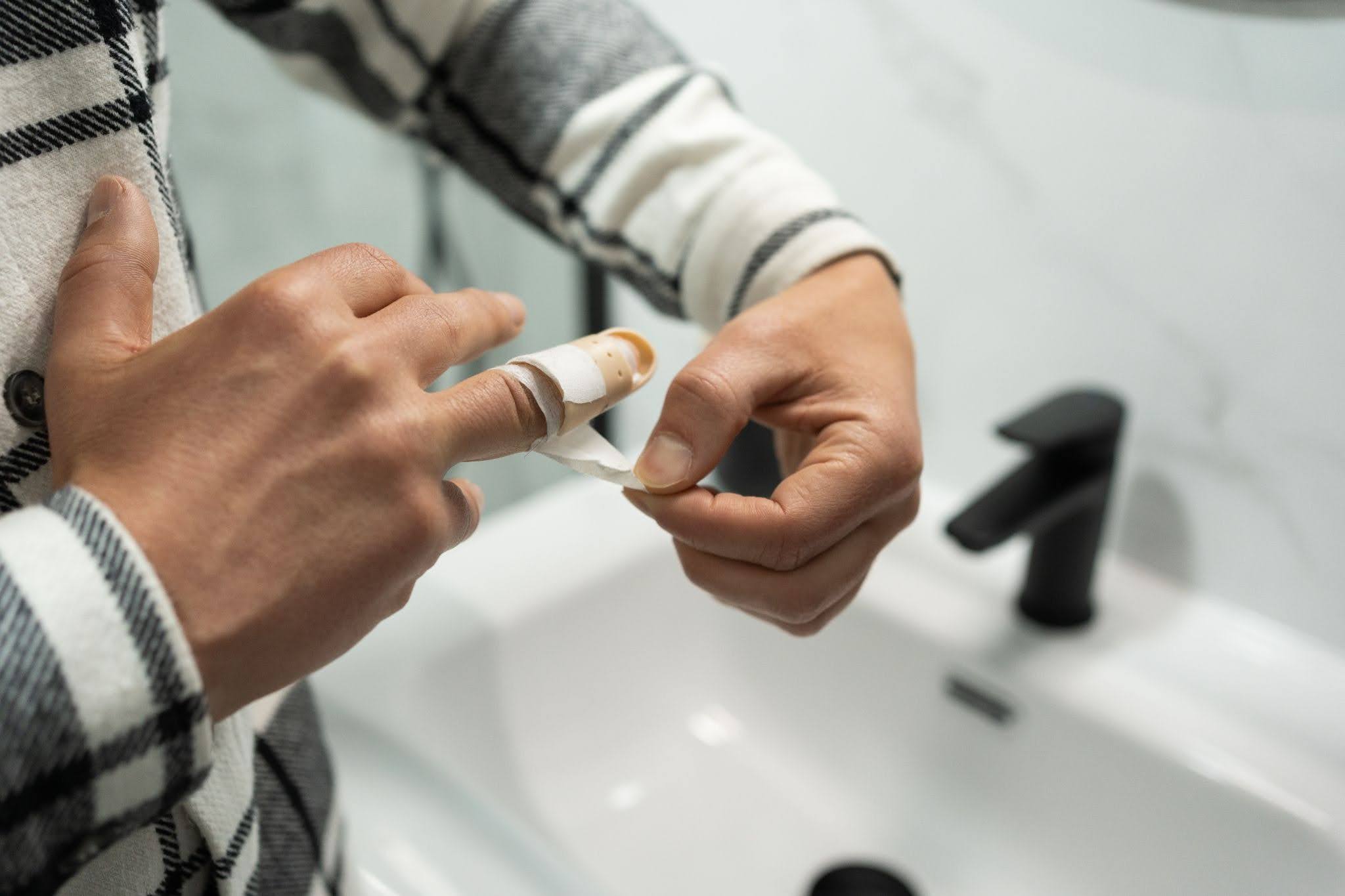
Wear a splint as directed. Splinting is the primary treatment for most mallet finger injuries. The splint holds the joint closest to your fingertip straight while the injured tissues heal. You'll usually need to wear it continuously for several weeks, including while sleeping.
Keep your other finger joints moving. While the injured fingertip needs protection, your provider may encourage you to gently move your other fingers and the middle joint of the injured finger to maintain mobility.
Manage pain and swelling. An ice pack wrapped in a thin towel can help ease swelling. It also helps to take any rings off that hand right away, since swelling can make a ring too tight.
Take over-the-counter (OTC) medication as needed. Pain relievers such as ibuprofen (Advil, Motrin), naproxen (Aleve), and acetaminophen (Tylenol) can help ease pain so you can do your targeted exercises and stay active when you have finger pain. Other options are topical NSAIDs or pain relief creams. If you have a medical condition or take other medications, check in with your provider to make sure these OTC options are safe to take.
Try physical therapy and targeted exercises. At a certain point in recovery after splinting, targeted exercises help restore movement and strength in your finger after your tendon has healed. You can do exercise therapy at home or work with a physical therapist who can guide you through movements tailored to your needs. You can see a physical therapist in person or use a program like Hinge Health, where you may access a PT via telehealth/video visit.
Talk to your doctor about surgery for certain injuries. Surgery may be an option for some injuries or when splinting hasn’t straightened your fingertip. Your provider can help you decide what treatment options are best for you.
Tips for wearing your mallet finger splint
The most important rule while your tendon heals is simple: don’t let your fingertip bend. Consider these tips recommended by Hinge Health physical therapists:
Keep your fingertip straight. Your splint should hold the joint closest to your fingertip in the position recommended by your provider. If that joint bends during the continuous splinting period, it may disrupt healing and require additional time in the splint.
Follow your provider's cleaning instructions. Some splints can be removed briefly for cleaning, but your fingertip must remain supported and straight the entire time. Ask your care team to show you how to clean and dry your finger safely.
Wear your splint while sleeping. Keeping your fingertip supported overnight helps prevent accidental bending.
Check your skin. Splints can sometimes cause irritation, redness, or pressure sores. Let your provider know if your skin becomes painful, breaks down, or develops persistent redness.
Ask about fit and comfort. Your splint should support your fingertip without cutting off circulation or causing excessive pressure. A clinician can adjust or replace it if necessary.
Remember this: You don’t have to figure out splint care on your own. Your healthcare provider or hand therapist can show you how to manage everyday tasks while protecting your finger.
How movement can help while you heal
Wearing a splint doesn’t mean you need to stop using your entire hand. In most cases, only the joint closest to your injured fingertip needs to stay immobilized. Your other fingers, wrist, and often the middle joint of the injured finger can continue moving.
“Bending and straightening your middle joint, moving your other fingers, and gently circling your wrist can help you avoid stiffness,” says Dr. Martinez. These movements can help you maintain mobility as your injured tendon heals, making it easier to return to everyday tasks once your splinting period is over.
“Think of the splint as a bodyguard for one small joint, not a cast for your whole hand,” says Dr. Martinez.
Just be sure to follow your provider's instructions about which movements are safe. The goal is to keep the rest of your hand active without accidentally bending the injured fingertip.
Mallet finger exercises after splinting
This exercise gently curls your fingers at the middle and tip while your knuckles stay straight, which may help your fingertip get used to bending again once you’re cleared to do so.
Want expert care?
Check if you're covered for our free programDid you know?
Physical therapy (PT) is for more than just recovering from surgery or injury. It’s one of the top treatments for joint and muscle pain. It helps build strength, improve mobility, and reduce pain. And it doesn't always need to be in person.
Hinge Health members can conveniently access customized plans or chat with their care team at home or on the go — and experience an average 68% reduction in pain* within the first 12 weeks of their program. Learn more*.
You won’t necessarily need all these exercises, and some may be introduced later than others. A physical therapist or hand therapist can help you progress gradually based on how your finger is healing. It’s normal for your finger to feel stiff when you first begin moving it again. Start gently and follow your provider’s recommendations rather than forcing your fingertip to bend or straighten. As your finger gets stronger, they may add hand strengthening exercises to rebuild your grip and pinch.
The information contained in these videos is intended to be used for educational purposes only and does not constitute medical advice or treatment for any specific condition. Hinge Health is not your healthcare provider and is not responsible for any injury sustained or exacerbated by your use of or participation in these exercises. Please consult with your healthcare provider with any questions you may have about your medical condition or treatment.
How long does mallet finger take to heal
Healing time depends on your type of injury, how closely you follow your splint plan, and the activities you want to return to. Most mallet fingers heal without surgery within a few months, although recovery time can vary.
While your splint is on
Many people need to wear a splint continuously for approximately eight to 12 weeks, although your provider may recommend a different timeline based on your injury.
During this period, keeping your fingertip straight is essential for the tendon to heal properly. You can usually continue moving the rest of your hand as directed.
After your splint comes off
Once your provider confirms that healing has progressed enough, you’ll gradually begin bending your fingertip again. Some people are advised to continue wearing a splint at night or during certain activities for a period of time. It’s normal for your finger to feel stiff at first, and it’s okay if regaining comfortable movement takes a few extra weeks.
How to tell your mallet finger is healed
Your healthcare provider will assess whether your fingertip can maintain its position and whether it's ready for more movement. A slight droop may remain even after successful treatment, and that doesn't necessarily mean your finger won't function well.
Over time, you may notice that everyday activities like typing, buttoning a shirt, or holding small objects become easier.
When is surgery needed for mallet finger?
Most mallet finger injuries heal without surgery. However, surgery may be recommended in certain situations, including:
A fracture involving a large portion of the joint surface
A fingertip joint that is no longer properly aligned
A deep cut or open injury involving the tendon
Certain injuries that don't respond adequately to nonsurgical treatment
Your healthcare provider can explain your options and help you decide on the best treatment for your injury.
When to see a doctor
If your fingertip suddenly droops and you can't straighten it on your own, have it evaluated promptly, even if you aren't experiencing much pain. A healthcare provider can examine your finger, check for a fracture or joint misalignment, and recommend the right treatment. Seek urgent medical attention if you have:
A deep cut or open wound near the injured joint
A visibly crooked or dislocated finger
A fingertip that becomes numb, pale, blue, or unusually cold
Significant nail damage or bleeding associated with the injury
Severe or worsening pain or swelling
If you’re already receiving treatment, contact your provider if your splint is causing skin problems, your fingertip bends unexpectedly during the continuous splinting period, or your symptoms aren’t improving as expected.
PT tip: Make splint care part of your routine
“I suggest having everything ready before you start: a towel, your splint, and a flat table,” says Dr. Martinez. “Ask someone to help hold your fingertip straight if it feels awkward to do alone. Many of my patients set a phone reminder for their middle joint movements, so a few gentle bends become part of the day.”
Keeping your supplies in one place can make splint care easier. And pairing approved hand movements with something you already do each day can help you stay consistent without making recovery feel like another chore.
Remember to follow your provider’s specific instructions for removing or cleaning your splint so your injured fingertip stays supported.
How Hinge Health can help you
If you have joint or muscle pain that makes it hard to move, you can get the relief you’ve been looking for with Hinge Health’s online exercise therapy program.
The best part: You don’t have to leave your home because our program is digital. That means you can easily get the care you need through our app when and where it works for you.
Through our program, you’ll have access to therapeutic exercises and stretches for your condition. Additionally, you’ll have a personal care team to guide, support, and tailor our program to you.
See if you qualify for Hinge Health and confirm free coverage through your employer or benefit plan here.
This article and its contents are provided for educational and informational purposes only and do not constitute medical advice or professional services specific to you or your medical condition.
Looking for pain relief? Check if your employer or health plan covers our program.
Join more than 1.2 million members and over 2,800 companies that trust Hinge Health to get relief.

Related articles

Learn about the symptoms of hip pain before your period and how you can treat them, according to physical therapists.
Read more
Learn how to regulate your nervous system with approachable strategies like mindful movement and reassuring mantras, so you feel calm and confident.
Read more
Experiencing neck pain after running? Learn common causes, symptoms, and expert-backed exercises to relieve and prevent neck discomfort.
Read more
Arthritis in your ankle can cause pain, stiffness, and swelling. Here’s how to keep it from affecting your daily movement.
Read more
Get at-home knee extension exercises recommended by our physical therapist to improve range of motion and prevent and treat knee pain.
Read moreReferences
- 1Algar, L., Backe, H., Richer, R., Andruskiwec, S., Zalenski, P., Lengyel, A., & Svogun, C. (2023). Prospective randomized clinical trial comparing 3-point prefabricated orthosis and elastic tape versus cast immobilization for the nonsurgical management of mallet finger. The Journal of Hand Surgery, 48(9), 951.e1–951.e9. doi:10.1016/j.jhsa.2022.02.012
- 2Azad, A., Kegel, G., Phelps, J., Marshall, A., Lafer, M. P., Rocks, M., Catalano, L., Barron, O. A., & Glickel, S. (2023). A prospective analysis of patient characteristics affecting the outcome of dorsal splinting for soft tissue mallet injuries. Hand (New York, N.Y.), 18(8), 1330–1335. doi:10.1177/15589447221093674
- 3Bachoura, A., Ferikes, A. J., & Lubahn, J. D. (2017). A review of mallet finger and jersey finger injuries in the athlete. Current Reviews in Musculoskeletal Medicine, 10(1), 1–9. doi:10.1007/s12178-017-9395-6
- 4Beutel, B. G., & Waseem, M. (2025). Mallet finger injuries. StatPearls. https://www.ncbi.nlm.nih.gov/books/NBK459373/
- 5Cavanaugh, P. K., Watkins, C., Jones, C., Maltenfort, M. G., Beredjiklian, P. K., & Rivlin, M. (2022). Effectiveness of Quickcast versus custom-fabricated thermoplastic orthosis immobilization for the treatment of mallet fingers: A randomized clinical trial. Hand (New York, N.Y.), 17(6), 1090–1097. doi:10.1177/1558944720988136
- 6Dinh, V., Market, M., & Cheung, K. (2026). Approach to mallet finger injury: Practical guide for Canadian primary care physicians. Canadian Family Physician, 72(2), 93–97. doi:10.46747/cfp.720293
- 7Khera, B., Chang, C., & Bhat, W. (2021). An overview of mallet finger injuries. Acta Bio Medica: Atenei Parmensis, 92(5), Article e2021246. doi:10.23750/abm.v92i5.11731
- 8Lin, J. S., & Samora, J. B. (2018). Surgical and nonsurgical management of mallet finger: A systematic review. The Journal of Hand Surgery, 43(2), 146–163.e2. doi:10.1016/j.jhsa.2017.10.004
- 9Rode, M. M., Mullen, B. L., Zhu, A. Q., Helsper, E. A., & Moran, S. L. (2025). Surgical management of swan neck deformity following mallet finger injury: A review of 25 patients over 20 years. Hand (New York, N.Y.), 20(2), 197–202. doi:10.1177/15589447231205616
- 10Zhu, X., Chen, X., Lv, Y., Chen, Y., Gao, W., & Yan, H. (2025). The importance of active exercise in treatment of tendinous mallet finger: Insights from a randomized controlled clinical trial. The Journal of Hand Surgery, 50(11), 1404.e1–1404.e10. doi:10.1016/j.jhsa.2024.12.011