Hamstring strain recovery time: what to expect at each stage of healing
Oct 22, 2026

Over 1 Million members trust Hinge Health, a digital clinic that provides access to virtual physical therapy, to address their joint and muscle pain.
Reduction in member pain
of licensed physical therapists and health coaches
Average star rating of the Hinge Health mobile app
Bailey JF, et al. Digital Care for Chronic Musculoskeletal Pain: 10,000 Participant Longitudinal Cohort Study. J Med Internet Res 2020;22(5):e18250.
Hamstring strain recovery time can last from weeks to months. Here's what your body is doing at each stage of the strain, and what active rehab can do.
Available at $0 cost to many members
No matter if you’re a soccer star, a recreational dancer, or an active gardener, a hamstring strain can sideline you unexpectedly. Most hamstring strains recover well with time, movement, and a gradual return to exercise. But feeling better doesn’t always mean your hamstring, located at the back of your thigh, is ready for everything you want to do.
“You may feel better before the tissue is strong enough to handle loads from sports or running,” says Martha Barker, PT, DPT, a physical therapist at Hinge Health. “People can have recurrent hamstring strains, especially if they go back too early. But if you rehab it well the first time, you’ll be less likely to have a long-term problem or recurrence.”
Recovery can vary depending on the severity of your strain and the activities you’re planning to get back to, but it typically progresses through several overlapping stages, with movement and gradually increased loading playing an important role throughout.
Here, learn more about hamstring strain recovery time, what to expect at each stage, and how to support your recovery, including exercises from Hinge Health physical therapists.
Reviewed by our clinical and medical experts


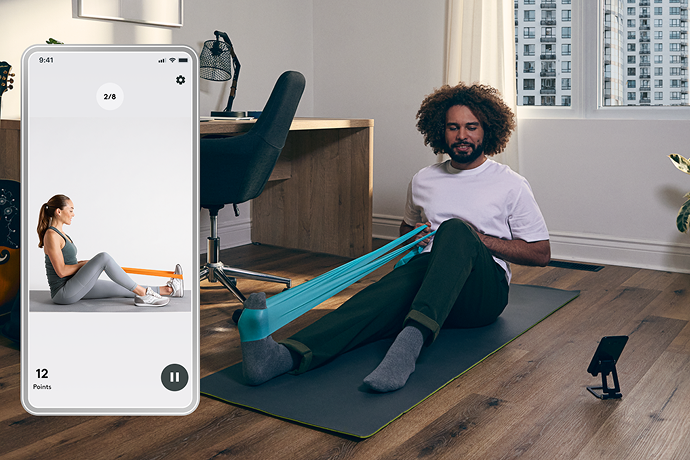
Fully covered foot or ankle pain relief
Find relief from foot pain, ankle pain, plantar fasciitis, & more.
What is a hamstring strain?
The hamstrings are a powerful muscle group in the back of your thighs. They’re made up of three muscles — the biceps femoris, semitendinosus, and semimembranosus. Your hamstrings help bend your knee and extend your hip, making everyday activities like walking, climbing stairs, and bending possible.
Your hamstrings are resilient, but sometimes strains happen when muscle fibers are overstretched or loaded beyond what they can handle. Most happen suddenly during activities involving rapid acceleration or deceleration, such as running or playing sports. They can also happen during movements where your hamstrings are lengthened, such as kicking or dancing.
“The severity of a hamstring strain can span from a little irritation of a couple of muscle fibers to a full tear,” says Dr. Barker. But most hamstring strains are mild to moderate and recover with simple at-home treatments, including intentional loading and mobility work.
Early stage of hamstring strain recovery
Immediately after a hamstring injury, your body begins the healing process. You may experience pain, swelling, bruising, or stiffness that makes certain movements uncomfortable. But how noticeable these symptoms are depends partly on the severity of your strain.
Movement can usually begin early in the recovery process, but the goal at first is to find an amount your hamstring can comfortably tolerate. It’s also important to focus on gentle movement rather than aggressive stretching or strenuous exercise.
“Gentle isometrics for the hamstrings and glutes get blood flow to the area and stimulate healing,” says Dr. Barker. “A little walking is good if you don’t have much pain.”
Isometric exercises contract the muscle without requiring much movement, making them one way to begin loading your hamstring early in recovery. Walking may also be appropriate if it feels comfortable. From there, you can gradually do more as your symptoms and movement improve.
There’s no exact number of days you need to spend in this stage. A mild strain may begin to heal relatively quickly, while a more significant injury may need additional time before taking on more challenging exercises.
Middle stage of hamstring strain recovery
As your symptoms improve, the focus shifts toward restoring a comfortable range of motion and progressively rebuilding strength. You may still notice some pain, stiffness, or weakness, but bruising and swelling generally begin to settle.
Exercise therapy becomes increasingly important during this stage. Rehab may progress from isometric exercises, which engage the muscle without movement, to concentric exercises, in which the muscle shortens as it contracts, like during hamstring curls. “You’re working on getting the muscle to move through a full range of motion and continuing to build muscle strength,” says Dr. Barker.
As your hamstring becomes more comfortable with these movements, exercises can gradually become more challenging. The goal is to build enough strength and capacity for the demands of what you want to get back to, such as walking longer distances, lifting, running, or returning to a sport.
A physical therapist can help determine the appropriate progression. If an exercise ramps up your symptoms, you may need to modify the range, resistance, or amount you’re doing rather than stop moving altogether.
This stage may last several weeks, but progression is based more on how your hamstring is functioning than on reaching a particular date on the calendar.
Late stage of hamstring strain recovery
The late stage focuses on rebuilding strength, coordination, and confidence for the activities you want to return to. Most symptoms should have subsided, although some stiffness or soreness may occur after more intense activities.
“The late stage of recovery is really dependent on the demands you want to place on the hamstring,” says Dr. Barker. “We want to make sure that we’re loading it appropriately for the activities you want to get back to.”
Rehab typically includes eccentric, or muscle-lengthening, exercises such as single leg RDLs. These exercises challenge your hamstrings to produce force while lengthening, which is especially important for activities such as running and changing direction.
Your program may also start to look more like the activity you’re returning to. A runner, for example, may gradually progress from walking and strengthening to jogging and faster running, while someone who plays soccer may add sprinting movements that require quick changes in direction.
A physical therapist can tailor your rehab program to the specific activities or sports you want to return to. Returning to everyday activities may happen much sooner than returning to sprinting or a high-demand sport, and that’s okay. Your strength, symptoms, confidence, and ability to tolerate the demands of your activity can all help guide when you’re ready.
Exercises for hamstring strain recovery
This early-stage isometric exercise gently engages your hamstring without requiring much movement. It can be a useful starting point for rebuilding strength when more dynamic exercises aren't comfortable yet.
Want expert care?
Check if you're covered for our free programTogether, these exercises provide different ways to gradually challenge your hamstring as you recover. Hamstring squeezes offer an early introduction to loading, while hamstring curls and banded curls progressively build strength through movement. Seated hamstring stretches and nerve glides address comfortable mobility, and single leg RDLs add a more challenging strengthening exercise as you're ready for it.
The information contained in these videos is intended to be used for educational purposes only and does not constitute medical advice or treatment for any specific condition. Hinge Health is not your healthcare provider and is not responsible for any injury sustained or exacerbated by your use of or participation in these exercises. Please consult with your healthcare provider with any questions you may have about your medical condition or treatment.
Did you know?
Physical therapy (PT) is for more than just recovering from surgery or injury. It’s one of the top treatments for joint and muscle pain. It helps build strength, improve mobility, and reduce pain. And it doesn't always need to be in person.
Hinge Health members can conveniently access customized plans or chat with their care team at home or on the go — and experience an average 68% reduction in pain* within the first 12 weeks of their program. Learn more*.
Factors that can affect how long recovery takes
There’s no definitive hamstring strain recovery timeline. Even two people with a similar severity of a hamstring strain can progress at different rates. Apart from the severity of the strain, factors that can influence recovery include:
Cause of the injury. Research suggests that hamstring strains associated with running may recover more quickly than those caused by overstretching, such as during kicking or dancing. Differences in injury location and severity may contribute to this.
Location. Where the injury occurs can affect your recovery. Strains involving the tendon or the area where muscle and tendon meet may follow a different recovery course than injuries primarily involving the muscle. One reason for this may be reduced blood flow.
Your activity goals. Being ready for comfortable walking isn’t the same as being ready to sprint, jump, or return to competitive sports. Higher-demand goals generally require more rehabilitation before you’re ready to return.
Consistency with rehab. “Doing your rehab exercises can help expedite your recovery,” says Dr. Barker. Consistent, gradually progressed exercise helps prepare your hamstring for the activities you want to return to.
Sleep. Prioritizing quality sleep gives your body valuable time to rest and recover. Aim for a consistent sleep schedule and create a relaxing bedtime routine to support your hamstring’s healing process.
Stress. High stress can affect sleep, pain, and your ability to stay consistent with rehab, so finding strategies that help you manage it can support your overall recovery. “Lots of stress keeps your nervous system in overdrive,” says Dr. Barker. “This makes it harder to calm down the system and allow that full healing potential.”
Nutrition. Eating enough calories and getting adequate protein and other nutrients gives your body the building blocks it needs during recovery. A balanced diet can also help support your energy for rehabilitation and everyday activity.
Treatments for a hamstring strain
Movement and progressive exercises are central to hamstring strain recovery, helping restore strength and function. Other treatments can help manage symptoms while you gradually return to activity.
Try physical therapy and targeted exercises. Targeted exercises, such as the ones above, can improve strength, mobility, and the hamstring’s ability to tolerate progressively greater loads. You can do exercise therapy at home or with a physical therapist who can guide you through movements tailored to your stage of recovery and help you get back to the activities you enjoy.
Stay active. Gentle activity can help you maintain mobility while you recover. Start with movements your hamstring tolerates well and gradually increase how much you do rather than waiting until every symptom is gone to become active again.
Apply heat or ice. Both methods can provide temporary symptom relief. You might prefer ice when the area feels sore after activity or heat when stiffness is more bothersome. Alternate between the two or stick to the one that feels best for you.
Take over-the-counter (OTC) medication as needed. Pain relievers such as ibuprofen (Advil, Motrin), naproxen (Aleve), and acetaminophen (Tylenol) can help ease pain so you can do your targeted exercises and stay active when you have hamstring pain. Other options are topical NSAIDs or pain relief creams. If you have a medical condition or take other medications, check in with your provider to make sure these OTC options are safe to take.
Consider lifestyle modifications. Sleep, stress, and nutrition can all support recovery. Prioritize adequate sleep, eat a healthy diet with sufficient protein, and adopt techniques to manage stress such as breathing exercises and progressive muscle relaxation.
Try complementary treatments. Talk to your provider if you’re interested in trying alternative treatments for hamstring strain relief, such as massage, acupuncture, or chiropractic care.
Ask about TENS therapy. TENS, or transcutaneous electrical nerve stimulation, uses gentle pulses to quiet your pain response and help reduce pain from a hamstring strain. One option is the wearable device Enso, available through Hinge Health. It’s small, wireless, and portable.
When hamstring pain persists beyond three months
Some hamstring strains take longer than expected to settle, and persistent pain doesn't necessarily mean the muscle hasn't healed or that you've reinjured it.
Your symptoms can be influenced by several factors, including how much activity your hamstring is currently prepared for, your strength and mobility, nerve sensitivity, and the demands you’re placing on your leg.
Working closely with a physical therapist can help identify what’s contributing to ongoing symptoms and adjust your program so you can continue building strength and activity tolerance. You can see a physical therapist in person or use a program like Hinge Health to access a PT via telehealth/video visit.
If your pain has persisted for three months or longer, is getting worse, or keeps returning whenever you increase activity, it’s also a good idea to check in with a healthcare provider to make sure you're addressing the right problem.
When to see a doctor
Hamstring strains often improve with at-home or simple treatments. But if your hamstring pain is severe, getting worse, or making daily activities difficult, see a healthcare provider. It's also a good idea to get care if you have:
Significant swelling or bruising after the injury
A noticeable change in the shape of the muscle
Inability to bear weight or walk without a significant limp
Pain that isn’t improving after several weeks of gradually progressed movement and rehab
Numbness, tingling, or significant weakness extending down the leg
Pain that repeatedly returns when you increase your activity
PT tip: Communicate early and often
“Working closely with your healthcare provider from the beginning can make a huge difference in how quickly you recover,” says Dr. Barker.
Share your goals with your PT so they can prescribe appropriate exercises to help you achieve them. Let them know how your hamstring is doing so they can adjust your rehab plan appropriately. “The more you’re communicating, the better your PT can navigate your rehab, and the better your recovery will go,” says Dr. Barker.
How Hinge Health can help you
If you have joint or muscle pain that makes it hard to move, you can get the relief you’ve been looking for with Hinge Health’s online exercise therapy program.
The best part: You don’t have to leave your home because our program is digital. That means you can easily get the care you need through our app when and where it works for you.
Through our program, you’ll have access to therapeutic exercises and stretches for your condition. Additionally, you’ll have a personal care team to guide, support, and tailor our program to you.
See if you qualify for Hinge Health and confirm free coverage through your employer or benefit plan here.
This article and its contents are provided for educational and informational purposes only and do not constitute medical advice or professional services specific to you or your medical condition.
Looking for pain relief? Check if your employer or health plan covers our program.
Join more than 1.2 million members and over 2,800 companies that trust Hinge Health to get relief.
Related articles

Joint pain before your period? Learn how hormones play a role and get relief tips, including exercises from Hinge Health physical therapists.
Read more
Learn common causes of a stiff neck and how to relieve it, especially with exercises recommended by physical therapists.
Read more
Discover how to treat and prevent knee injuries from falling, especially with exercises from Hinge Health physical therapists.
Read more
Discover the benefits of exercise for heart health, learn how to gauge your exertion and choose the right activities, in honor of American Heart Month.
Read more
Overcome joint and muscle pain with Hinge Health's virtual physical therapy in Denver. Discover personalized care. No cost to you, no commutes.
Read moreReferences
- 1Askling, C., Saartok, T., & Thorstensson, A. (2006). Type of acute hamstring strain affects flexibility, strength, and time to return to pre-injury level. British Journal of Sports Medicine, 40(1), 40–44. doi:10.1136/bjsm.2005.018879
- 2Erickson, L. N., & Sherry, M. A. (2017). Rehabilitation and return to sport after hamstring strain injury. Journal of Sport and Health Science, 6(3), 262–270. doi:10.1016/j.jshs.2017.04.001
- 3Florentino, S. A., Parshva Sangvhi, Adelstein, J., Berk, A., Good, L., Calcei, J., Voos, J., & Salata, M. (2025). Increased incidence of hamstring injuries in the United States from 2015 to 2024 and projected growth through 2030. Arthroscopy Sports Medicine and Rehabilitation, 101295–101295. doi:10.1016/j.asmr.2025.101295
- 4Geraci, A., Mahon, D., Hu, E., Cervantes, J. E., & Nho, S. J. (2024). Prevention and rehabilitation of the athletic hamstring injury. Arthroscopy Sports Medicine and Rehabilitation, 7(2), 101021–101021. doi:10.1016/j.asmr.2024.101021
- 5Hickey, J. T., Opar, D. A., Weiss, L. J., & Heiderscheit, B. C. (2021). Hamstring strain injury rehabilitation. Journal of Athletic Training, 57(2). doi:10.4085/1062-6050-0707.20
- 6Turnagöl, H. H., Koşar, Ş. N., Güzel, Y., Aktitiz, S., & Atakan, M. M. (2021). Nutritional considerations for injury prevention and recovery in combat sports. Nutrients, 14(1), 53. doi:10.3390/nu14010053