Dry needling vs. acupuncture: what's the difference and which one is right for you?
Nov 10, 2026
Reviewed by our clinical and medical experts


Over 1 Million members trust Hinge Health, a digital clinic that provides access to virtual physical therapy, to address their joint and muscle pain.
Reduction in member pain
of licensed physical therapists and health coaches
Average star rating of the Hinge Health mobile app
Bailey JF, et al. Digital Care for Chronic Musculoskeletal Pain: 10,000 Participant Longitudinal Cohort Study. J Med Internet Res 2020;22(5):e18250.
Dry needling and acupuncture both use needles, but they're very different. Learn how each works and what a physical therapist might recommend.
Available at $0 cost to many members
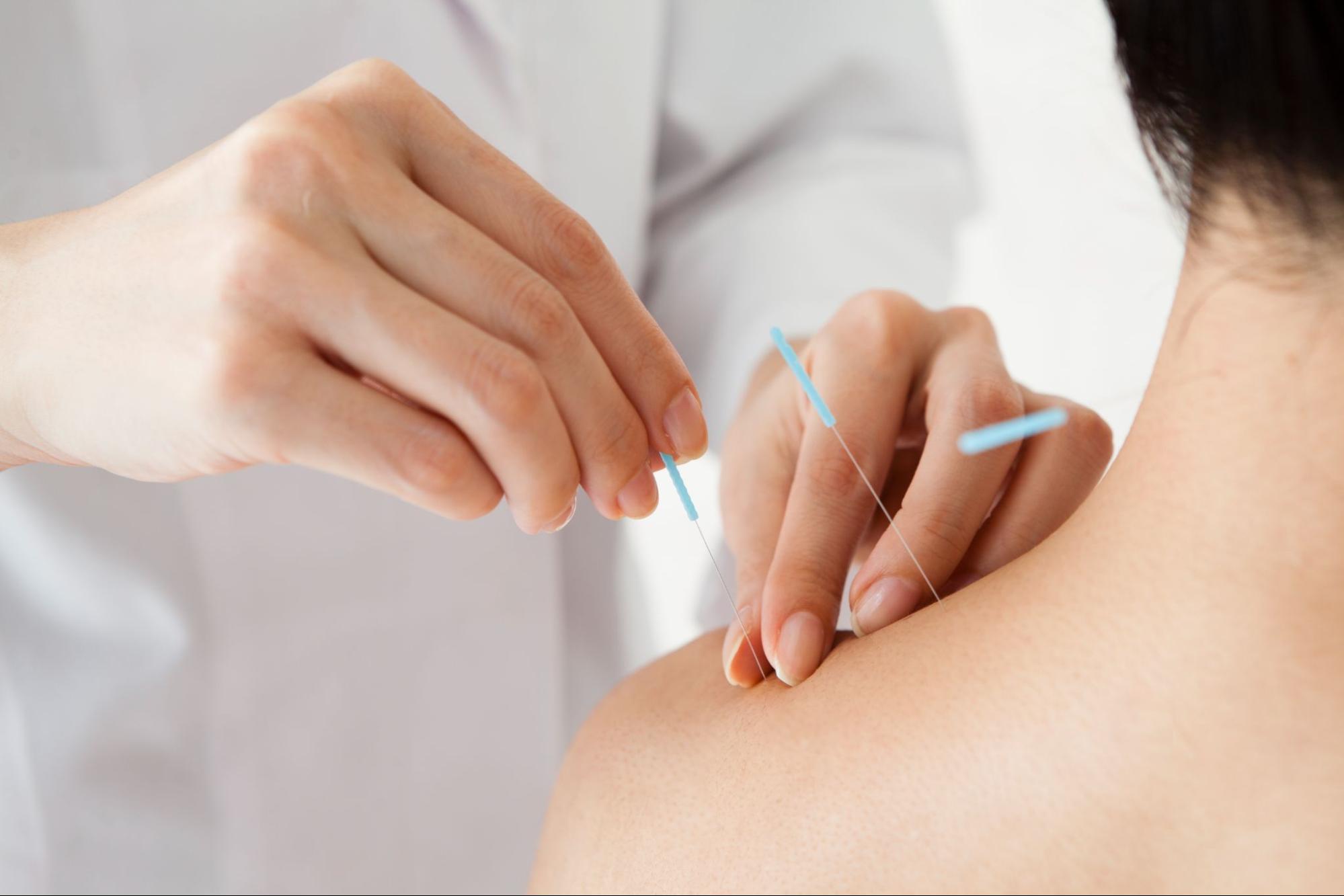
If a physical therapist has mentioned dry needling as an alternative treatment, your first thought might be: Isn’t that acupuncture? There are similarities: Both treatments involve inserting thin needles through your skin, and they both can help alleviate musculoskeletal pain. But there are some key differences in how they’re used and what they’re intended to treat.
Dry needling is a technique used to help relieve muscle pain and tension, while acupuncture involves stimulating specific points across the body and may help manage a variety of health concerns, including chronic pain. Both treatments should be performed by qualified healthcare professionals with appropriate training, although who can provide them varies by state.
“Acupuncture and dry needling start from different ideas about the body. Acupuncture is rooted in traditional Chinese medicine (TCM) and the idea of energy, known as Qi, flowing along specific pathways, while dry needling is built around muscles and the tight spots within them,” says Alec Martinez, PT, DPT, a physical therapist at Hinge Health. “Knowing these differences can help you ask better questions, like what the needling is meant to change and how it connects to the rest of your treatment plan.”
Here, learn how dry needling and acupuncture compare, what research says about their benefits, and how to decide whether either treatment belongs in your pain management plan.

Fully covered pain relief
Find relief from muscle and joint pain.
What is dry needling?
Dry needling is a Western technique in which a trained healthcare professional inserts thin needles into areas of muscle that feel tight or tender, often called myofascial trigger points or muscle knots. It’s intended to help relieve muscle pain and improve comfort with movement. The term “dry” simply means that no medication or other substance is injected into your skin.
In the U.S., some physical therapists offer dry needling after completing additional training. Whether physical therapists can perform the technique, and what training they need, depends on state regulations.
But does dry needling work? Research suggests it may provide short-term pain relief for some people. One review found improvements in neck pain and function, while another found short-term relief for low back pain.
Dry needling may also offer additional pain relief when combined with exercise for certain conditions, including knee osteoarthritis, trapezius muscle pain, and low back pain, according to some studies in a 2026 review. However, most of the studies in the review found no added benefit from dry needling compared with exercise alone.
The takeaway: Dry needling may help ease discomfort, but it isn’t essential for recovery. Exercise remains a key part of managing muscle and joint pain and improving how you move and feel.
What is acupuncture?
Acupuncture has been practiced for at least 2,500 years. According to TCM, the technique involves inserting thin needles at specific points along pathways called meridians to help balance the flow of energy, or Qi, through the body.
Modern explanations often focus on how acupuncture may affect the nervous system and pain processing, although researchers don’t quite understand how it works. Acupuncture is generally performed by licensed acupuncturists, with training and licensing requirements varying by state.
During a typical acupuncture session, needles may remain in place for about 10 to 30 minutes. You might feel a mild ache or tingling sensation, but treatment shouldn’t cause pain.
But does acupuncture work? While acupuncture is commonly used to manage pain, including back, neck, and joint pain, people also try it to help alleviate concerns like nausea, stress, and hormone regulation. Research suggests it may help manage certain conditions, although evidence varies.
For chronic pain, a large analysis involving approximately 20,800 participants found that acupuncture provided greater pain relief than sham acupuncture (a simulated treatment that mimics acupuncture) or no acupuncture. While the difference compared with sham acupuncture was relatively small, the findings suggest that acupuncture’s benefits go beyond the placebo effect.
The takeaway: Acupuncture may help ease pain and discomfort, but it isn’t essential for recovery. Exercise remains a key part of managing muscle and joint pain and improving how you move and feel.
Dry needling vs. acupuncture: key differences
Dry needling isn’t the same practice as acupuncture, even though the two can use the same kind of thin needle. Here’s how they compare:
Dry needling | Acupuncture | |
Origins | Developed from Western approaches to muscle pain and trigger points | Rooted in traditional Chinese medicine |
Needle placement | Often targets tender areas within muscles | Traditionally uses specific acupuncture points; may also target tender areas |
Primary uses | Muscle pain, tenderness, and movement-related discomfort | Chronic pain and a broader range of health concerns |
Practitioners | Trained healthcare professionals, including physical therapists where permitted | Licensed acupuncturists and other appropriately trained practitioners, depending on state law |
What it feels like | May cause a brief muscle twitch or temporary soreness | May cause mild aching, tingling, or other sensations |
There's some overlap between the techniques, particularly in how practitioners choose where to place needles. Rather than focusing on which treatment is categorically better, it may be better to consider your symptoms, preferences, and what you hope to get out of treatment.
Which one is right for you?
If you’re interested in trying dry needling or acupuncture, let your symptoms, treatment goals, and personal preferences help guide your decision. Consider the following:
Dry needling may be worth discussing with your physical therapist if you’re experiencing muscle pain or tenderness in a specific area. It’s sometimes incorporated into a broader physical therapy program alongside strengthening and mobility exercises.
Acupuncture may appeal to you if you’re interested in a complementary, holistic treatment for chronic pain or other concerns, such as certain types of nausea.
What if you have back pain or sciatica? There isn’t enough direct research comparing dry needling and acupuncture to say that one consistently works better than the other. A 2026 analysis found stronger evidence supporting acupuncture for chronic pain than dry needling, although the treatments weren’t necessarily compared directly. And a 2024 clinical trial found that acupuncture improved leg pain and function more than sham acupuncture in people with sciatic pain from a herniated disc.
Ultimately, the decision is personal. Both treatments may help manage your symptoms, but they work best as supplemental therapies to a broader plan that helps you stay active and build strength.
“Some of my patients come in hoping needling will be the whole answer, and I understand the appeal of a quick fix,” says Dr. Martinez. “What I usually see is that the people who keep up with their exercises between visits are the ones who notice the most lasting change. So if you try dry needling or acupuncture, treat it as a helpful extra and keep your exercises as the main event.”
And if neither treatment appeals to you, that’s okay, too. Targeted exercises, physical therapy, and other hands-on approaches to pain management like massage can also help ease pain.
Did you know?
Physical therapy (PT) is for more than just recovering from surgery or injury. It’s one of the top treatments for joint and muscle pain. It helps build strength, improve mobility, and reduce pain. And it doesn't always need to be in person.
Hinge Health members can conveniently access customized plans or chat with their care team at home or on the go — and experience an average 68% reduction in pain* within the first 12 weeks of their program. Learn more*.
What to expect from a dry needling session
If you’re considering dry needling, knowing what happens during a session can help you feel more prepared. The specifics vary depending on your symptoms and your provider’s approach, but here’s what you can generally expect:
Before treatment
Your physical therapist will discuss your symptoms, review your medical history, and determine whether dry needling is appropriate. Be sure to mention any medications you take, particularly blood thinners, as well as pregnancy, medical conditions, or concerns about needles.
During treatment
Your physical therapist inserts thin, sterile needles into specific muscles. You may notice a brief twitch, aching, or pressure. The needling portion of the appointment is often relatively short and may be combined with exercises or other physical therapy treatments.
After treatment
Temporary soreness, minor bruising, or light bleeding can occur. One large study found that minor side effects occurred in about 37% of dry needling sessions, while major adverse reactions were reported in roughly 0.1% of treatments. Serious complications are uncommon but possible, which is why proper training and technique matter.
How many sessions do you need to find relief?
There’s no set number of treatments everyone needs. One survey of U.S. physical therapists found that many typically recommended three to six sessions, but your provider should reassess whether treatment is helping before scheduling your next session.
“Think of the needling sessions as something that tapers off over time while your exercise routine stays steady, since the exercises are what keep your progress going between visits,” says Dr. Martinez.
Who should avoid dry needling?
Dry needling isn’t appropriate for everyone. Certain health conditions, medications, or circumstances may require extra precautions or make another treatment a better option.
Tell your provider if you take blood thinners, have a bleeding disorder, are pregnant, have an infection near the proposed treatment area, or have a condition that affects your immune system. These factors don’t always rule out treatment, but they can influence whether it’s appropriate and how it’s performed.
It’s also important to know that, although uncommon, serious complications can occur. For example, needling near the chest or upper back carries a risk of puncturing a lung, which is why it’s so important to see a licensed professional who’s trained in dry needling. (Seek urgent medical attention if you develop chest pain or shortness of breath after treatment.)
PT tip: Nervous about needles? You have options
"Feeling nervous about needles is okay, and it doesn't mean you have to try dry needling or rule it out,” says Dr. Martinez. “You can ask questions, start small, or choose other hands-on options like steady pressure, massage, or gentle stretching instead. Whatever you decide, the exercises you do are what help you build strength and confidence in how you move."
How Hinge Health can help you
If you have joint or muscle pain that makes it hard to move, you can get the relief you’ve been looking for with Hinge Health’s online exercise therapy program.
The best part: You don’t have to leave your home because our program is digital. That means you can easily get the care you need through our app when and where it works for you.
Through our program, you’ll have access to therapeutic exercises and stretches for your condition. Additionally, you’ll have a personal care team to guide, support, and tailor our program to you.
See if you qualify for Hinge Health and confirm free coverage through your employer or benefit plan here.
This article and its contents are provided for educational and informational purposes only and do not constitute medical advice or professional services specific to you or your medical condition.
Looking for pain relief? Check if your employer or health plan covers our program.
Join more than 1.2 million members and over 2,800 companies that trust Hinge Health to get relief.
Related articles

Learn about rectal prolapse symptoms and treatment options, including strengthening exercises, lifestyle changes, and when surgery may help.
Read more
Learn how to do calf raises to boost lower-body strength and mobility, plus modifications to make this exercise easier or harder.
Read more
Learn common causes of wrist pain, symptoms to watch for, and simple exercises to help prevent and treat discomfort.
Read more
Learn about Dupuytren's contracture and what can cause it, plus exercise tips for relief recommended by physical therapists.
Read more
Learn how ChatGPT is being used in healthcare and the fitness industry, and whether you can benefit from using it in your exercise and pain management.
Read moreReferences
- 1 Acupuncture for pain relief: How it works and what to expect. (2025, August 25). Harvard Health Publishing. https://www.health.harvard.edu/pain/acupuncture-for-pain-relief-how-it-works-and-what-to-expect
- 2American Physical Therapy Association. (2023, July 24). Roundup. https://www.apta.org/article/2023/07/24/state-wins
- 3Boyce, D., Wempe, H., Campbell, C., Fuehne, S., Zylstra, E., Smith, G., Wingard, C., & Jones, R. (2020). Adverse events associated with therapeutic dry needling. International Journal of Sports Physical Therapy, 15(1), 103–113. https://pubmed.ncbi.nlm.nih.gov/32089962/
- 4 Fan, A. Y., Faggert Alemi, S., & Li, Y. M. (2020). Dry needling: Is it derived from acupuncture? How did nonacupuncturists start using it? Alternative Therapies in Health and Medicine, 26(3), 40–46. https://pubmed.ncbi.nlm.nih.gov/31719212/
- 5Fernández-de-Las-Peñas, C., Plaza-Manzano, G., Sanchez-Infante, J., Gómez-Chiguano, G. F., Cleland, J. A., Arias-Buría, J. L., & Navarro-Santana, M. J. (2022). The importance of the local twitch response during needling interventions in spinal pain associated with myofascial trigger points: A systematic review and meta-analysis. Acupuncture in Medicine, 40(4), 299–311. doi:10.1177/09645284211056346
- 6Gattie, E., Cleland, J. A., & Snodgrass, S. (2020). A survey of American physical therapists' current practice of dry needling: Practice patterns and adverse events. Musculoskeletal Science and Practice, 50, 102255. doi:10.1016/j.msksp.2020.102255
- 7Hernández-Secorún, M., Abenia-Benedí, H., Borrella-Andrés, S., Marqués-García, I., Lucha-López, M. O., Herrero, P., Iguacel, I., Tricás-Moreno, J. M., & Hidalgo-García, C. (2023). Effectiveness of dry needling in improving pain and function in comparison with other techniques in patients with chronic neck pain: A systematic review and meta-analysis. Pain Research and Management, 2023, 1523834. doi:10.1155/2023/1523834
- 8Lara-Palomo, I. C., Gil-Martínez, E., López-Fernández, M. D., González González, L. M., Querol-Zaldívar, M. L. Á., & Castro-Sánchez, A. M. (2023). Efficacy of dry needling for chronic low back pain: A systematic review and meta-analysis of randomized controlled trials. Alternative Therapies in Health and Medicine, 29(8), 110–120. https://pubmed.ncbi.nlm.nih.gov/36399082/
- 9Mayo Clinic Staff. (2024a, April 20). Acupuncture. Mayo Clinic. https://www.mayoclinic.org/tests-procedures/acupuncture/about/pac-20392763
- 10Mayo Clinic Staff. (2024b, January 5). Myofascial pain syndrome - Diagnosis and treatment. Mayo Clinic. https://www.mayoclinic.org/diseases-conditions/myofascial-pain-syndrome/diagnosis-treatment/drc-20375450
- 11National Center for Complementary and Integrative Health. (2019). Traditional Chinese medicine: What you need to know. National Institutes of Health. https://www.nccih.nih.gov/health/traditional-chinese-medicine-what-you-need-to-know
- 12National Center for Complementary and Integrative Health. (2022). Acupuncture: Effectiveness and safety. National Institutes of Health. https://www.nccih.nih.gov/health/acupuncture-what-you-need-to-know
- 13Salazar-Arias, M. P., Gómez-Carmona, C. D., Azofeifa-Mora, C., Sánchez-Ureña, B., Badri, S., & Rojas-Valverde, D. (2026). Dry needling and exercise in the treatment of musculoskeletal pain: A systematic review. Sportverletzung Sportschaden. Advance online publication. doi:10.1055/a-2825-6294
- 14Tu, J. F., Shi, G. X., Yan, S. Y., Ni, G. X., Yu, F. T., Cai, G. W., et al. (2024). Acupuncture vs sham acupuncture for chronic sciatica from herniated disk: A randomized clinical trial. JAMA Internal Medicine, 184(12), 1417–1424. doi:10.1001/jamainternmed.2024.5463
- 15Tüzün, E. H., Gıldır, S., Angın, E., Tecer, B. H., Dana, K. Ö., & Malkoç, M. (2017). Effectiveness of dry needling versus a classical physiotherapy program in patients with chronic low-back pain: A single-blind, randomized, controlled trial. Journal of Physical Therapy Science, 29(9), 1502–1509. doi:10.1589/jpts.29.1502
- 16Vickers, A. J., Vertosick, E. A., Lewith, G., MacPherson, H., Foster, N. E., Sherman, K. J., Irnich, D., Witt, C. M., & Linde, K. (2018). Acupuncture for chronic pain: Update of an individual patient data meta-analysis. The Journal of Pain, 19(5), 455–474. doi:10.1016/j.jpain.2017.11.005
- 17Waterway, T., Beougher, J., Butler, R., Church, K., Cook, G., Falsone, S., Hortz, B., Opitz, T., Plisky, P. J., Zylstra, E., & Martin, R. (2026). Treatment guidelines and decision tree for dry needling musculoskeletal conditions: A consensus statement. International Journal of Sports Physical Therapy, 21(5), 556–567. doi:10.26603/001c.161025
- 18Xu, A., Huang, Q., Rong, J., Wu, X., Deng, M., & Ji, L. (2023). Effectiveness of ischemic compression on myofascial trigger points in relieving neck pain: A systematic review and meta-analysis. Journal of Back and Musculoskeletal Rehabilitation, 36(4), 783–798. doi:10.3233/BMR-220045
- 19Zhang, Y., Zhao, Y., Cheng, Y., Liu, L., Wang, Z., & Wu, B. (2026). The impact of complementary interventions on pain and disability in patients with chronic non-cancer pain: A network meta-analysis. Complementary Therapies in Clinical Practice, 63, 102060. doi:10.1016/j.ctcp.2026.102060