Over 1 Million members trust Hinge Health, a digital clinic that provides access to virtual physical therapy, to address their joint and muscle pain.
Reducción del dolor del usuario
de fisioterapeuta titulado y coach de salud
Valoración media de estrellas de la Aplicación móvil Hinge Health
Bailey JF, entre otros. Atención digital para el dolor musculoesquelético crónico: estudio de cohorte longitudinal con 10.000 participantes. J Med Internet Res 2020; 22(5):e18250.
Menopause-related anxiety is common and treatable. Learn what drives it, what symptoms to watch for, and how movement can help you feel more like yourself.
Available at $0 cost to many members
If you’re going through the menopause transition, you may already be familiar with physical symptoms like hot flashes, joint stiffness, or sleep changes. But menopause can affect how you feel emotionally, too. Anxiety can become more noticeable during perimenopause, even if you’ve never experienced it before.
There isn’t just one reason menopause and anxiety can overlap. Hormonal fluctuations may play a direct role, but other factors such as sleep disruption, hot flashes, physical discomfort, everyday stress, and your mental health history can all affect how you feel.
“Changes in estrogen and progesterone levels during perimenopause can directly affect your brain’s stress response,” explains Martha Barker, PT, DPT, a physical therapist at Hinge Health. “It also helps to remember that, while anxiety is common in menopause, these changes in anxiety levels can be transient.”
There are many ways to manage anxiety during the menopause transition. Regular movement, quality sleep, stress-management strategies, therapy, and, when appropriate, medication or menopause hormone therapy (MHT) can all be part of the picture.
Ahead, learn more about the connection between menopause and anxiety, plus movement-based strategies recommended by Hinge Health physical therapists that can help support both your physical and mental well-being.
Fully Covered Pelvic Care
Find relief from pelvic pain, leakage, muscle weakness, & more.
Why menopause causes anxiety
Perimenopause can last anywhere from two to 10 years before you reach menopause, which is marked by 12 consecutive months without a period. During this transition, estrogen and progesterone can ping-pong up and down, sometimes erratically. These hormonal fluctuations can affect multiple systems in your body, including brain chemicals called neurotransmitters that help to regulate mood, sleep, and your stress response. As a result, some people may become more susceptible to anxiety.
But hormones aren’t the only factor. Hot flashes and night sweats can disrupt sleep, and poor sleep can contribute to feelings of anxiety. Joint pain or other physical symptoms can add another source of stress, too.
“When you’re in pain or tired, you’re more susceptible to feelings of stress and anxiety,” says Dr. Barker.
Life circumstances matter as well. The menopause transition often coincides with other sources of stress, from work and relationships to caregiving responsibilities and other health changes. People with a history of anxiety, depression, or other mood symptoms may also be more vulnerable to mental health changes during this stage of life.
Symptoms of menopause and anxiety
Anxiety affects everyone differently. Some people experience a persistent sense of worry or uneasiness, while others notice more physical symptoms. Common signs and symptoms can include:
Feeling nervous, worried, or on edge
Irritability
Trouble concentrating
Difficulty sleeping
A racing or pounding heart
Feeling restless or unable to relax
Muscle tension or muscle spasms
Panic attacks
Some physical menopause symptoms, such as hot flashes and heart palpitations, can also feel similar to symptoms of anxiety. Tracking when your symptoms occur and discussing them with a menopause-informed healthcare provider can help you sort out what may be contributing.
How movement helps menopause and anxiety
Movement can be a valuable part of managing anxiety during menopause, and it doesn’t have to mean an intense workout.
Regular physical activity can support mood, sleep, stress management, strength, and overall well-being. It can also help you manage musculoskeletal symptoms that may be adding to how you feel physically and emotionally.
“Exercise triggers the release of endorphins, or ‘feel good’ chemicals in your brain that boost your mood,” explains Dr. Barker. “It also helps to lower stress hormones like cortisol, which contribute to anxiety.”
Walking, strength training, stretching, yoga, swimming, or another activity you enjoy can all count. But exercise isn’t a replacement for mental health treatment when you need it. Think of movement as one tool in a larger toolbox for supporting your physical and emotional health during the menopausal transition.
Exercises for menopause and anxiety
Deep belly breathing gives you an opportunity to pause and focus on your breath when you’re feeling tense or overwhelmed. “It helps to calm you down when anxiety hits, because it activates your parasympathetic nervous system, or your ‘rest and digest’ mode,” explains Dr. Barker.
Want expert care?
Check if you're covered for our free programDid you know?
Pelvic floor physical therapy is more than just kegel exercises. Various exercises tailored to your symptoms and needs are key to getting relief. Pelvic floor PT can relieve many different pelvic issues, such as pelvic pain, painful sex, and urinary incontinence.
Members of the Hinge Health pelvic health program experience an average 67% reduction in pelvic pain and 54% reduction in urinary incontinence within the first 12 weeks. Learn more*.
You don’t need to choose between strength, cardio, and relaxing movement. Including a mix of activities you enjoy can support both your physical health and overall well-being during menopause, Dr. Barker says.
The information contained in these videos is intended to be used for educational purposes only and does not constitute medical advice or treatment for any specific condition. Hinge Health is not your healthcare provider and is not responsible for any injury sustained or exacerbated by your use of or participation in these exercises. Please consult with your healthcare provider with any questions you may have about your medical condition or treatment.
Treatments for menopause and anxiety
The right treatment depends on how anxiety is affecting you and what else may be contributing to it. Lifestyle strategies and movement may be enough for some people with mild symptoms, while others may benefit from more targeted approaches, such as psychotherapy, medication, treatment of other menopause symptoms, or a combination of approaches. Consider these treatments:
Stay active. Movement can support mood, sleep, stress management, and physical health. Walking, stretching, swimming, strength training, and other forms of exercise can all help, so focus on activities that feel manageable and enjoyable to you.
Try physical therapy and targeted exercises. Targeted exercises help to address other menopause symptoms that may lead to anxiety, such as pelvic floor pain or urinary incontinence. You can do exercise therapy at home or work with a physical therapist who can guide you through movements tailored to both the physical and emotional symptoms of menopause. You can see a physical therapist in person or use a program like Hinge Health, where you may access a PT via telehealth/video visit.
Prioritize quality sleep. Sleep disruption can make it harder to cope with stress and anxiety. Developing consistent sleep hygiene habits, such as following a sleep routine, cooling your bedroom before sleep, and practicing relaxation techniques and mindfulness exercises, can all help you fall asleep.
Consider cognitive behavioral therapy (CBT). CBT is a type of psychotherapy that can help you recognize and change thought and behavior patterns that contribute to anxiety. A mental health professional can also help you develop strategies for managing symptoms when they arise so you’re prepared at any time.
Talk to your provider about menopause hormone therapy. MHT is an effective treatment for menopause symptoms such as hot flashes and night sweats. Its effect on anxiety is less clear, and it isn’t considered a stand-alone treatment for an anxiety disorder. If anxiety is occurring alongside other menopause symptoms, your provider can help you determine whether MHT may be appropriate based on your symptoms, health history, and individual risks and benefits.
Ask about medication for anxiety. If anxiety is persistent or interfering with your daily life, a healthcare provider may recommend medication, psychotherapy, or both. Treatment is individualized based on your symptoms and medical history.
Consider complementary treatments. Talk to your provider if you’re interested in trying alternative treatments for anxiety relief, such as massage, acupuncture, or chiropractic care.
Tips to manage menopause anxiety
You don’t have to overhaul your routine to support your mental health. Small, consistent changes — like timing your workouts strategically, tracking symptom patterns, and adjusting your sleep environment — can make a meaningful difference in managing menopause-related anxiety day to day.
Track your patterns. Sleep, hot flashes, pain, stressful events, and other factors may influence how you feel. “I recommend keeping a little diary on your phone’s notes app to help track if there are times of day, or certain triggers, that make anxiety worse,” says Dr. Barker. Look for patterns rather than trying to identify or eliminate every possible trigger.
Move when it works for you. You don’t need to exercise at a particular time of day to benefit. Choose a time that fits your schedule and makes it easier to stay consistent. A morning walk may feel great for one person, while an evening strength session works better for someone else.
Adjust movement to how you feel. On days when anxiety or other menopause symptoms are more noticeable, you can still move without sticking rigidly to your usual workout. A walk, gentle stretching, breathing exercises, or a shorter workout can help you stay connected to movement while respecting how you feel. “Try to get in some light movement to help keep endorphin levels high and calm your nervous system without overloading it,” says Dr. Barker.
Pay attention to physical symptoms without assuming anxiety is the cause. Tingling and other unusual sensations can occur for many reasons. If you experience new, persistent, worsening, or one-sided tingling or numbness, talk to a healthcare provider rather than assuming it’s related to menopause or anxiety.
When to see a doctor
Anxiety during the menopause transition is common, but you don’t have to wait for it to become severe before asking for help. Talk to a healthcare provider if your anxiety is persistent, distressing, interfering with sleep or everyday activities, or simply feels difficult to manage on your own. It’s especially important to get medical care if you experience:
Frequent or disabling panic attacks
New or concerning heart palpitations, chest pain, or significant shortness of breath
Anxiety that is interfering with work, relationships, sleep, or everyday activities
Symptoms of depression or another mental health condition
New, persistent, worsening, or one-sided numbness or tingling
PT tip: Focus on what you can do
Menopause symptoms can change over time, and the same is true for anxiety. Rather than waiting to feel completely symptom-free before doing the things that matter to you, focus on small actions that help you feel supported now, whether that’s taking a walk, getting some restorative sleep, or reaching out for professional support when you need it.
How Hinge Health can help you
If you have pelvic pain, bladder, bowel, or other pelvic symptoms that are affecting your quality of life, you can get the relief you've been looking for with Hinge Health’s online exercise therapy program.
The best part: You don’t have to leave your home because our program is digital. That means you can easily get the care you need through our app, when and where it works for you. Through our program, you’ll have access to therapeutic exercises and stretches for your condition. Additionally, you’ll have a personal care team to guide, support, and tailor our program to you.
See if you qualify for Hinge Health and confirm free coverage through your employer or benefit plan here.
This article and its contents are provided for educational and informational purposes only and do not constitute medical advice or professional services specific to you or your medical condition.
Looking for pain relief? Check if your employer or health plan covers our program.
Join more than 1.2 million members and over 2,800 companies that trust Hinge Health to get relief.
Related articles

Learn how to do pelvic floor massage, explore effective techniques and tools, key benefits and insight from a pelvic floor physical therapist.
Read more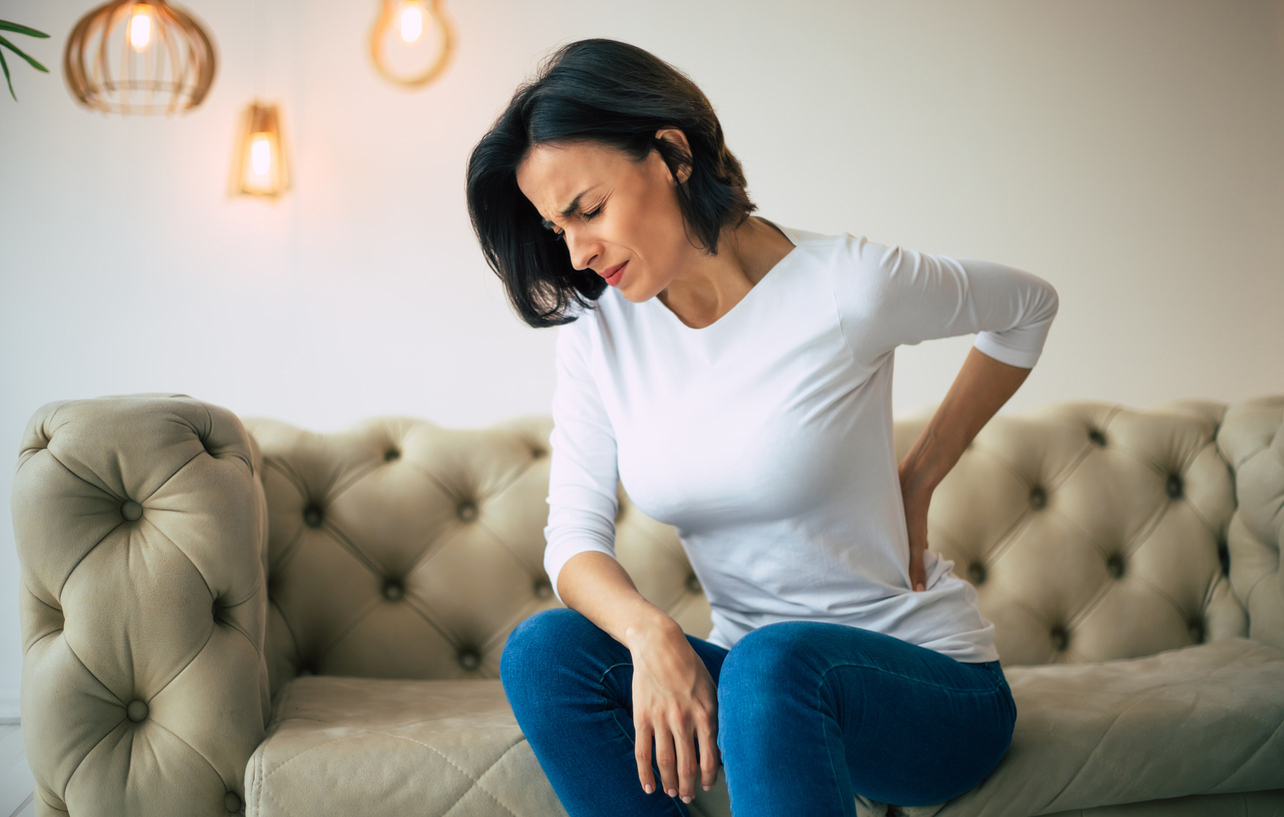
Learn what causes back pain during menopause and discover exercises, lifestyle tips, and treatment options that can help you find relief.
Read more
Got stiff or painful shoulders? Try these exercises and stretches recommended by our physical therapists to improve shoulder function and quality of life.
Read more
Posterior tibial tendinitis could be the reason your foot arch and ankle hurt when you walk. Try these tips and exercises from physical therapists.
Read moreReferences
- 1Huang, S., Wang, Z., Zheng, D., & Liu, L. (2023). Anxiety disorder in menopausal women and the intervention efficacy of mindfulness-based stress reduction. American Journal of Translational Research, 15(3), 2016.
- 2How menopause affects your mental health | let’s talk menopause. (n.d.). Www.Letstalkmenopause.Org. Retrieved September 16, 2026, from https://www.letstalkmenopause.org/menopause-mental-health
- 3Kandasamy, G., Almaghaslah, D., & Almanasef, M. (2024). A study on anxiety and depression symptoms among menopausal women: A web-based cross sectional survey. Frontiers in Public Health, 12. doi:10.3389/fpubh.2024.1467731
- 4Dąbrowska, J., Dąbrowska-Galas, M., Rutkowska, M., & Michalski, B. A. (2016). Twelve-week exercise training and the quality of life in menopausal women – clinical trial. Menopausal Review, 15(1), 20–25. doi:10.5114/pm.2016.58769
- 5Anekwe, C. V., Cano, A., Mulligan, J., Ang, S. Bin, Johnson, C. N., Panay, N., Schaedel, Z., Akam, E. Y., Porterfield, F., Wang, E., & Nappi, R. E. (2025). The role of lifestyle medicine in menopausal health: A review of non-pharmacologic interventions. Climacteric, 28(5), 478–496. doi:10.1080/13697137.2025.2548806
- 6Rukure, H., & Husted, M. (2025). Cognitive behavioural therapy for menopausal symptoms: A systematic review of efficacy in improving quality of life. BMC Women’s Health, 26(1). doi:10.1186/s12905-025-04142-y
- 7Menopause treatment | Office on Women’s Health. (2014). OASH | Office on Women’s Health. https://womenshealth.gov/menopause/menopause-treatment
- 8Hantsoo, L., & Epperson, C. N. (2017). Anxiety disorders among women: A female lifespan approach. Focus: Journal of Life Long Learning in Psychiatry, 15(2), 162–172. doi:10.1176/appi.focus.20160042
- 9Kim, N., Ka, S., & Park, J. (2023). Effects of exercise timing and intensity on physiological circadian rhythm and sleep quality: A systematic review. Physical Activity and Nutrition (Online), 27(3), 052–063. doi:10.20463/pan.2023.0029