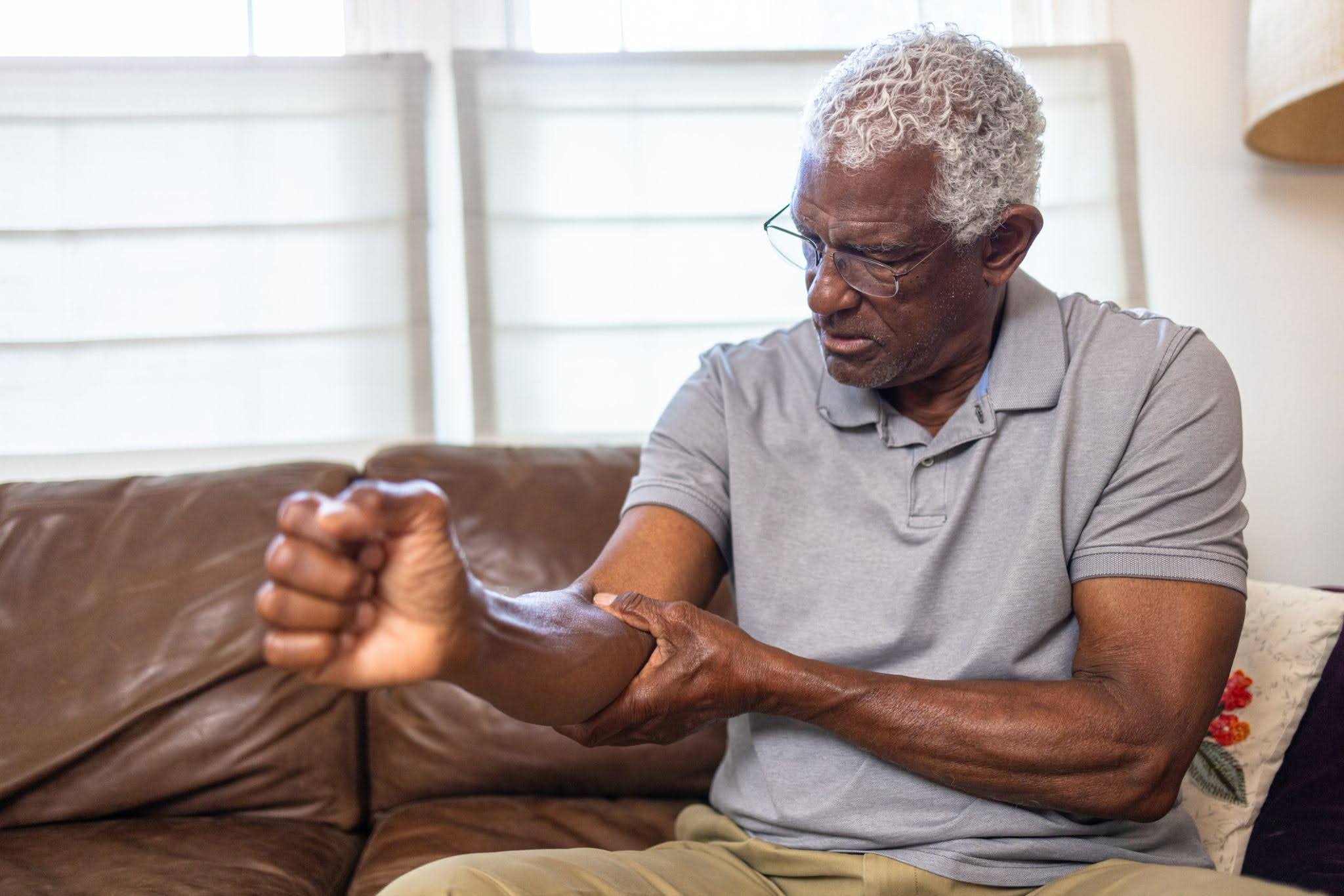
Over 1 Million members trust Hinge Health, a digital clinic that provides access to virtual physical therapy, to address their joint and muscle pain.
Reduction in member pain
of licensed physical therapists and health coaches
Average star rating of the Hinge Health mobile app
Bailey JF, et al. Digital Care for Chronic Musculoskeletal Pain: 10,000 Participant Longitudinal Cohort Study. J Med Internet Res 2020;22(5):e18250.
Tennis elbow and golfer's elbow both cause elbow pain, but affect opposite sides. Learn how to tell them apart and what to do about it.
Available at $0 cost to many members
Have you ever reached for a coffee mug, turned a doorknob, or shook someone's hand, and felt a sharp twinge flare around your elbow? You could have tennis elbow (lateral epicondylitis) or golfer's elbow (medial epicondylitis) — both of which can contribute to elbow pain. While they both affect the elbow, the discomfort shows up on different sides of the joint and is often triggered by different movements.
But you don’t just have to deal with this type of discomfort. Both conditions are common, highly treatable, and usually improve with simple at-home treatments — not surgery or prolonged rest. Despite their names, you don't have to play tennis or golf to develop either one. Everyday activities that involve repeated gripping, lifting, twisting, or wrist movements can contribute to either type of elbow pain.
Identifying whether your pain is on the inside or outside of your elbow can help you better understand what's going on and choose targeted exercises that support your recovery. Although the exercises may differ slightly depending on where your pain is, both conditions are typically managed with gentle movement, progressive strengthening, and gradual return to the activities you enjoy.
"Whether it turns out to be tennis elbow or golfer's elbow, you don't need a firm label before you can start feeling better,” says Dr. Andrea Bettini, PT, DPT, a Hinge Health physical therapist. “What I pay attention to is where you feel your symptoms and how they change with activity — that often tells us more than the name does. From there, we can find gentle movements and a few small adjustments to how you grip, lift, or type that let you keep doing what matters to you while your elbow settles down."
Ahead, learn the differences between tennis elbow and golfer's elbow, what causes each condition, and how targeted exercises recommended by Hinge Health physical therapists can help alleviate pain long-term.
Reviewed by our clinical and medical experts


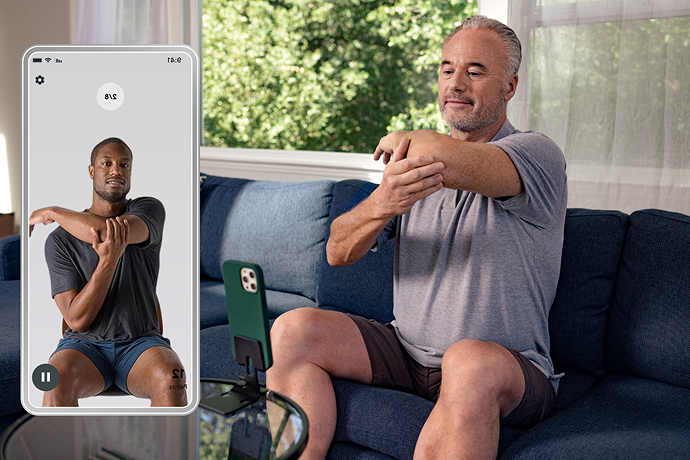
Fully covered arm or shoulder pain relief
Find relief from arm pain, shoulder pain, pinched nerves, & more.
Tennis elbow vs. golfer's elbow
Tennis elbow and golfer's elbow are both conditions that affect the tendons in and around your elbow, but they're not one and the same. The main difference is which side of the elbow they affect. Tennis elbow involves the tendons on the outer elbow that help extend your wrist. Golfer's elbow affects the tendons on the inner elbow that help bend your wrist and grip objects.
Despite the "-itis" you sometimes see in their medical names, these conditions involve gradual changes in the tendon from repetitive movements that were more than the tendon was ready for. But the tendons in your body are resilient and are designed to take on load. That's why treatment focuses on gradually rebuilding your tendon's capacity through movement and strengthening exercises, rather than just trying to reduce inflammation.
Generally speaking, tennis elbow is more common. Golfer’s elbow is less common and may account for up to 20% of all epicondylitis cases.
Tennis elbow | Golfer's elbow | |
Location | Outer side of the elbow | Inner side of the elbow |
Tendons involved | Tendons that straighten the wrist and fingers | Tendons that bend the wrist and grip |
Movements that may aggravate it | Lifting with the palm down, turning doorknobs, gripping, and straightening the wrist | Bending the wrist, gripping, and twisting the forearm |
Common aggravating activities | Painting, typing, using hand tools, and racquet sports | Throwing, lifting weights, hammering, and golf swings |
Causes of tennis and golfer's elbow
Tennis and golfer's elbow can occur from similar activities, and both usually develop gradually from repeated loading of the forearm muscles and tendons, rather than from one specific injury. The difference is which side of the elbow is affected.
Again, despite their names, most people who develop either condition don't play tennis or golf. Any repeated arm and wrist motion at work or home, from carpentry to using a computer mouse, can lead to tennis or golfer’s elbow.
Tennis elbow
This tends to develop when the tendons on the outside of your elbow are asked to handle more wrist straightening and gripping than they're ready for. This can happen with activities like painting, racquet sports, using hand tools, or other repetitive arm movements. Repeating the same motions without enough time to adapt can lead to gradual changes in the tendon over time.
Golfer's elbow
This tends to develop when the tendons on the inside of your elbow are asked to handle more wrist bending, gripping, and forearm twisting than they're ready for. Common contributors include activities like lifting weights, throwing, hammering, gardening, or other repetitive gripping tasks.
Symptoms of tennis elbow vs. golfer's elbow
The biggest difference between tennis elbow and golfer's elbow is where you feel the pain. Paying attention to which side of your elbow is tender — and which movements bring on symptoms — can help you tell them apart.
Tennis elbow symptoms
Pain on the outside of your elbow. You may feel tenderness over the bony bump on the outer part of your elbow (lateral epicondyle).
Pain with gripping, lifting, or straightening your wrist. Lifting an object with your palm facing down, carrying groceries, or using a screwdriver are all examples of activities or movements that may increase your symptoms.
A weaker grip. Your grip may feel weaker or less reliable than usual.
Golfer's elbow symptoms
Pain on the inside of your elbow. Tenderness is usually felt over the bony bump on the inside of your elbow (medial epicondyle).
Pain with gripping, bending your wrist, or twisting your forearm. Lifting weights, turning a doorknob, or swinging a golf club can aggravate symptoms of golfer’s elbow.
Tingling in the ring and pinky fingers. Sometimes nearby nerves can become sensitive, which can lead to tingling or numbness in the ring and pinky fingers.
How movement can help with elbow pain
It's completely understandable to want to protect a sore elbow by resting it. But tendons usually recover better with the right amount of gradual, progressive movement than with complete rest. Research shows that targeted isometric exercises (movements that call for holding a static position) help strengthen tendons, enabling them to better adapt to repetitive movements and improve their ability to handle everyday tasks, which can help reduce pain.
Think of it like training for a long walk or learning a new skill: you improve by doing a little at a time, not by avoiding it altogether. It's normal to notice some soreness as you gradually increase activity.
A physical therapist can help you find the right balance, also known as your movement sweet spot, so you continue making progress while keeping symptoms manageable.
"The goal is to find exercises that load the tendon without causing a big spike in pain or soreness that lingers into the next day,” says Dr. Bettini. “I often tell people that mild, short-lived soreness is okay as long as your symptoms settle within about 24 hours. Sharing how things feel with your physical therapist helps us fine-tune your starting point and gradually progress your program as you feel more confident and strong."
Exercises for tennis elbow and golfer's elbow
The right exercises can help you keep moving while gradually building your arm’s strength and confidence for everyday activities. You don’t have to wait until your symptoms are completely gone to move. Start with an amount that feels manageable, use slow, controlled movements, and adjust as needed.
“I don’t just focus on the elbow itself,” explains Dr. Bettini. “The forearm, wrist, shoulder, and upper arm all contribute to gripping, lifting, and reaching, so strengthening these areas can help your arm share the work. I want the whole arm strong and doing its share, from the shoulder above to the wrist below.”
Your elbow doesn’t work alone. Your shoulder, upper arm, forearm, and wrist all help when you grip, lift, or reach. Strengthening these areas can help your arm handle everyday activities with more confidence.
A physical therapist can help you choose a good starting point. Depending on where you feel your symptoms, you may spend more time on exercises that strengthen the muscles that straighten or bend your wrist, or that help turn your forearm. The exercises below target several parts of the arm—not just the elbow.
Exercises for tennis elbow and golfer's elbow
Rest your forearm on a table or your thigh, with your wrist near the edge. Using a light weight or resistance band, slowly lift and lower your hand. Keep the movement smooth and work within a comfortable range, especially as you lower your hand. This helps your wrist and forearm gradually build strength for gripping and lifting.
Want expert care?
Check if you're covered for our free programTogether, these movements build the strength of the forearm muscles that bend and straighten the wrist, improve grip, and ease wrist stiffness. Consistency matters more than intensity, and keeping up a simple maintenance routine once you feel better helps protect your progress.
The information contained in these videos is intended to be used for educational purposes only and does not constitute medical advice or treatment for any specific condition. Hinge Health is not your healthcare provider and is not responsible for any injury sustained or exacerbated by your use of or participation in these exercises. Please consult with your healthcare provider with any questions you may have about your medical condition or treatment.
Did you know?
Physical therapy (PT) is for more than just recovering from surgery or injury. It’s one of the top treatments for joint and muscle pain. It helps build strength, improve mobility, and reduce pain. And it doesn't always need to be in person.
Hinge Health members can conveniently access customized plans or chat with their care team at home or on the go — and experience an average 68% reduction in pain* within the first 12 weeks of their program. Learn more*.
Treatments for both tennis and golfer's elbow
Because both conditions involve tendons adapting to repeated stress, treatment follows the same general principles: gradually loading the tendon, improving strength, and modifying activities just enough to keep you moving while symptoms settle. Consider these simple at-home treatments recommended by Hinge Health physical therapists.
Try physical therapy and targeted exercises. Targeted exercises, such as the ones above, help strengthen your forearm tendons so they can handle daily activity with less pain. You can do exercise therapy at home or work with a physical therapist who can guide you through movements tailored to your needs. You can see a physical therapist in person or use a program like Hinge Health, where you may access a PT via telehealth/video visit.
Stay active. Targeted forearm strengthening and stretching exercises are designed to help with recovery, but any type of movement — like walking, stretching, or even household chores — can improve blood flow to tender areas.
Apply heat or ice. Heat can ease muscle stiffness and soothe tension, while ice can numb pain and reduce swelling. Consider alternating between the two or choosing the method that works best for you.
Try over-the-counter (OTC) medication. Pain relievers such as ibuprofen (Advil, Motrin), naproxen (Aleve), and acetaminophen (Tylenol) can help ease pain so you can do your targeted exercises and stay active when you have elbow pain. Other options are topical NSAIDs or pain relief creams. If you have a medical condition or take other medications, check in with your provider to make sure these OTC options are safe to take.
Consider lifestyle modifications. Factors like sleep, stress, nutrition, and certain activities can all play a role in how you feel. In fact, many people are surprised to learn that pain isn’t just about what’s happening physically — your daily habits and overall well-being can have a real impact, too. Staying curious about how your routines affect your muscles and joints can help you identify where small changes might help reduce pain. For example, you might notice your pain is less noticeable on low-stress days.
Pace your activities. Modify activities that trigger pain. If lifting certain objects aggravates symptoms, try to break up that activity into shorter sessions.
Consider complementary treatments. Talk to your provider if you're interested in trying alternative treatments for elbow pain relief, such as massage, acupuncture, or chiropractic care.
Ask about TENS therapy. TENS, or transcutaneous electrical nerve stimulation, uses gentle pulses to quiet your pain response and help reduce pain associated with conditions like tennis elbow and golfer's elbow. One option is the wearable device Enso, available through Hinge Health. It's small, wireless, and portable.
Tips to manage tennis and golfer's elbow
Small adjustments can take pressure off a sore elbow as it recovers, from how you grip your tools to how you warm up before repetitive tasks. Consider these tips:
Modify your grip. Switching to a thicker, padded, or more ergonomic grip on tools, racquets, or your computer mouse can spread out the load across your hand and forearm, reducing strain on your tendons and nearby nerves.
Wear a brace as needed. A counterforce brace worn just below the elbow may reduce discomfort during activities that involve repetitive gripping or wrist movements. It can be a helpful short-term tool while you continue strengthening the area.
Warm up before repetitive activities. Gently warming up your forearm with the above targeted exercises before tasks with repetitive arm movements, such as gardening, or sports (like tennis) can help your tendons prepare for the work ahead.
Gradually build your tolerance. Rather than avoiding activities altogether, adjust the intensity, duration, or frequency if symptoms flare. As your strength improves, you can slowly build back toward your usual routine.
Take movement snack breaks. If you spend long periods typing, gripping tools, or doing repetitive tasks, try pausing every 30 to 60 minutes to stretch your hands, wrists, and forearms before getting back to work.
Listen to your body. Mild soreness during or after activity can be part of the recovery process. If pain increases significantly or lingers well into the next day, consider scaling back on that activity before progressing again.
When to see a doctor
Elbow pain often improves with consistent self-care and movement-based treatments. But if your elbow pain is severe, getting worse, or causing difficulty with daily activities, see a healthcare provider. It's also a good idea to get care if you have:
Symptoms that don't improve after several weeks of self-care
Significant weakness or loss of function in the arm or hand
Numbness or tingling that extends down the arm
PT tip: Find your starting load with a simple table test
Here's a simple starting point Dr. Bettini recommends to help determine the right weight to get started with. “Rest your forearm on a table so your elbow isn't doing all the work, then pick a light weight or resistance band you can move comfortably for about 15 slow reps,” she says. “Move slowly, especially on the lowering part — that controlled lowering is where a lot of the tendon-building happens. Then check in the next morning: if your elbow feels about the same, that's a good load to stay with for a week or so before you nudge it up a little.”
How Hinge Health can help you
If you have pelvic pain or symptoms that are affecting your quality of life, you can get the relief you've been looking for with Hinge Health’s online exercise therapy program.
The best part: You don’t have to leave your home because our program is digital. That means you can easily get the care you need through our app, when and where it works for you.
Through our program, you’ll have access to therapeutic exercises and stretches for your condition. Additionally, you’ll have a personal care team to guide, support, and tailor our program to you.
See if you qualify for Hinge Health and confirm free coverage through your employer or benefit plan here.
This article and its contents are provided for educational and informational purposes only and do not constitute medical advice or professional services specific to you or your medical condition.
Looking for pain relief? Check if your employer or health plan covers our program.
Join more than 1.2 million members and over 2,800 companies that trust Hinge Health to get relief.

Related articles

Learn about physical recovery after pregnancy loss, including the role of physical therapy to manage symptoms and promote healing.
Read more
Discover common causes and best treatments for neck and shoulder pain. Get exercises and tips from physical therapists to manage and prevent discomfort.
Read more
Is joint and muscle pain at night keeping you up? Learn why pain can worsen while you sleep, plus prevention tips and exercises from physical therapists.
Read more
Learn how to do a bridge exercise to strengthen your glutes and core, with modifications for any level and video demos.
Read moreReferences
- 1Buchanan, B. K., & Varacallo, M. A. (2023). Lateral epicondylitis (tennis elbow). In StatPearls. StatPearls Publishing. https://www.ncbi.nlm.nih.gov/books/NBK431092/
- 2Li, D., Hammad, A., & Kaiser, K. (2026). Medial epicondylitis (golfer's elbow). In StatPearls. StatPearls Publishing. https://www.ncbi.nlm.nih.gov/books/NBK519000/
- 3Reece, C. L., Li, D., & Susmarski, A. J. (2024). Medial epicondylitis. In StatPearls. StatPearls Publishing. https://www.ncbi.nlm.nih.gov/books/NBK557869/
- 4Zahn, K. V., & Byerly, D. W. (2023). Medial epicondyle injection. In StatPearls. StatPearls Publishing. https://www.ncbi.nlm.nih.gov/books/NBK551506/
- 5Konarski, W., Poboży, T., Kotela, A., Hordowicz, M., & Poboży, K. (2022). Ultrasound in the differential diagnosis of medial epicondylalgia and medial elbow pain. Healthcare (Basel, Switzerland). https://pmc.ncbi.nlm.nih.gov/articles/PMC9407887/
- 6Taylor, S. A., & Hannafin, J. A. (2012). Evaluation and management of elbow tendinopathy. Sports Health. https://pmc.ncbi.nlm.nih.gov/articles/PMC3435941/
- 7Ikonen, J., Lähdeoja, T., Ardern, C. L., Buchbinder, R., Reito, A., & Karjalainen, T. (2022). Persistent tennis elbow symptoms have little prognostic value: A systematic review and meta-analysis. Clinical Orthopaedics and Related Research. https://pmc.ncbi.nlm.nih.gov/articles/PMC8923574/
- 8Stasinopoulos, D. (2022). Isometric exercise for the management of lateral elbow tendinopathy. Journal of Clinical Medicine. https://pmc.ncbi.nlm.nih.gov/articles/PMC9820871/
- 9Stasinopoulos, D., & Stasinopoulos, I. (2017). Comparison of effects of eccentric training, eccentric-concentric training, and eccentric-concentric training combined with isometric contraction in the treatment of lateral elbow tendinopathy. Journal of Hand Therapy. https://pubmed.ncbi.nlm.nih.gov/27823901/
- 10American Academy of Orthopaedic Surgeons. (n.d.). Tennis elbow (lateral epicondylitis). OrthoInfo. https://orthoinfo.aaos.org/en/diseases--conditions/tennis-elbow-lateral-epicondylitis/
- 11American Academy of Orthopaedic Surgeons. (n.d.). Medial epicondylitis (golfer's elbow). OrthoInfo. https://orthoinfo.aaos.org/en/diseases--conditions/medial-epicondylitis-golfers-elbow/
- 12Mayo Clinic Staff. (2025). Tennis elbow — Symptoms and causes. Mayo Clinic. https://www.mayoclinic.org/diseases-conditions/tennis-elbow/symptoms-causes/syc-20351987
- 13Mayo Clinic Staff. (2024). Tendinitis pain: Should I apply ice or heat? Mayo Clinic. https://www.mayoclinic.org/diseases-conditions/tendinitis/expert-answers/tendinitis/faq-20057872
- 14Cleveland Clinic. (n.d.). Golfer's elbow (medial epicondylitis). Cleveland Clinic. https://my.clevelandclinic.org/health/diseases/21711-golfers-elbow-medial-epicondylitis
- 15Johns Hopkins Medicine. (n.d.). Lateral epicondylitis (tennis elbow). Johns Hopkins Medicine. https://www.hopkinsmedicine.org/health/conditions-and-diseases/lateral-epicondylitis-tennis-elbow
- 16Lucado, A. M., Day, J. M., Vincent, J. I., MacDermid, J. C., Fedorczyk, J., Grewal, R., Martin, R. L., Dewitt, J., Paulseth, S., Dauber, J. A., Szekeres, M., & Beattie, P. F. (2022). Lateral elbow pain and muscle function impairments. American Physical Therapy Association. https://www.apta.org/patient-care/evidence-based-practice-resources/cpgs/lateral-elbow-pain-and-muscle-function-impairments