By Mallika Bariya, PhD, Neurostimulation Scientist
As a neurostimulation scientist at Hinge Health, I am focused on developing wearable sensors and neurostimulators – tools to make sense of and treat physiological and neurological health conditions. Few conditions are more neurologically complex, widespread, and underserved than migraine, but the current approach to migraine care fails to meet this need at a staggering scale. Migraine affects 1 in 6 Americans – that’s more than 40 million people navigating a care path that is often inaccessible, prohibitively expensive, and fragmented.¹ Migraine attacks can present with debilitating headaches, light sensitivity, and nausea lasting for days at a time, derailing quality of life and creating a ripple effect on family and professional life.
In fact, the condition costs U.S. businesses an estimated $78 billion each year in healthcare and lost productivity costs.² At the individual level, specialized care is sparse, with around one migraine specialist for every 65,000 individuals living with migraine.³ Unsurprisingly, the majority of people living with migraine don’t feel like they can manage their disease or are dissatisfied with their treatment options.⁴
What patients need is a solution they can actually access and afford, with optionality to address the spectrum of migraine symptoms and triggers.
Retiring the “one-size-fits-all” model for migraine care
The neurological complexity of migraine makes it notoriously hard to treat. It’s a multi-system storm that is, all at once, neurological, physical, environmental, and behavioral.
A wide variety of medications are available, but often must be combined in specific, calibrated cocktails for acute rather than prophylactic care. Additional drugs may be required to help prevent the medication-overuse headaches that these cocktails can themselves trigger. Even when medications are effective, they can lead to dizziness and fatigue that still impair normal function.
Other solutions include injections like nerve blocks and botox that directly target impacted nerves, and behavioral changes to avoid triggers and stave off attacks before they start. But there isn’t one solution that works for everyone. Individuals often don’t have access to different options they can experiment with to find what works best, and they can have limited understanding of the diet, stress, or environmental triggers that bring on an attack.
Given this subjectivity, it is vitally important that a migraine solution addresses the full spectrum of the condition. It needs to help you understand when attacks happen, prevent them from happening, and treat them when they do, all alongside expert insight to make sense of the complex treatment landscape. The future of migraine care is a comprehensive, tech-enabled ecosystem that puts control back in the patient's hands.
You can’t manage what you don’t measure
Logging attacks and the behavior leading up to them is key to uncovering the cause-and-effect patterns responsible for initiating them. Tracking can identify if dehydration, stress, specific foods, or hormonal changes are triggers specifically for you, providing valuable insights to motivate and inform lifestyle changes.
While many individuals consider neck and shoulder pain symptoms of migraine attacks, they can also be triggers rooted in poor posture, muscle imbalance, and tension that create physical and neurological strains. In fact, research shows that roughly 3 in 4 people with migraine pain also have neck pain, but treating one without the other can lead to incomplete care.⁵ Targeted physical therapy exercises address these physical drivers, while behavioral strategies like meditation and guided breathing reduce systemic stress to stave off future attacks.
A drug-free path to relief
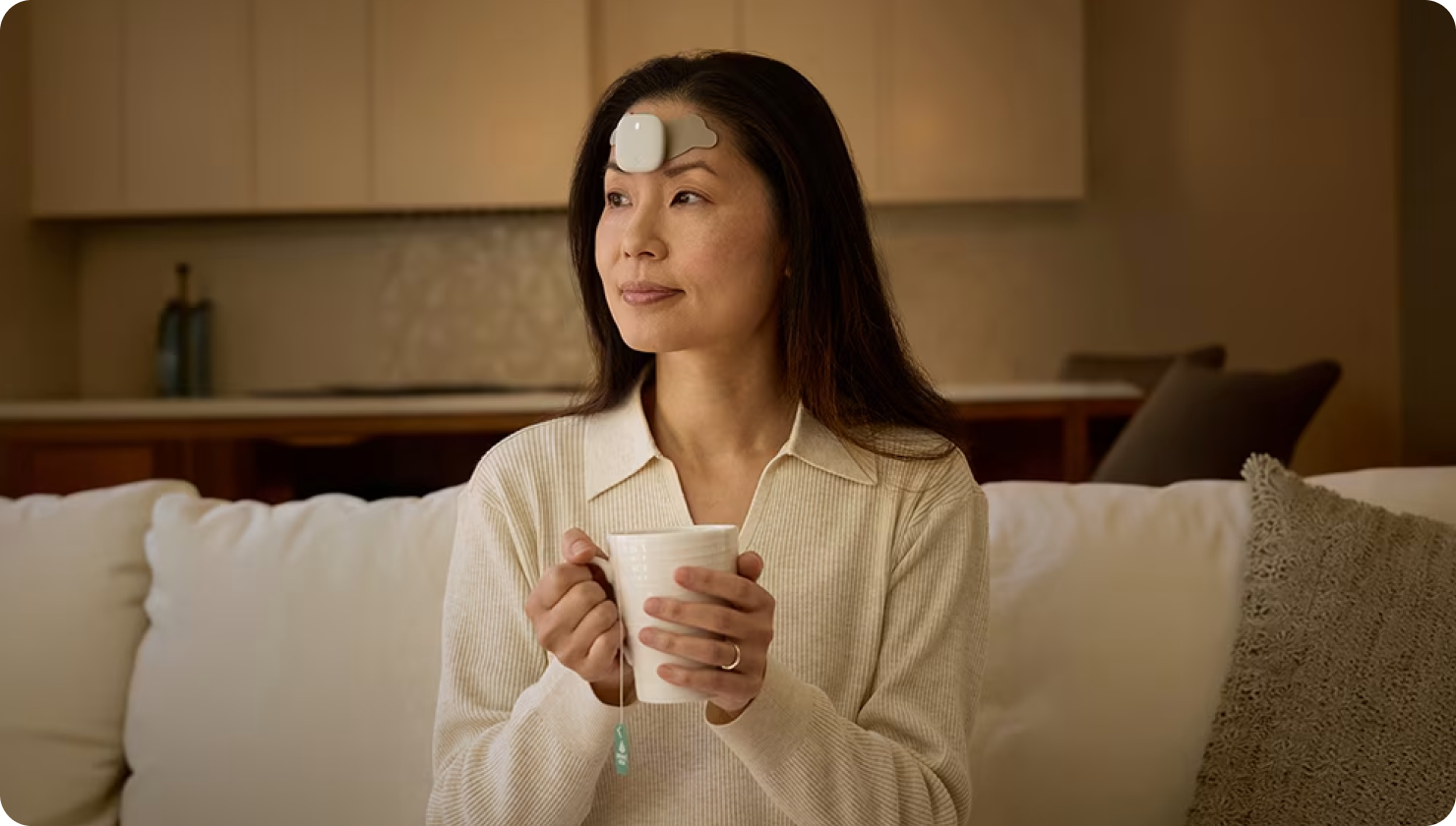
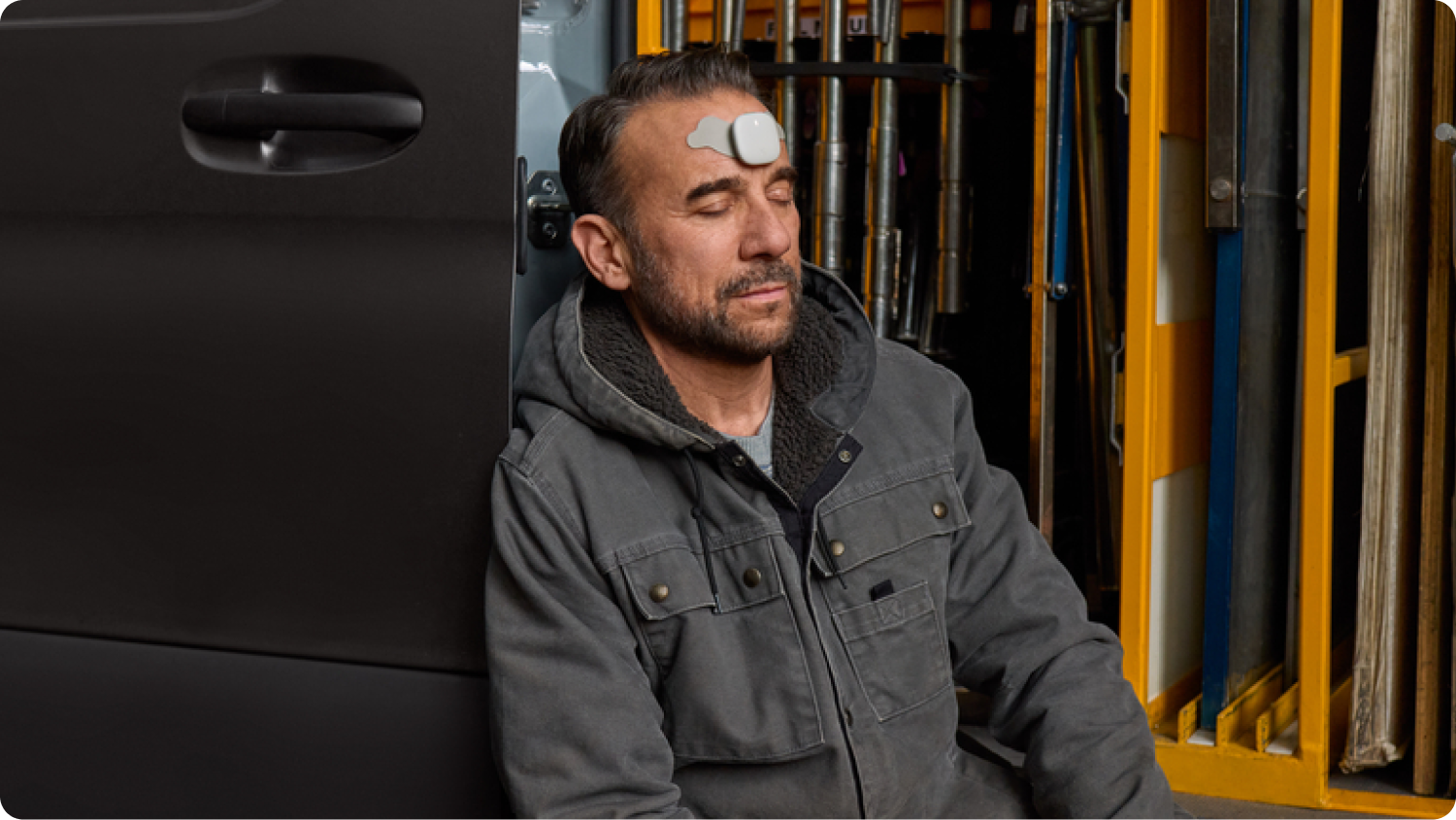
While medications will always remain a rational option for migraine relief, there are other tools available with profound effects for acute relief. Wearable neurostimulation devices, like Hinge Health’s Enso, are transforming care for some patients, providing fast relief with few side effects. These devices are attached to the skin (often on the forehead and sometimes elsewhere on the body) using sticky gel pads that deliver small electrical currents to sensory nerves beneath the skin surface.
Migraine pain arises from a complex network of neural structures and nerve branches in the head and neck. By gently stimulating nerves that feed into that network, the whole pain system can be influenced. With this approach, neurostimulation devices are able to provide acute relief in as little as minutes. Even further, regular device usage can reduce the frequency and intensity of migraine headaches over time.
As with all migraine relief solutions, this technology may not have the same level of benefit for everyone. But it may have an outsized impact as migraine neurostimulation devices become more affordable and easier to use.
Adopting a combined approach
As digital healthcare expands, it’s vital to offer migraine solutions that are easily accessible to those who need them, when they need them. Hinge Health’s comprehensive Migraine Care Program is an important step toward doing just that.
Accessible through the app, Hinge Health’s program lets you track your triggers; guides you in exercises to reduce physical and mental stress; acts as a remote control for your neurostimulation device; and offers access to neurologists and experts no matter where you live. With accelerating developments in AI, a digital solution can even get smarter over time, synthesizing insights based on your tracking logs and treatment results to give you ever more personalized and effective treatment guidance.
Combining these options is a crucial piece of the puzzle as we reimagine migraine as something patients can control for themselves with the right tools. Time and time again, patients express that they’re tired of waiting months for a specialist, only to be met with disparate treatment options and reactive rather than preventative care. But today, Hinge Health’s Migraine Care Program customizes care at scale and provides tools to treat the whole person, rather than just the symptoms.
Healthcare is moving in the direction of smart, digital, integrated solutions. Going forward, patients will be empowered with better options, deeper insights, and increased access to tackle their migraine attacks head on.
Related Articles

Learn about patellar tracking disorder causes, symptoms, and treatments. Most cases improve with targeted exercises and PT—surgery is rarely needed.
Read more
Stress doesn’t directly cause hemorrhoids, but it can disrupt digestion and trigger them. Learn how stress affects your body and how to break the cycle.
Read more
Discover how to improve knee health and stay mobile with tips and exercises recommended by physical therapists.
Read more
The RICE method has guided injury recovery for years, but thinking has changed. Learn how the PEACE & LOVE approach focuses on movement for healing.
Read more
Pain from knee bursitis can get in the way of your usual activities, but some simple knee exercises can help you get relief.
Read more- 1Headache: The Journal of Head and Face Pain, 58(4), 496–505. https://doi.org/10.1111/head.13281
- 2Gooch C., Pracht E, Borenstein A. The Burden of Neurological Disease in the United States: A Summary Report and Call to Action. Ann Neurol., 2017
- 3American Headache Society. Clinical Studies Show Impact of Migraine Across Various Stages of Women’s Lives. American Headache Society., 2018.
- 4National Headache Foundation. Preventing Migraine Attacks: A Current Perspective. National Headache Foundation., 2021.
- 5Ashina S., Bendtsen L., Lyngberg AC., Lipton RB., Hajiyeva N., Jensen R. Prevalence of Neck Pain in Migraine and Tension-Type Headache: A Population Study. Cephalalgia., 2015.