Understanding how AI is changing digital health benefits
Explore how this technology makes access to care easier, while improving outcomes. So members can do what they love most.
Convenience. The key to care.
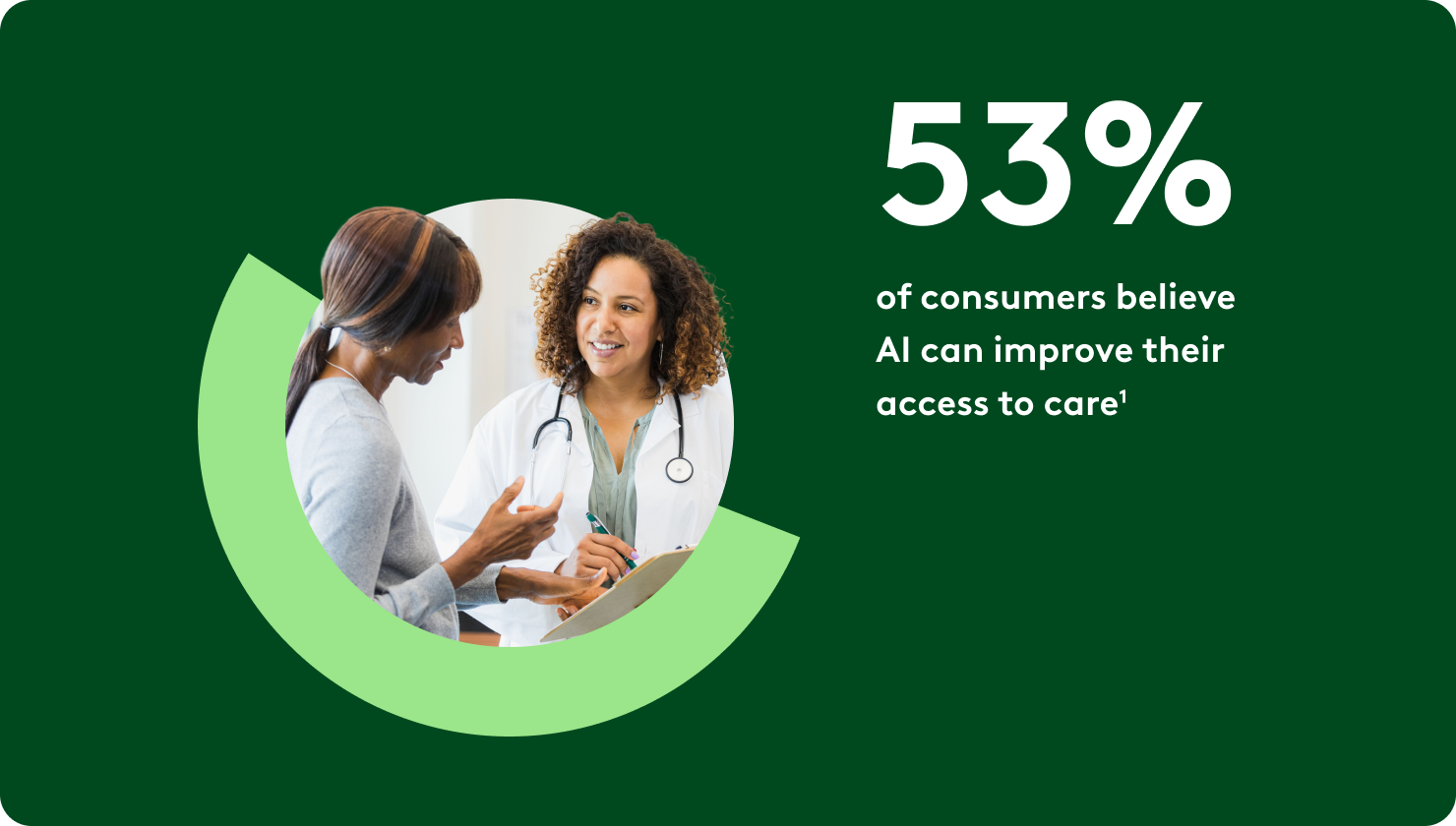
More than half (51%) of consumers say ease of access is the most important factor in selecting care, and 80% would switch providers for greater convenience.²
Responsible, human-centered AI.
The goal of AI-enhanced care is to support the people behind the patients. It helps to personalize engagement with members, adapt to real-time situations, and deliver faster pathways to recovery.

AI in healthcare is not about replacing people, it is about humanizing automation, delivering personalized member experiences while streamlining care connections.
AI-enhanced care

47% improved response times to member care through the use of AI-driven workflows.³

AI-empowered care teams reduce friction and accelerate care, while maintaining equity, privacy, and trust.⁴

AI is among the leading technology investment priorities for healthcare leaders in digital health.⁵
Not all AI-enabled health solutions are equal. When evaluating vendors, keep in mind the following:
Results oriented in areas such as productivity, member satisfaction, and mental health.
Quick solution setup and member onboarding.
Flexibility in workflows for health plans and members.
Dedication to innovation and research.
Security practices and regulatory compliance, including HIPAA, SOC 2, and HITRUST.

Lead the AI conversation
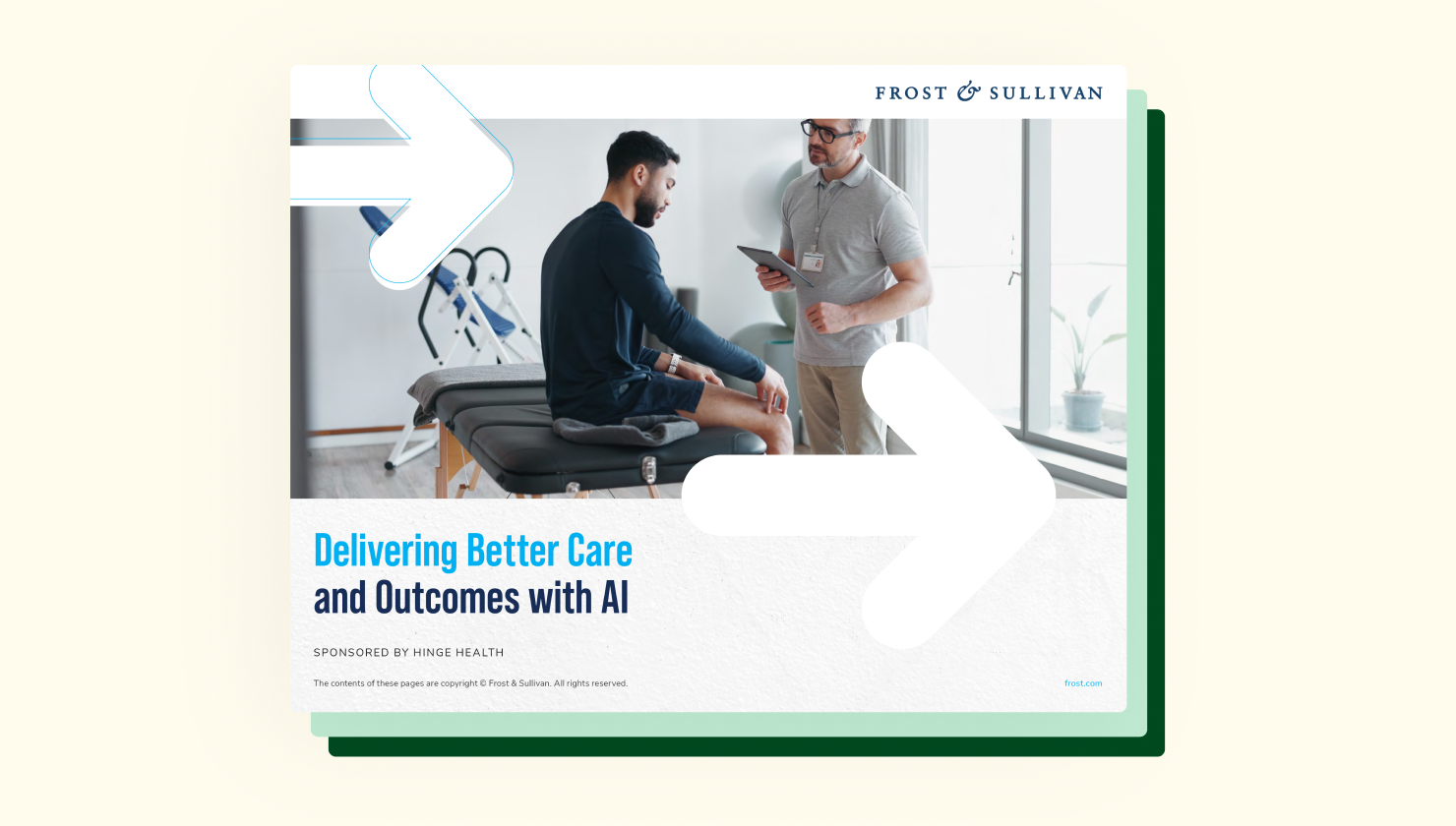
Digital health benefits are rapidly changing. Get a framework to help you make informed decisions for using AI your digital health benefits strategy.
- 1Dhar, A., Fera, B., Korenda, L. (2023). Can GenAI help make health care affordable? Consumers think so. Deloitte. Last accessed August 2025 at Can GenAI Help Make Health Care Affordable? Consumers Think So | Deloitte US
- 2NRC Health Market Insights survey. 2019 Healthcare Consumer Trends Report. National Research Corporation. Nrchealth.com.
- 3Data courtesy of Hinge Health. Q2 2025 vs. Q2 2024
- 4Bajwa, J., Munir, U., Nori, A., Williams, B. (2021) Artificial intelligence in healthcare: transforming the practice of medicine. Future Healthcare Journal Jul;8(2):e188-e194. doi: 10.7861/fhj.2021-0095
- 5Frost & Sullivan. Global Healthcare Cloud User Survey, Q3 2024. Report KB2C. 2025. Frost.com